
Frieze House Presents: Kwangho Lee , The Severance of the Serpent’s Neck
December 9 – December 20, 2025
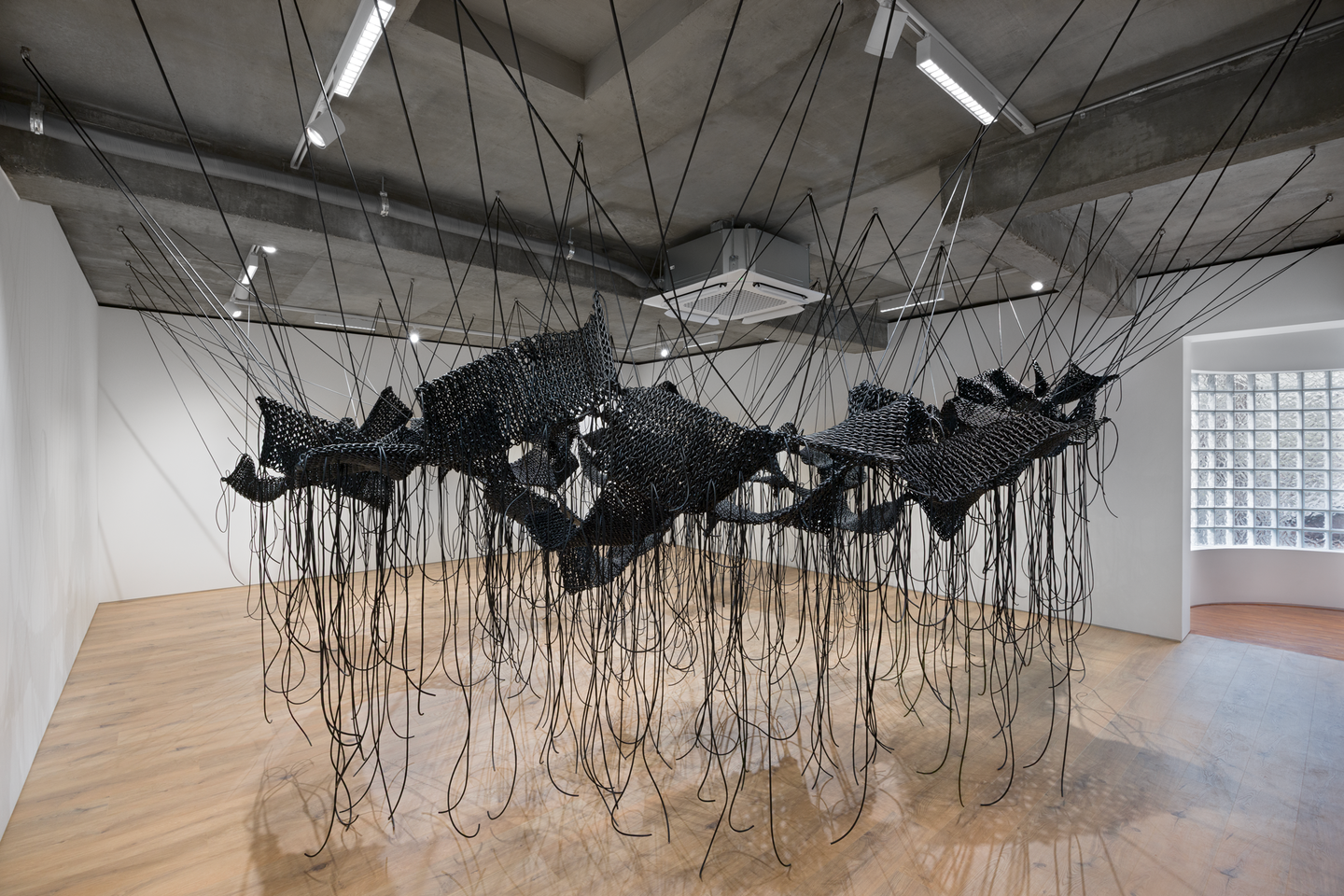
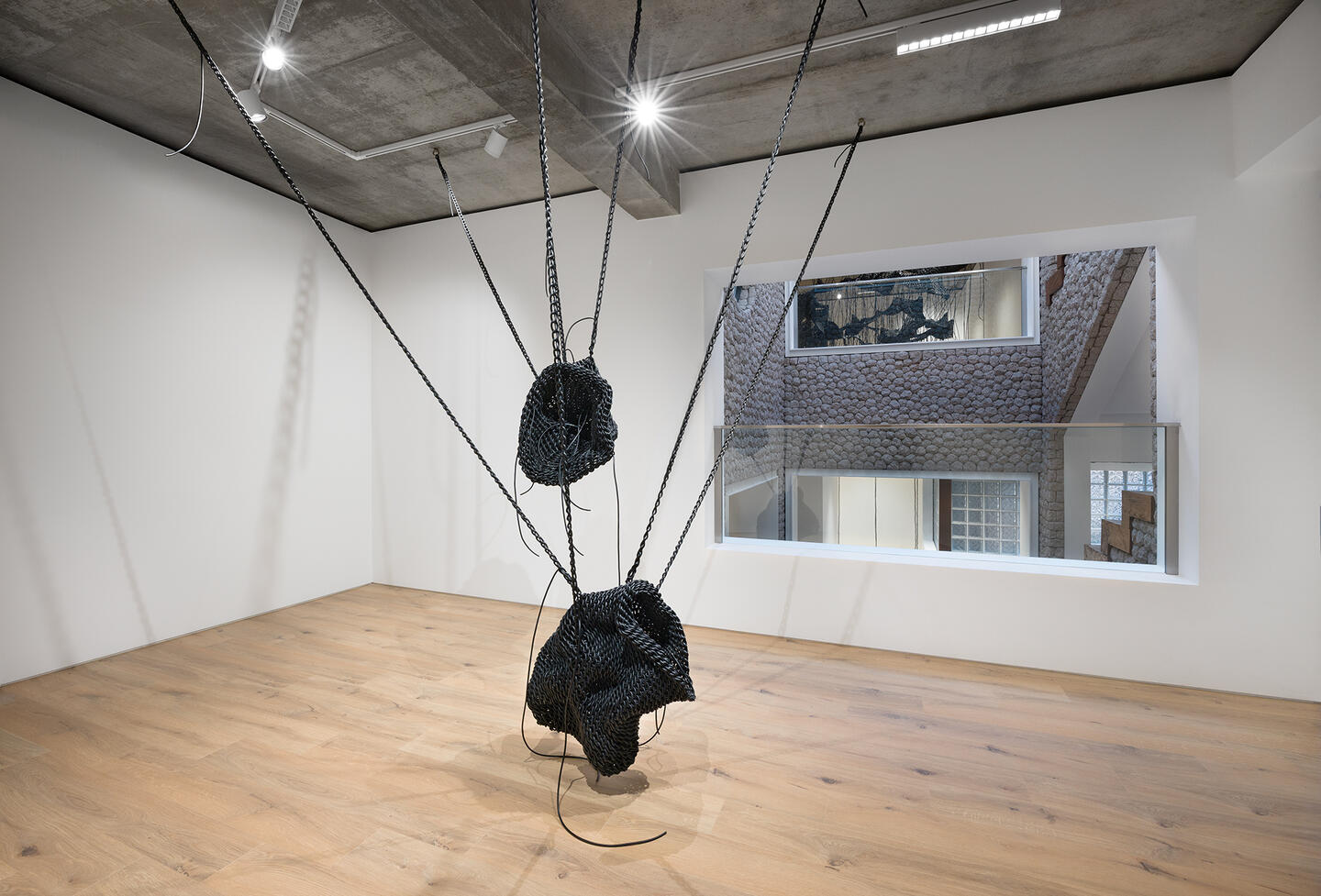
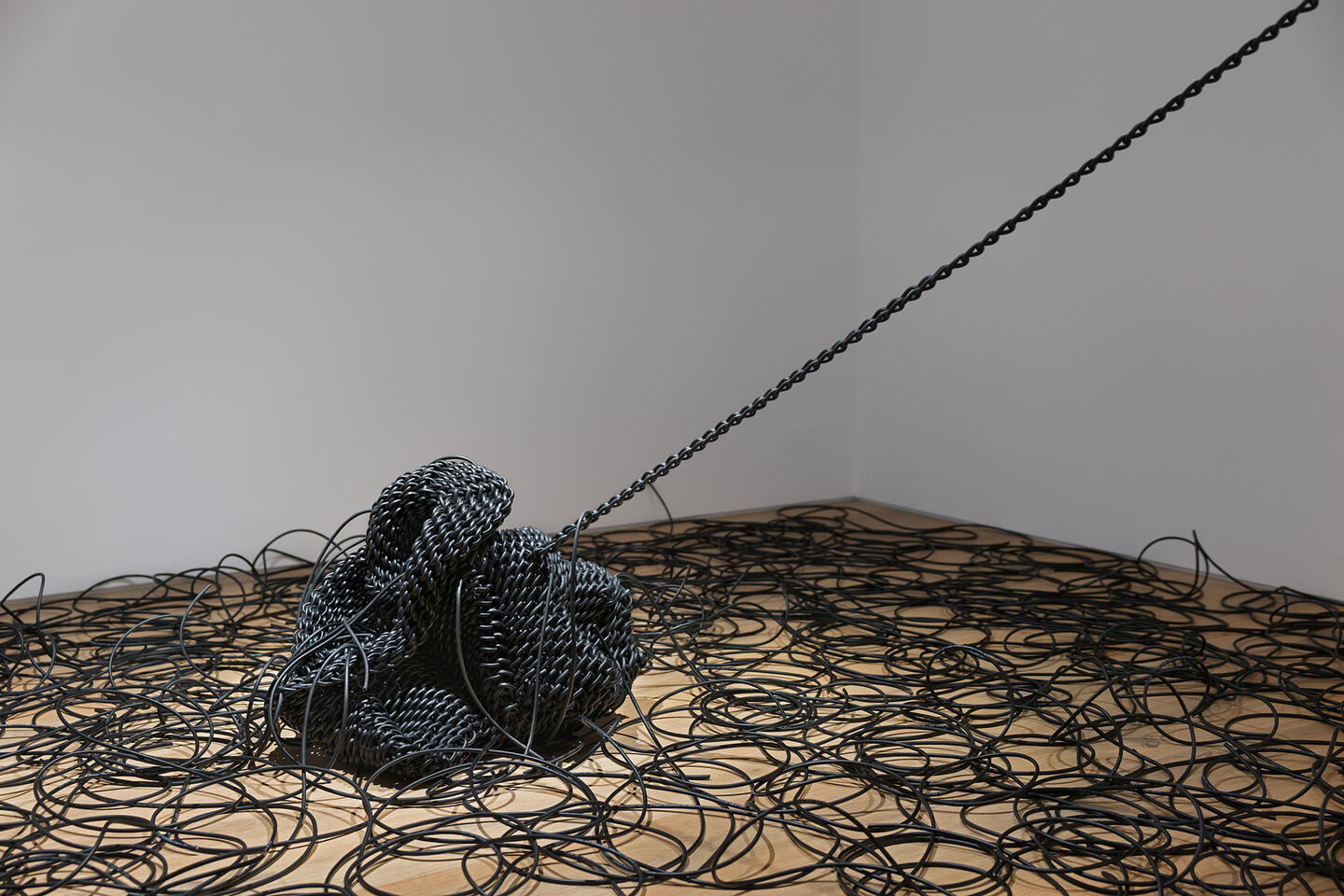
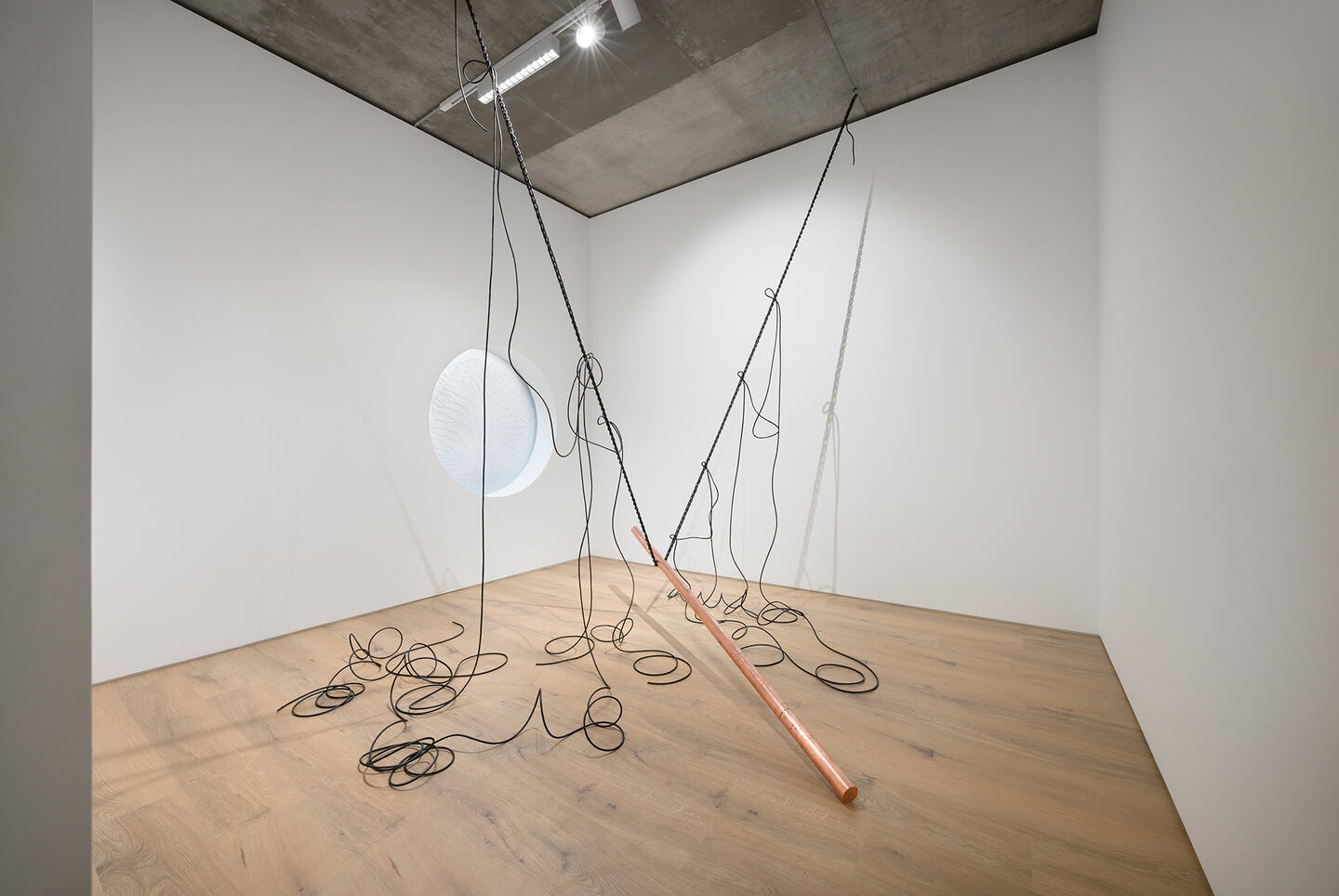
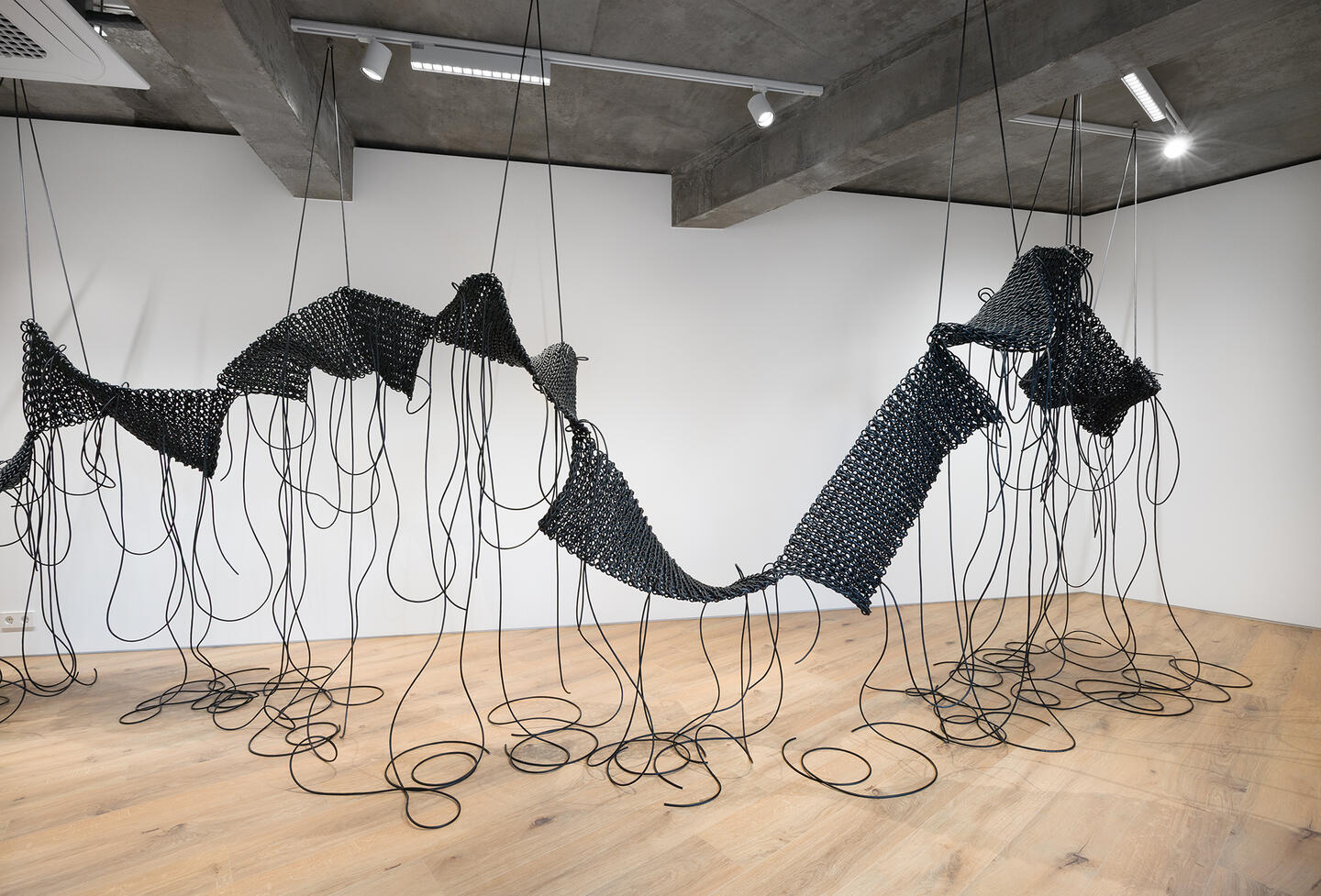
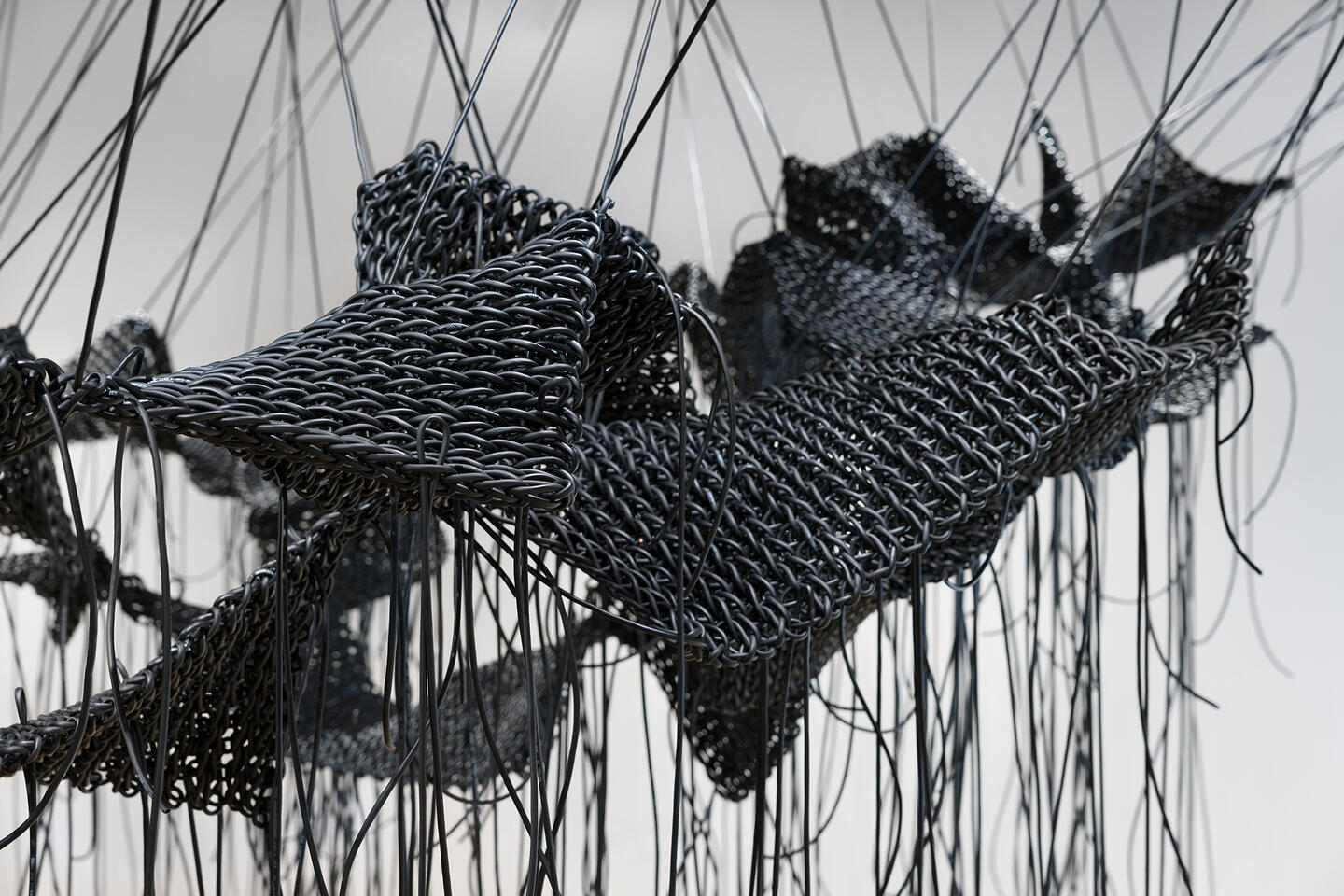
Frieze House Seoul is pleased to present The Severance of the Serpent’s Neck, an exhibition of large-scale sculptural installations by Korean artist and designer Kwangho Lee. Throughout his career, Lee has consistently adopted an experimental approach to manipulating industrial materials such extension cords, thereby transforming the most utilitarian elements of contemporary life into expansive spatial and tactile environments. In this exhibition, monumental sculptures are suspended within the galleries of Frieze House, configuring the space as an immersive field of tension, gravity and interconnection.
At the core of Lee’s practice is the act of knotting, an iterative and laborious process that binds disparate fragments into cohesive forms. Working without predetermined templates or patterns, he knits his materials into amorphous sculptural bodies that are sustained entirely by the internal force of their own interlacing. In so doing, he proposes a means of healing the primal rupture that defines the beginning of all life: the cutting of the umbilical cord.
The Severance of the Serpent’s Neck invokes the inevitability of an infant’s physical detachment from their mother, a critical moment that accompanies the arrival of all newborns into the world. Through repeated processes of looping, tightening, binding and releasing, Lee attempts a symbolic suturing of this existential wound by transforming his materials into endless, integrated configurations. These repetitive gestures endow finite matter with a sensibility of perpetual circulation, forging sculptural forms that pulse with serpentine energy.
Central to the exhibition is a symbolic shift drawn from Umbilical Cord Code: A Cultural History of Straw Rope, Serpents and Umbilical Cords (2008) by Kim Young-kyun and Kim Tae-eun, which explores how society’s collective understanding of childbirth has been mythologized. With the umbilical cord as its central motif, this text proposes the serpent as embodying an archetype of eternal return – the ouroboros – as well as a primordial life force. However, Lee approaches such imagery from the opposite angle: rather than signifying an endless continuity, he sees it as a moment of separation that makes independent life possible into the future.
For Lee, the discontinuous nature of fragmented industrial materials provides an apt metaphor for contemporary existence, and his practice proposes a resolute reconstruction of what he describes as “an autonomous code of life.” In an era defined by disconnection and material detachment, Lee’s sculptures propose a counter-model of interdependence in which entities are held together not by external supports, but by the immutability of their own relations.
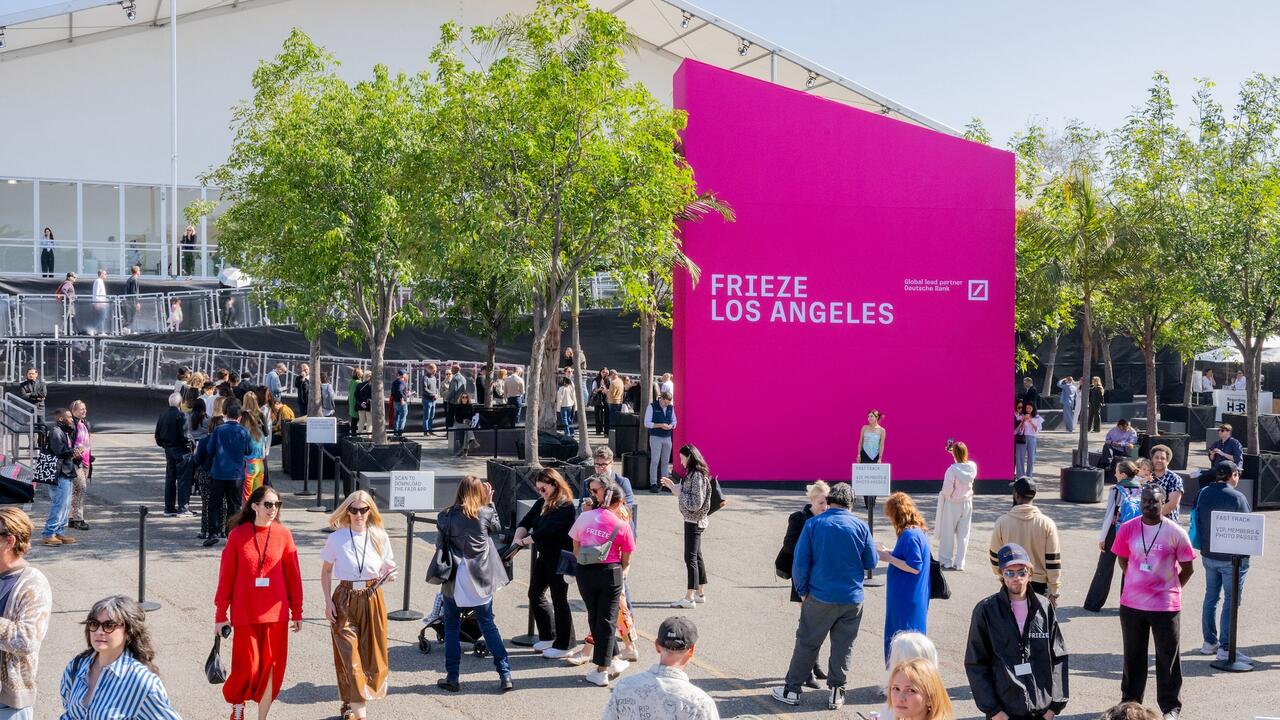
Frieze House Presents is a new initiative dedicated to highlighting leading voices across Korean creative fields — including visual artists, artisans, designers, dancers, directors, and architects. Each showcase offers a focused exploration of a distinctive practice, foregrounding the ideas and methodologies shaping the trajectory of Korean visual culture. Through this programme, Frieze continues to strengthen its connection with the local creative community and supports the ongoing evolution of Korea’s cultural landscape on the global stage.