



Traces of Empire in Jasleen Kaur’s Everyday Objects
At Hollybush Gardens, London, the Turner Prize winner works with commonplace items to reveal how histories and narratives are constructed, circulated and socialised
At Hollybush Gardens, London, the Turner Prize winner works with commonplace items to reveal how histories and narratives are constructed, circulated and socialised
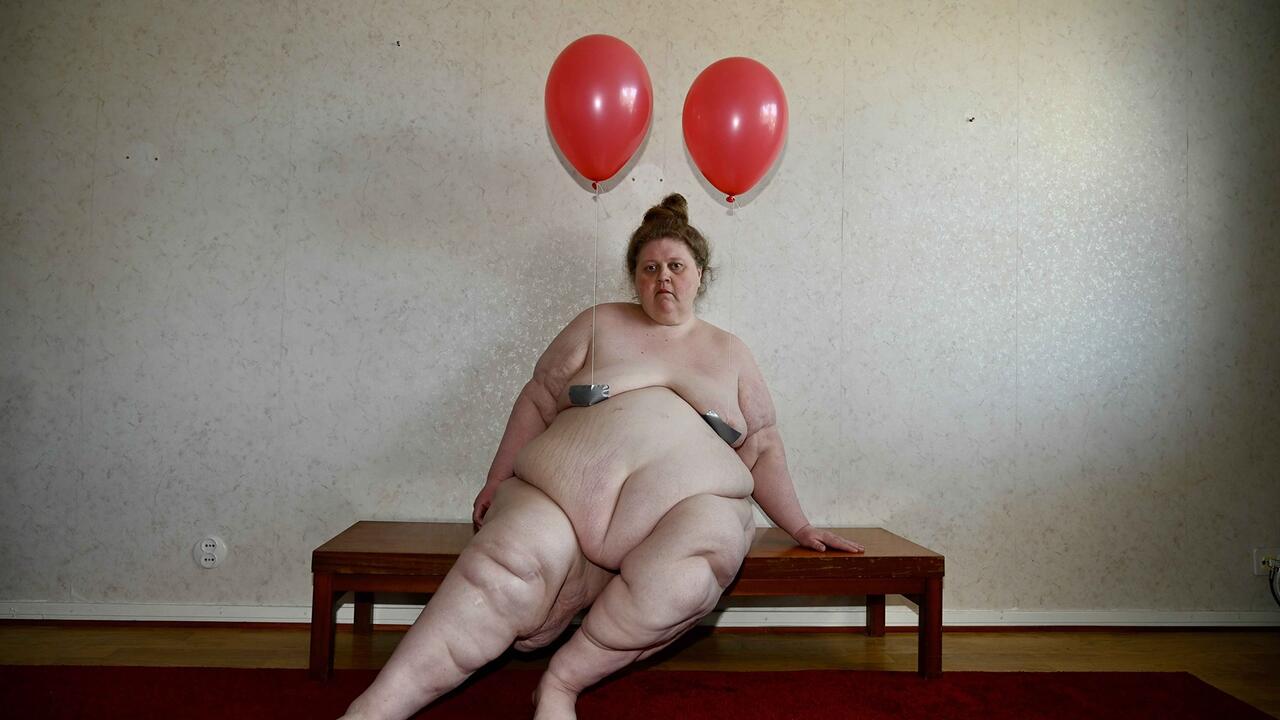
Are we all too late to the party? That’s the nagging question as I enter Jasleen Kaur’s new show, ‘Boomerang’, at Hollybush Gardens. Helium balloons, Monobloc chairs and discarded phones, scarves, jackets and gloves are fast becoming a signature of her work. It’s one such balloon that greets us as we enter, hanging beneath the ceiling of the main entrance hall with a miniature boxing glove attached (Pride, all works 2025). Below this, mounted on the wall, is Untitled, a photograph of Kaur’s grandfather and uncle, presented in a resin case the colour of Irn-Bru, the former’s face obscured by a torn fragment of roti.
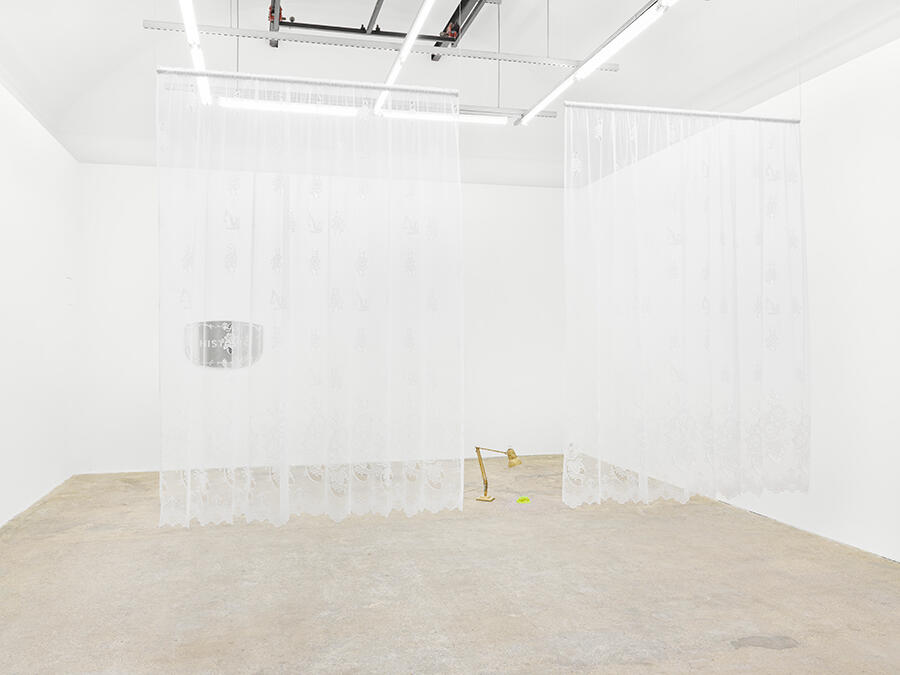
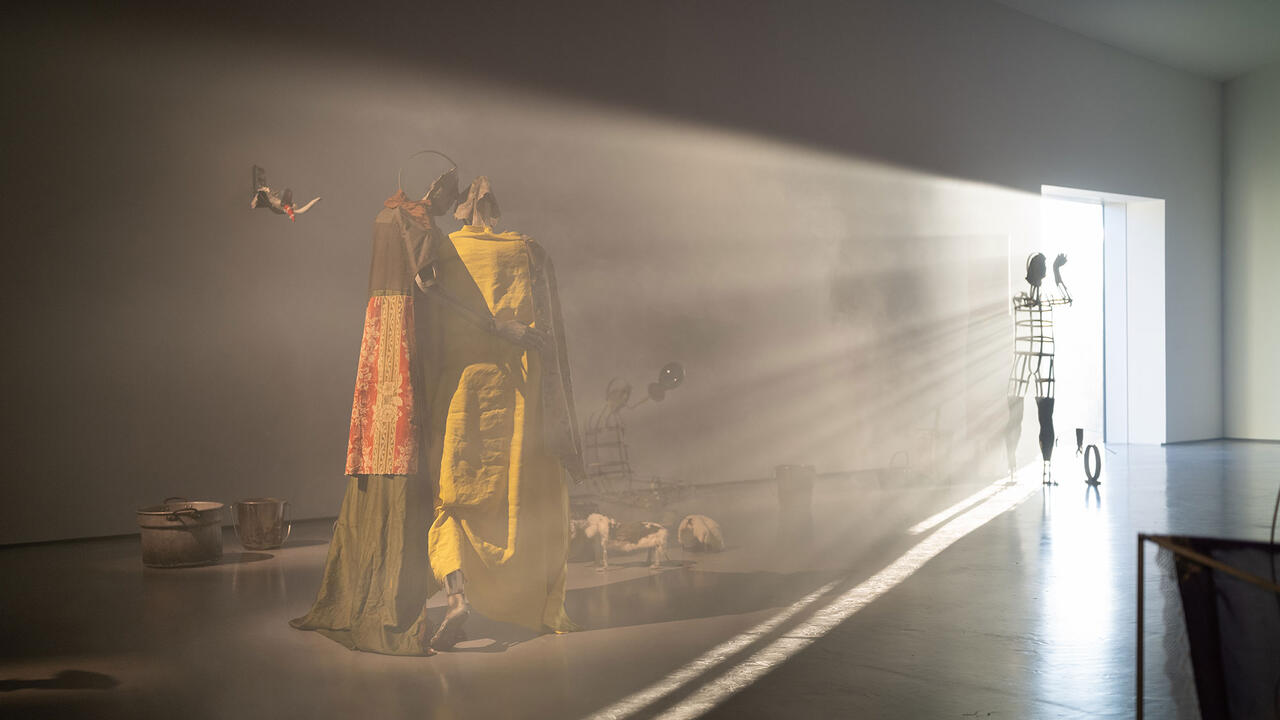
The people who inhabit Kaur’s work do so only by their traces. It’s an absence that calls to mind rooms across Britain, empty until the local Sikh community gathers inside them to worship: community halls and former pubs. It’s also a hollowed-out feeling that’s suggestive of immigrant households – places that only become sites of belonging and cultural expression after much effort, and which are swiftly abandoned when the children are forced to leave and find work. Meso is a pair of net curtains that hang from the ceiling of the main room, that platonic expression of white mistrust, neighbourly antagonism and surveillance. Its purview here, though, is no more than a concrete husk of a building and an assortment of objects that feels more like the abandoned deck of the Mary Celeste than a home.
‘Boomerang’ offers us something sombre, even mysterious. Its culmination is After Image: a vintage Anglepoise lamp placed on the ground, its surface appearing artificially aged due to the scumble finish. Its ultraviolet bulb flickers on and off, causing a tiny uranium-glass model of a mosque to fluoresce. An accompanying text tells us that this is a replica of the Babri Masjid in Ayodhya, India, which was demolished by Hindu nationalists in 1992.
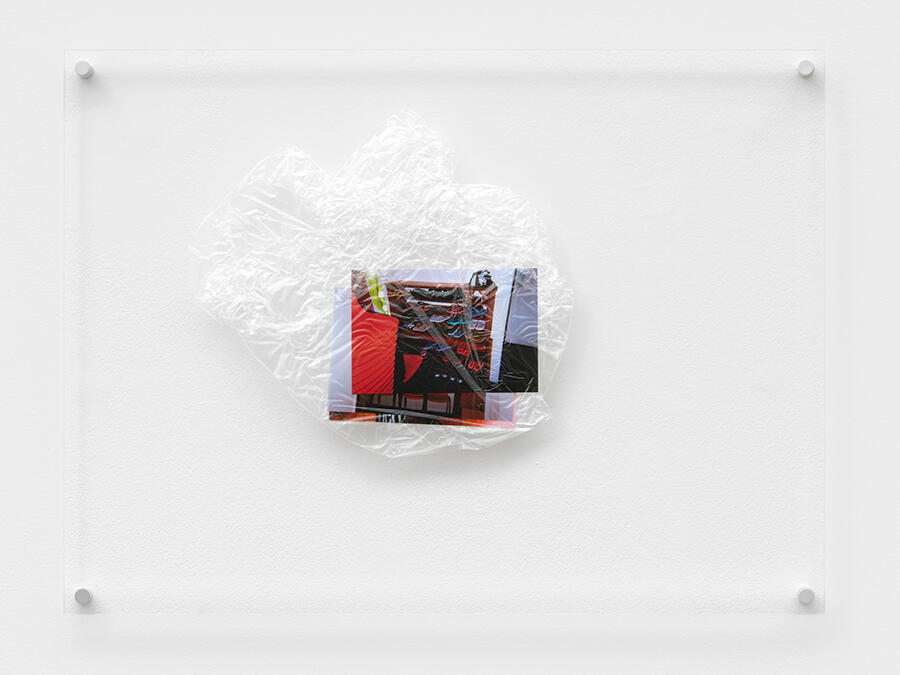
Here’s where the exhibition’s title becomes clear, referring to the ‘imperial boomerang’ whereby colonial exercises in the periphery come back to haunt the metropole. Is the divide and rule tactic deployed by the British in India – in which Hindus and Sikhs received preferential treatment over their Muslim neighbours – not only haunting India today with the rise of prime minister Narendra Modi, but also being used to a similar effect to ostracize all brown people of Britain?
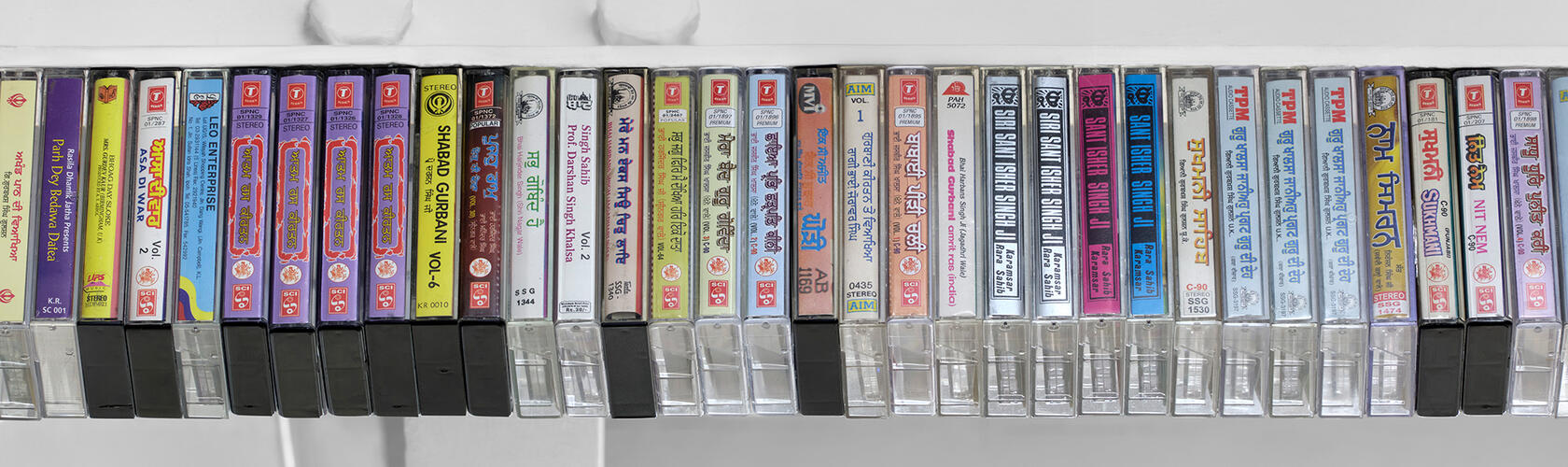
As the lamp blinks on and off – just as the destruction of the temple flickered in Kaur’s childhood imagination, hinting at some dire situation further down the line – the only other sound comes from the occasional blare of Major/minor composition, two films that play on iPhones on the floor of the next room. To access them, we must walk under two lintels: one composed of cassette tapes and another, stacks of Gucci Rush perfume, beloved of teenage girls in the 2000s (Keystone II and Keystone I). These are rites of passage as we step into the antechamber, where the phones display footage shot by, or depicting, Kaur’s own children, walking in a nearby park or playing the piano, respectively. Above them is Kismet, an image of the Golden Temple in Amritsar, Punjab, displayed behind a sheet of textured privacy glass. From afar, it looks like an impressionistic painting, indistinct as it fades into memory.
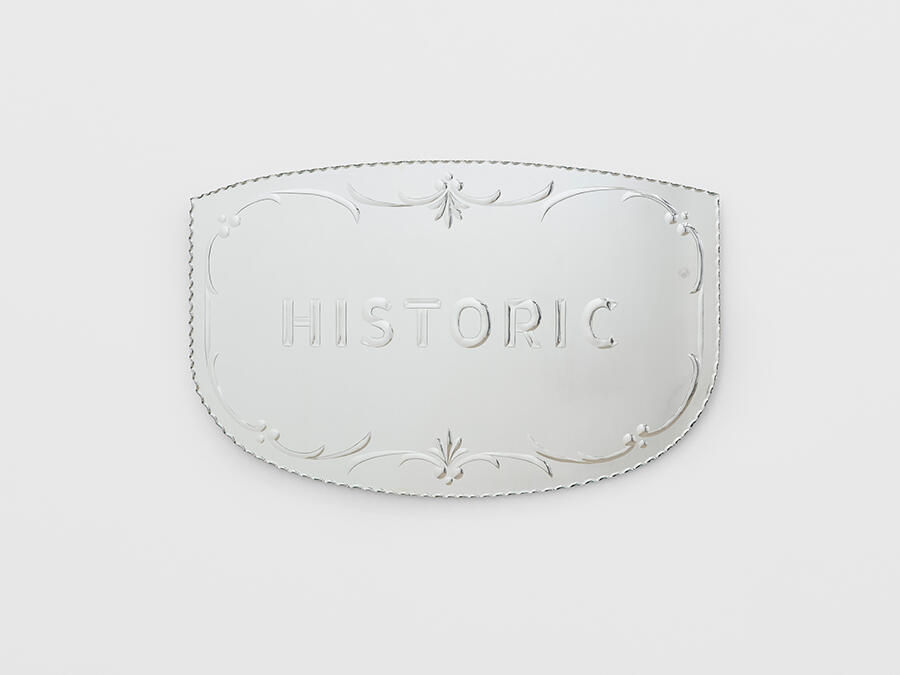
Kaur is in her stride, confident enough to speak to us in visual puns that adopt Édouard Glissant’s concept of the opaque – beautiful because of their specificity to one stratum of society, while rejecting the tendency to perform for the committee. In a way, she’s creating a code: an art for people who will always, on some level, live inside the draughty function room, behind the mottled windowpanes and surrounded by the intoxicating scent of a Superdrug perfume.
Jasleen Kaur’s ‘Boomerang’ is at Hollybush Gardens, London, until 20 December. The exhibition coincides with the launch of a new public artwork by the artist, Was. Is. Will be., on display in Thamesmead, London
Main image: Jasleen Kaur, Keystone II (detail), 2025, 79 cassettes, magnets, 10 × 134 × 6 cm. Courtesy: © the artist and Hollybush Gardens, London; photograph: Eva Herzog