



Joseph Yaeger and the Unstable Truth of Images
At Modern Art’s new space, the artist unveils paintings of isolated film stills, presented as evidence yet marked by omission
At Modern Art’s new space, the artist unveils paintings of isolated film stills, presented as evidence yet marked by omission
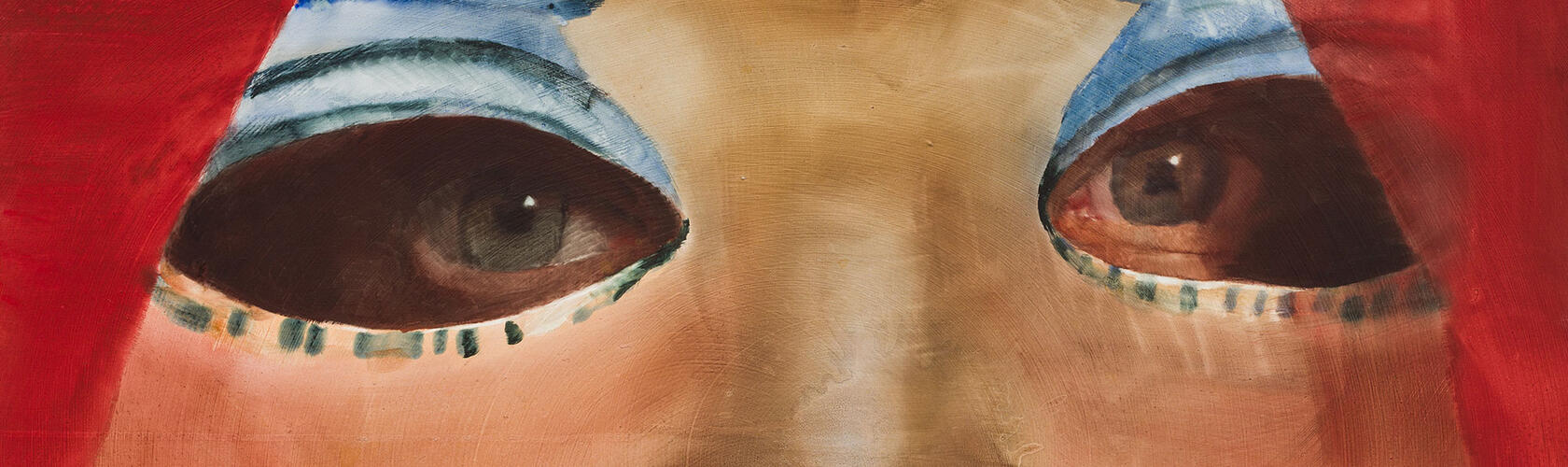
If you’re a regular at the Blue Posts pub on Bennet Street, St James’s, you may have noticed a change across the road: the 18th-century sash windows of the handsome Georgian town house opposite, previously shuttered, have been restored, and a new door installed. Modern Art has moved in. The inaugural exhibition, ‘Polygrapher’ by Joseph Yaeger, features ten new watercolour-on-gessoed-linen paintings, accompanied by a meta-fictional text consisting solely of the answers the artist provided to a lie detector test.
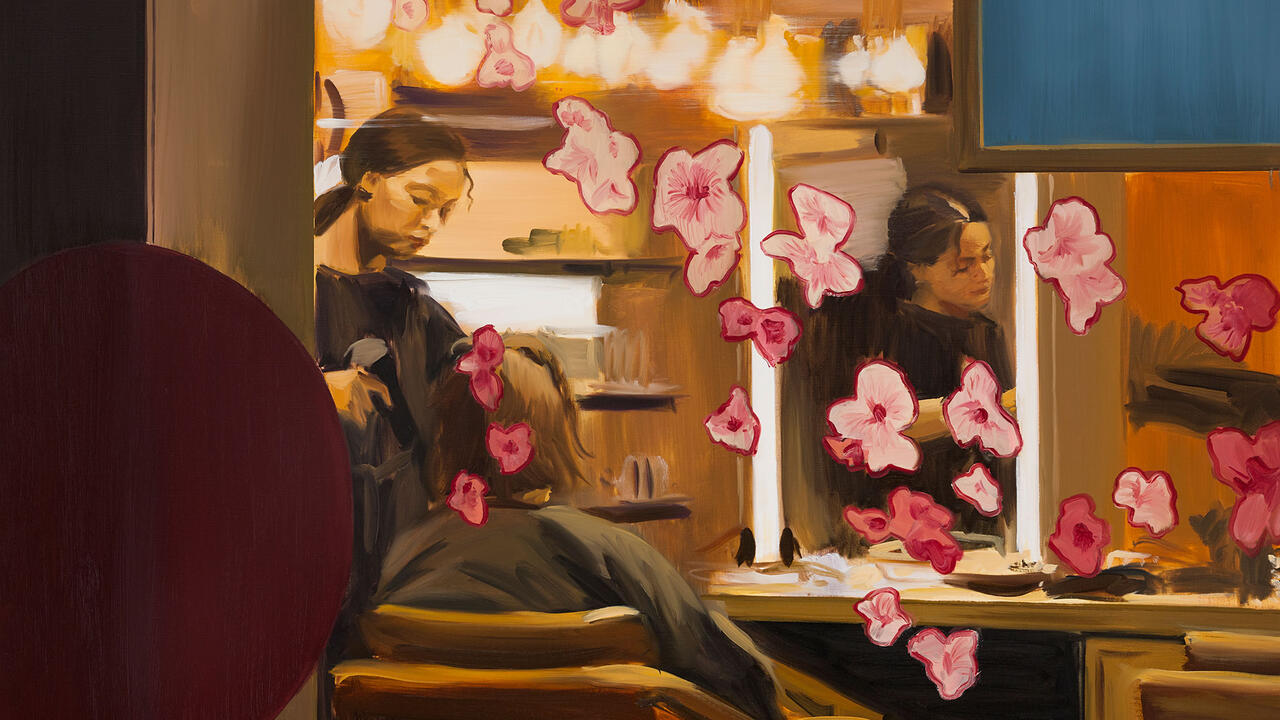
Standing before these paintings – inspecting the images, then the rough surfaces (with ‘studio debris’ listed as a material) and trying to decode the nonsensical titles – we are compelled to project our own stories onto them. You may feel that you recognize one of these faces, but Yaeger certainly doesn’t make identification easy. He sources material from film stills, but purposely avoids the poster images of identifiable stars, and the tight crop only heightens the ambiguity.
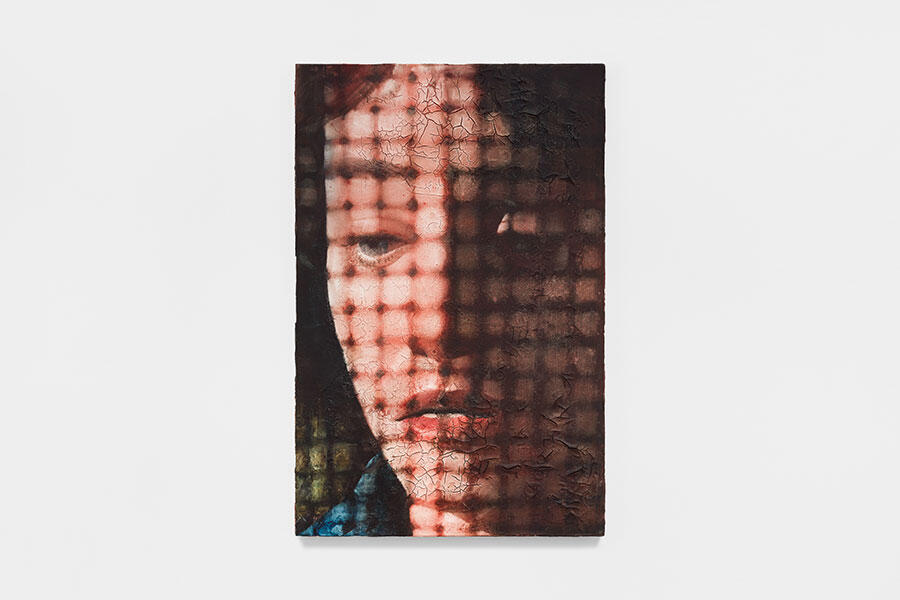
With the polygraph providing the show’s framework, each image becomes an alleged verity: a moment presented as evidence but riddled with omissions. The paintings’ obscured subjects – masked faces, shadowed, turned from view – compound that pervasive sense of uncertainty. They render the viewer a kind of interrogator, left to judge what to believe and what to treat with suspicion.
At first, I tried to read these works narratively: We come in with some of who we are (all works 2025), a little over a metre tall and in portrait format, shows an old man pursing his lips, the image cropped in to his painted blue face. Then there’s Fire that alters nothing: another face, another tight crop, this time stretched to three metres – a woman in profile, her mouth ajar in a moment that could be ecstasy, pain or both. Perhaps she has caught sight of the nude man hanging opposite in The subject is the act, his back to us, arms hooked behind him.
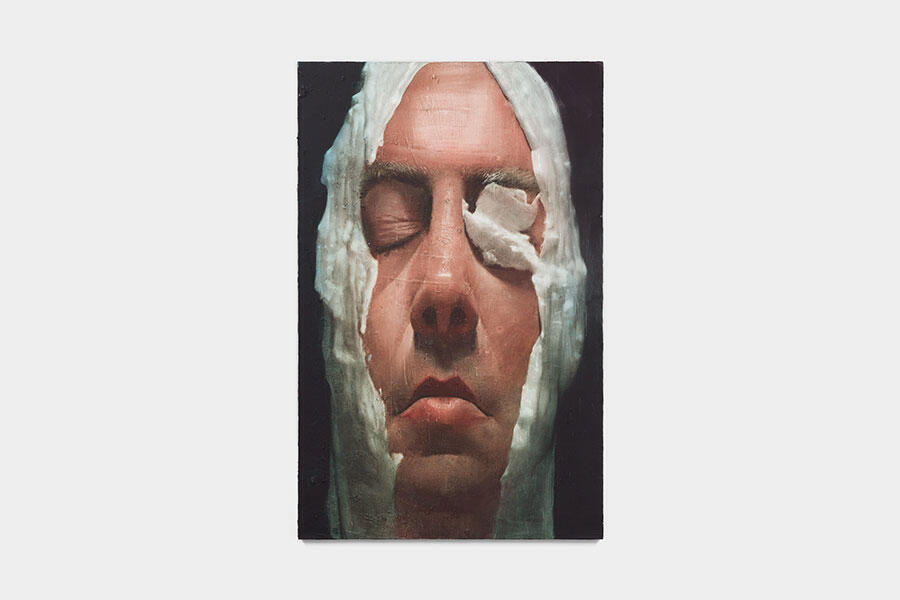
Yaeger first applies gesso, then white fixture, layer upon layer – sometimes ten layers deep – long before he even thinks about reaching for watercolour. Along the sides of the canvas, the gesso congeals and gathers like soft fondant slumping over the edge of a cake. Compared with earlier shows, the handling feels bolder, more deliberately unruly, as if he were stress-testing the material and technique to see how far it could be pushed. Previously, the gesso had been dragged left to right, as though the canvas were wrapped in bandages; or, in other works, lightly pockmarked into sculptured skins of hollows and protrusions – pockets of shadows where the watercolour would sluggishly seep and pool.
Here, the cracked surface over the girl’s forehead in Clean windows kill birds recalls the desiccation cracks of dried lake beds in the American West. The gesso has strained to breathe under the fixture, erupted and then settled into a skin of fractures. No thoughts but what we see, perhaps Yaeger’s most textured work yet, embeds staples and paint-tube lids – materials swept from the studio floor – directly into the picture plane. The effect underscores the friction in his method: the flicker of film or video pushed through a medium that insists on slowness, and the ongoing clash between watercolour and gesso – the tension arising from the gap between his intention and how much the surface pushes back.
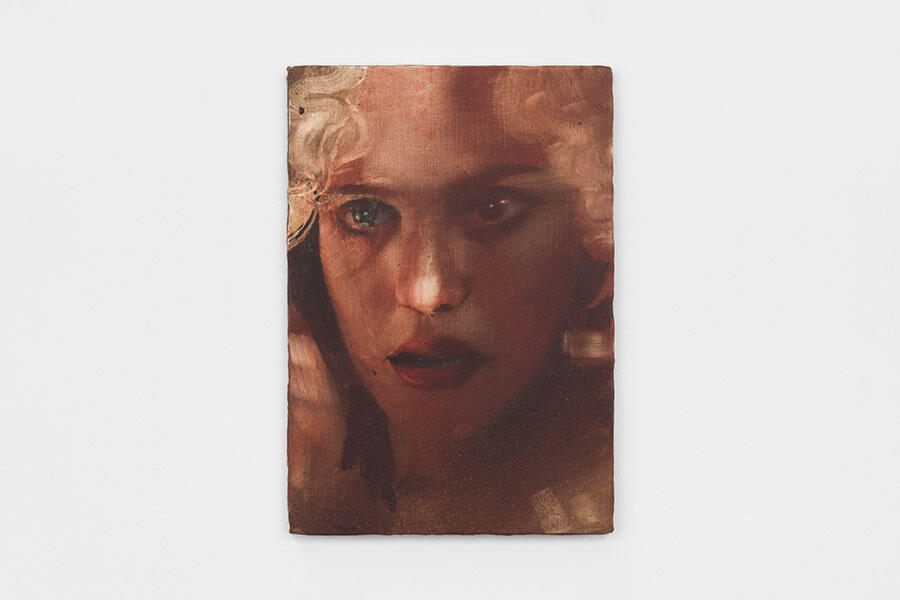
As you spend time with these paintings, their beginnings as film stills fade, and the figures step forward as the protagonists of a new narrative, assembled in your own mind. Hyperspecific in mood, carrying a charged, claustrophobic anticipation, they start to work in concert, passing tension from one frame to the next – each painting operating as an emotional spike, a held breath, a faltering pulse – a choreography Yaeger has mastered, and which he uses to probe an image’s unstable claim to truth.
Joseph Yaeger’s ‘Polygrapher’ is at Modern Art, Bennet Street, London, until 17 January.
Main image: Joseph Yaeger, To tell you the truth (detail), 2025, watercolour, studio debris and photograph on gessoed linen, 85 × 130 cm. Courtesy: © Joseph Yaeger and Modern Art; photograph: Modern Art