




The Year in Review: Best Frieze Articles of 2025
From a review of carnal ecstasy in a Tokyo nightclub to a deep critique of the biennial format, these are the ten articles our readers loved the most
From a review of carnal ecstasy in a Tokyo nightclub to a deep critique of the biennial format, these are the ten articles our readers loved the most
1. The Trouble with Art Biennials Today | Joshua Segun-Lean

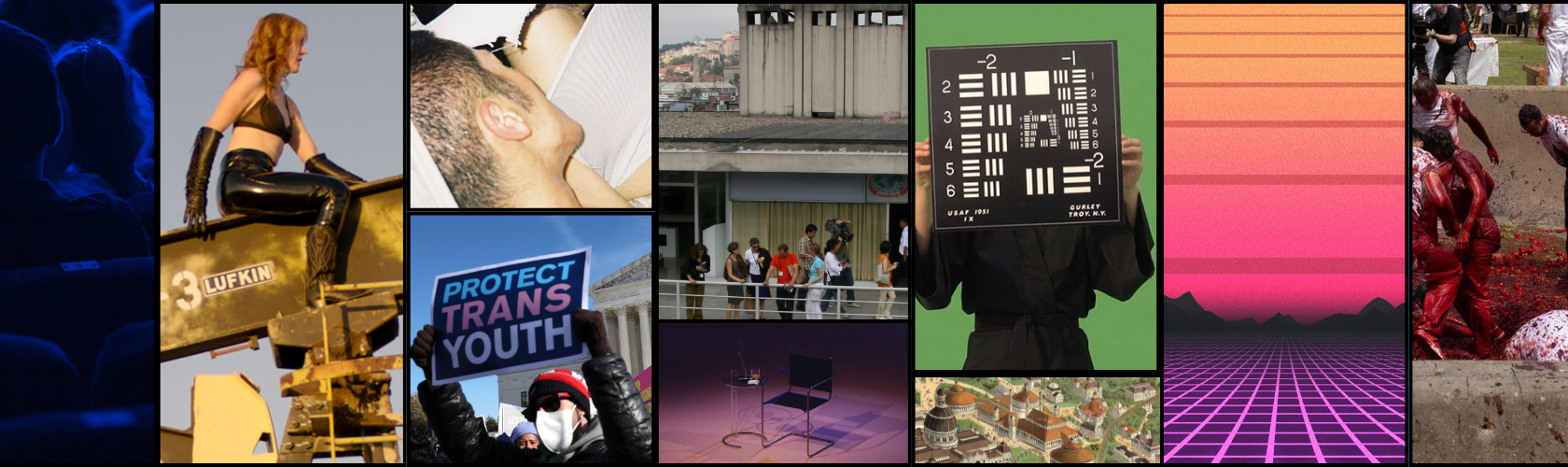
2025 has been a mixed year for the much-contested art exhibition format. With over 200 globally, biennials have been described as high sales vehicles at best and neocolonial extractivists at worst. Biennials have become sandpits for dealing with social and political themes, but their engagement with these topics runs the risk of aestheticizing matters of deep concern. In his piece, Joshua Segun-Lean traced the beginnings of mega-art events, from 19th-century World Fairs to the modern Venice Biennale, which has historically positioned the Atlantic West as the centre of industrial, economic and cultural innovation. In this vein, he wrote that the ‘mega-exhibition is a form fundamentally unable to bear the weight of its own contradictions’.
2. The Artists Embracing Queer Ecology | Cassie Packard

Frieze assistant editor Cassie Packard looked at how artists are rethinking ecological practice through a queer lens, challenging the idea that the natural world exists as something pure or separate from human life. Drawing on examples from Barbara Hammer’s Dyketactics (1974) to contemporary works, she explained how ‘radical intimacy with the earth offers a compelling complement to other activist strategies and environmental stewardship practices’. By embracing messiness, ambiguity and bodily connection, these practices push art beyond representation, opening up imaginative ways of thinking about sexuality, embodiment and environmental responsibility.
3. Ed Atkins and the Weight of the Unreal | Hans Ulrich Obrist

Hans Ulrich Obrist discussed the evolution of Ed Atkins’s work ahead of his first major UK survey at Tate Britain, which opened in April. The artist reflected on how a creative career was almost inevitable, considering he grew up with a painter mother and a graphic designer father, and highlighted his collaborations with creative partners and media technologies. The conversation explored his shift from painting to video and digital media, and his use of CG avatars and performance capture to probe identity.
4. Art vs. Cinema: What’s the Difference for Filmmakers? | Roundtable

Five curators, programmers, artists and academics came together for a provocative conversation about what defines cinema and what defines cinematic arts in contemporary practice. Central to the discussion was the sense that many artists eschew the linear logic of conventional film – as filmmaker Ana Vaz put it: ‘Working with the fragmentation of space and time is inherent to cinematic practice. The forceful taming of cinema into linearity is a construction that comes from the film industry.’
5. The Scapegoating of Trans People in Trump’s America | McKenzie Wark

McKenzie Wark unpacked how trans people in the United States have been made to take the blame for the nation’s woes amid the return of Trump‑era politics, arguing that the hostility directed at an already marginalized community reveals more about collective anxieties than any real social threat. Wark framed the phenomenon through René Girard’s theory of mimetic desire, where social envy and rivalry, especially on social media, are channelled into aggression against those perceived as different. She wrote that trans people are targeted not because of who they are but because they ‘undermine difference itself’, making visible the artificially constructed social order capitalist systems cling to. Touching on sport and media panic, the essay contended that demonization has become a tool of division and distraction, and that the mobilization of liberals is needed to counter this manufactured hostility.
6. Fistful of Flesh: Young Boy Dancing Group Hits Japan | Christopher Whitfield

Young Boy Dancing Group, a Swiss performance troupe most famous for shining lasers out of their butt cheeks, took over a Tokyo nightclub with exquisitely choreographed carnal prostrations; dancers morphed into human candelabras or step stools and, at one point, were tugging and shoving each other ‘with the churlish, non‑verbal frustration of a child awoken from a nap’. The group created a chaotic, immersive spectacle that forced the audience to embrace the rawness of their bodies in motion. There was no narrative to follow – only the relentless physicality of this memorable performance.
7. Creative Resistance in the Heart of Istanbul | Kaya Genç

In frieze Issue 252, Kaya Genç looked at how Istanbul’s independent art scene keeps finding ways to resist, even as gentrification and political pressure reshape the city. Istanbul Manufacturers Bazaar (İMÇ), a former mall that became a makeshift home for artist-run spaces, forms the focus of the piece. Rising rents and state-backed development may have pushed galleries out of Istanbul’s creative quarters, but at İMÇ – where collaboration is embraced more than commerce – artists have carved out a space for experimentation, community and political engagement.
8. The Rise of Vaporwave Curating | Rahel Aima
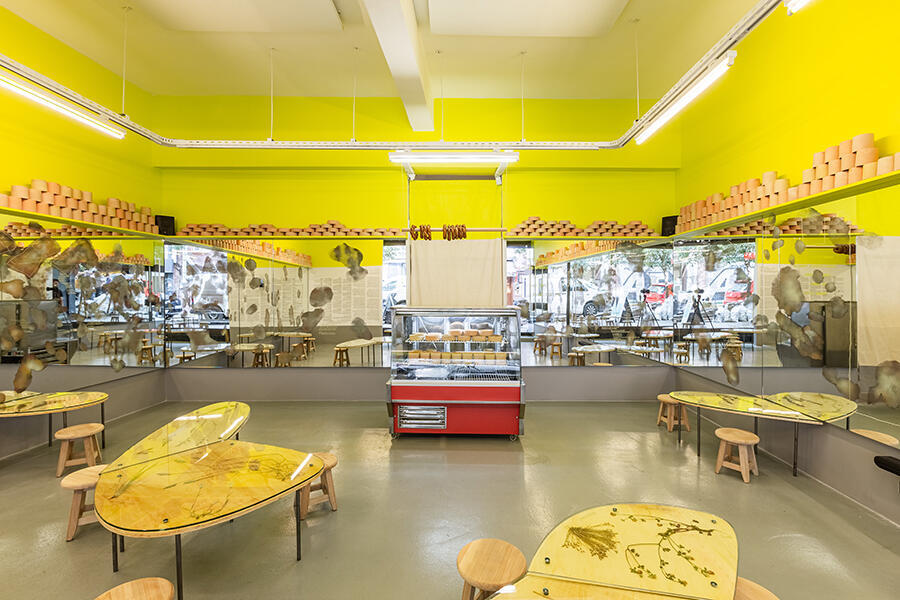
Every so often, a writer coins a phrase so apt that it’s surprising it wasn’t already a widely established term. In this piece, Rahel Aima took aim at the Vaporwave genre (think Windows 98 palettes and 16-bit Japanese graphics), not to critique its aesthetic, but to show how its endless recycling of mismatched, bygone-era detritus is embedded in today’s curatorial practices. In particular, across sprawling biennials, where, as she writes, ‘biennial bloat and its attendant cacophony of subthemes has the blurring effect of burying the lead and, along with it, any salient political commentary’. What she calls ‘vaporwave curating’ smooths over specificity and blunts political stakes.
9. Can Performance Art Cure Us of Brain Rot? | Janelle Zara
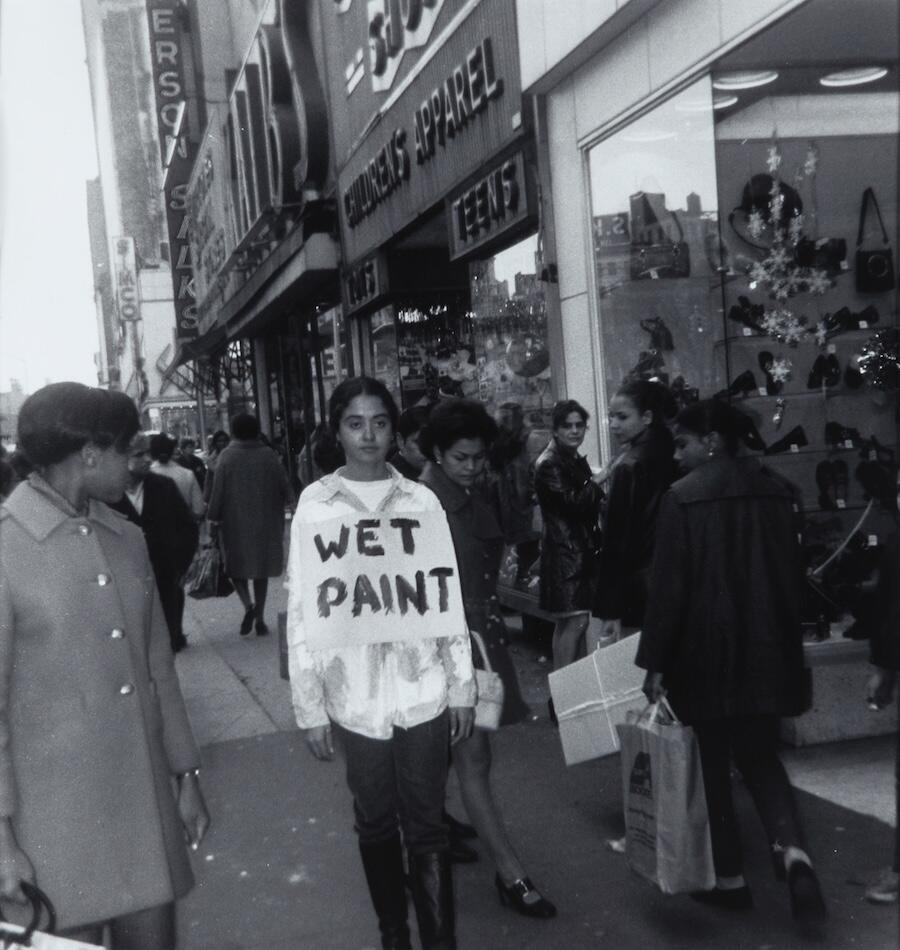
‘Brain rot’ was named Oxford word of the year in 2024 by Oxford University Press, but it seems the condition has metastasized in 2025 as vast sections of the internet continue to devolve into attention-draining sop. Thankfully, performance art might be an antidote, but only if we follow the dosing instructions carefully. Janelle Zara argued that live, durational performances can interrupt the frictionless doomscrolling that is dominating our lives if we allow performance to alter our perception of time and presence. Drawing from the inaugural AIR Festival at the Aspen Art Museum and works by artists such as Matthew Barney and Jota Mombaça, Zara explained how embodied attention and sensory engagement is the only way to counter cognitive decline.
10. The 25 Best Works of the 21st Century | frieze
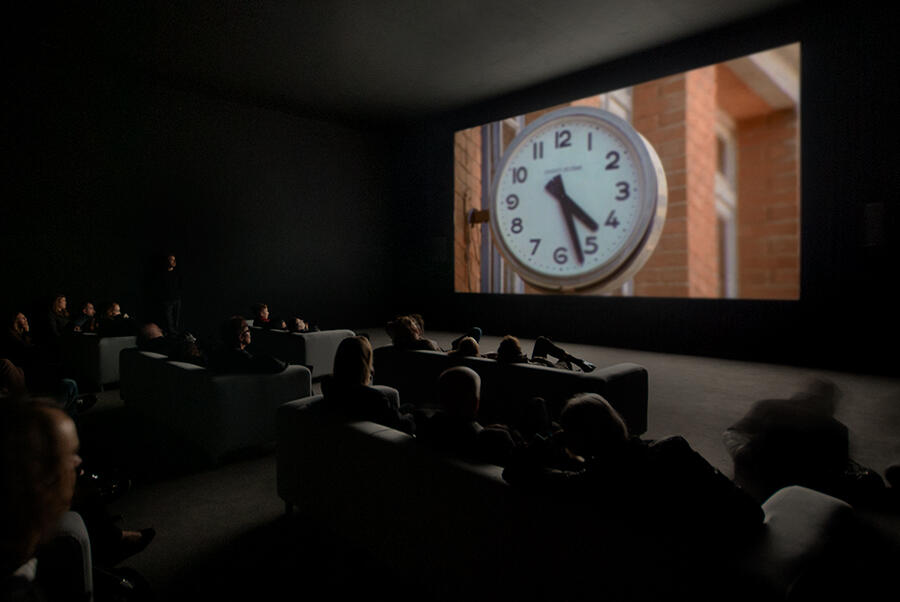
Frieze asked 200 artists, curators, critics and museum directors to name the most outstanding works of art from the past quarter century. From their nominations, we compiled a list of 25 works that have shaped contemporary art since the year 2000. Many seemingly obvious choices did not make the cut, and painting was also notably absent. The final selection generated enough debate that several frieze editors came together to reflect on it in a follow-up article, Frieze Editors Discuss the Best Works of the 21st Century.