



‘Behind the Counter’ Reframes Women’s Labour
At Telegraph Gallery, Olomouc, three artists turn to the socialist female service class to explore nostalgia as a feminist issue rather than a retro aesthetic
At Telegraph Gallery, Olomouc, three artists turn to the socialist female service class to explore nostalgia as a feminist issue rather than a retro aesthetic

Nostalgia in the post-communist, Eastern European context is a complicated terrain. Its remnants aren’t confined to the past but remain woven into everyday life – its infrastructure, architecture and political rhetoric – while its material culture circulates as a commodity, from retro tourism to curated ‘ruin’ aesthetics. This marketable Ostalgie often flattens history into familiar visual codes. Yet, nostalgia’s affective pull can also serve as a tool for negotiating the ideological and economic ruptures of the post-1989 landscape.
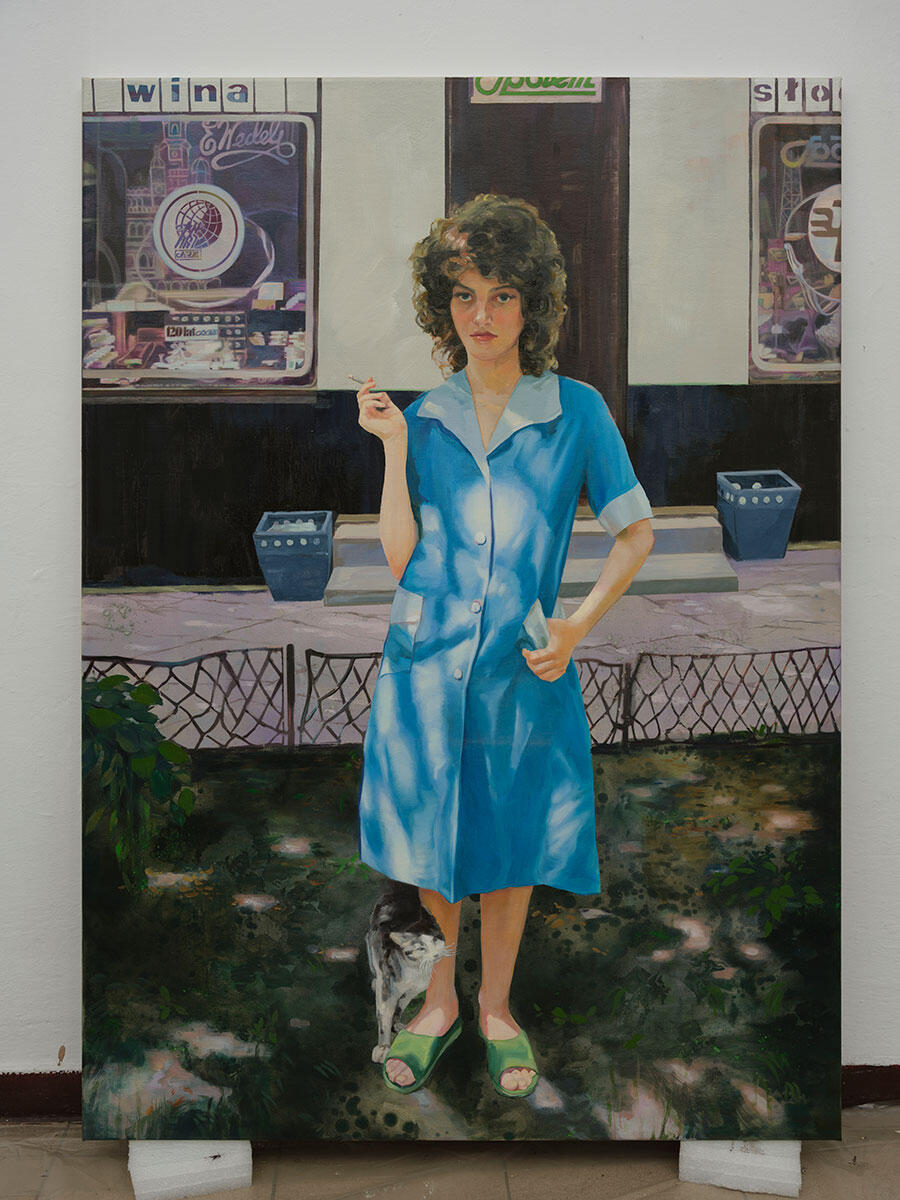
Within this shifting field, the image of the socialist female worker, poised behind the counter, can easily tip into a glossy, seductive, retro-nostalgic signifier, even though many of her conditions persist in today’s service economy. The artists in ‘Za Pultem’ (Behind the Counter), at Telegraph Gallery in Olomouc, examine this figure under a new gaze. Borrowing its title from the 1970s Czechoslovak TV series about the daily lives of supermarket employees, the exhibition brings together works by Paulina Olowska, Adéla Janská and Caroline Walker to consider what a feminist engagement with nostalgia might look like, unfolding as a study of visibility and power within the changing female service class.
The installation is designed as a 360-degree environment, with paintings suspended above piles of discarded steel kitchen appliances salvaged from a scrapyard. While I understand that this gesture aims for immersion – and it certainly looks cool – it doesn’t feel strictly necessary in this context: in a figurative painting show, the images speak volumes for themselves.
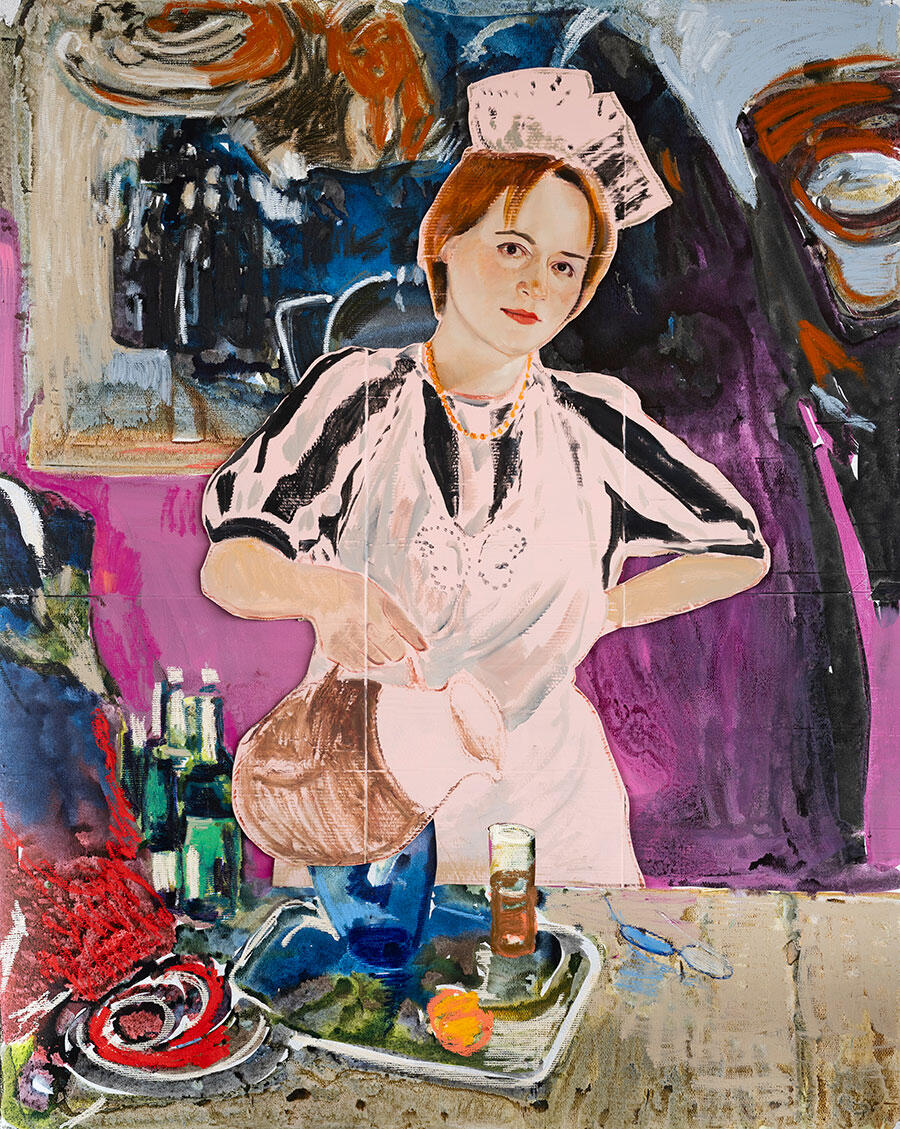
Paulina Olowska’s method is the most documentarian. Painting from vintage photographs of the 1960s and 70s, as well as from stills from the titular TV series, works such as Cashier (after Yelena Yemchuk) and Polena (both 2025) restage cashiers and shop assistants with close attention to period detail – uniforms, restaurant interiors, shop displays. Yet, rather than sentimentalizing, it feels like Olowska wants to emphasize ambivalence: once embedded in the unremarkable flow of everyday visual culture, the women now return as aestheticized relics.
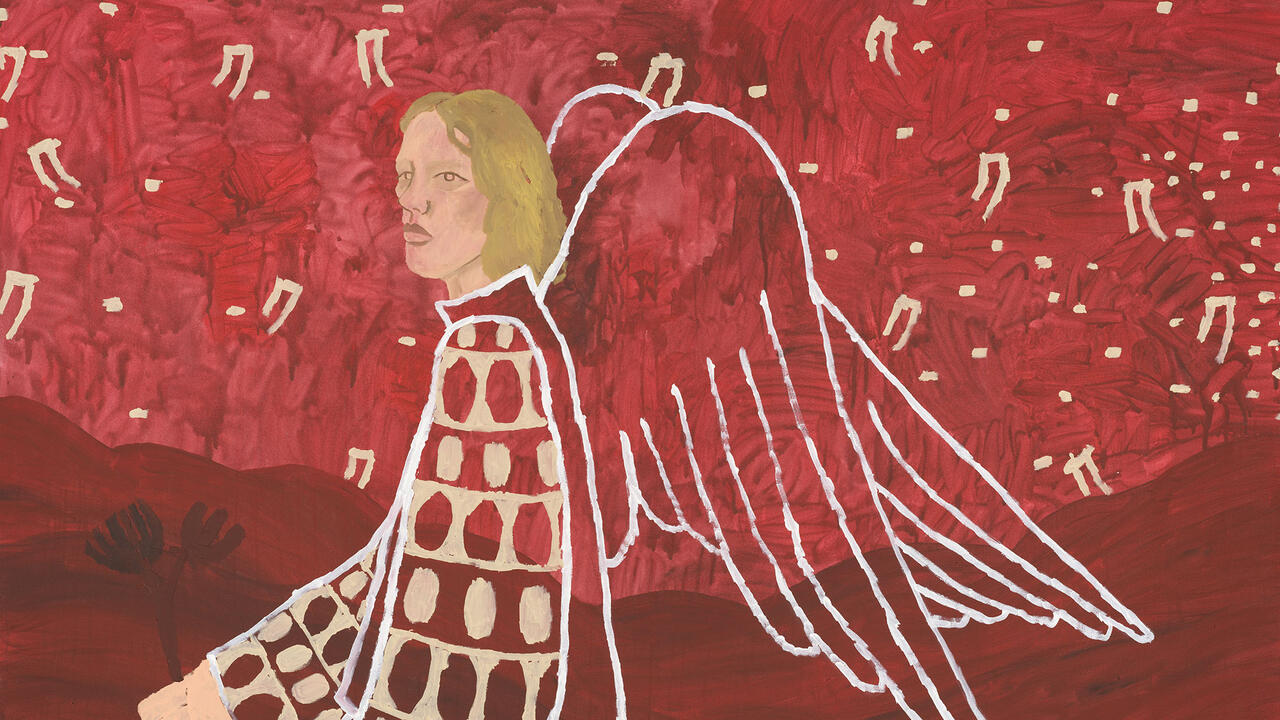
For Adéla Janská, the psychological charge of the figure becomes the focus. Her slightly claustrophobic backdrops in Saleswoman (after Evsej Evseevich Moiseyenko) and Ovoce & Zelenina (both 2025) loosely echo Olowska’s grocery-shop settings, but instead of realism, she treats these spaces as symbolic environments. In Za sklem (Behind the Glass) and Skleněné počasí (Glass Weather; both 2025), close-ups of her glossy, doll-like figures fill the frame. Their expressions waver between seduction, scrutiny and warning. Here, the counter becomes a threshold, where gendered power play and everyday social codes are negotiated. There is a mythical register to these portraits: monumental and intimidating in scale, her figures – mostly modelled by friends – appear as unsung heroines whose image calls for a belated canonization.
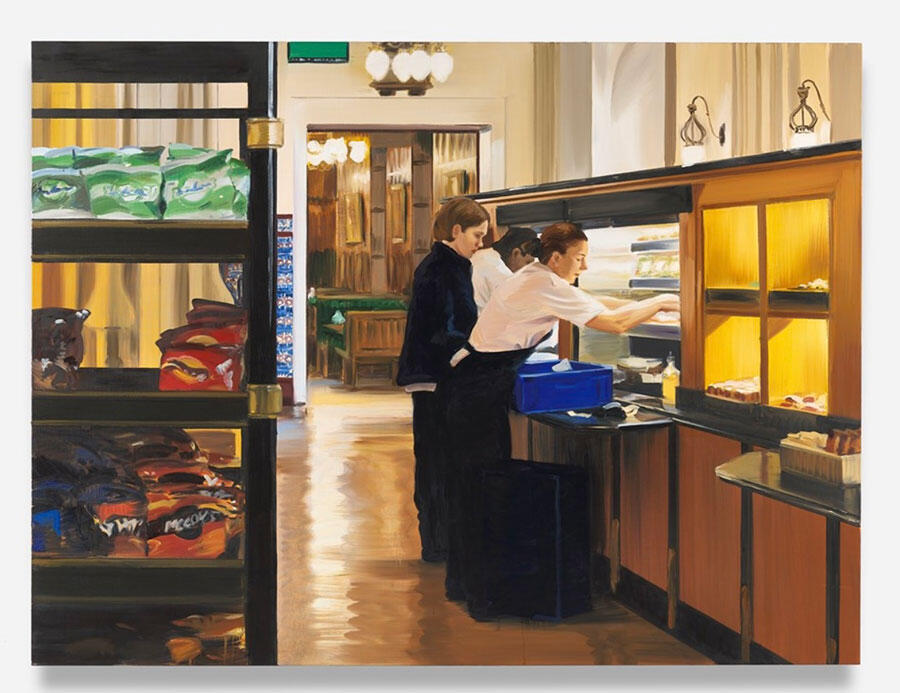
Caroline Walker’s cinematically lit painterly scenes of high-street shops, salons and restaurants in London introduce a late-capitalist Western counterpart. Her focus falls on gestures of labour – fetching food in Lunch Service II (2023), drying hair in Cut and Finish (2018) – rather than on individual faces, which remain largely abstracted. Often framed through windows, whose reflective surfaces become part of the composition – such as the floral stickers stretching across Glossing (2019) – these paintings reinforce a sense of urban voyeurism and alienation.
‘Za Pultem’ explores how images of women behind the counter circulate in collective memory and how easily they slip into myth. By critically restaging these figures while recognizing their nostalgic pull, the exhibition asks what desires and social fantasies they continue to generate – from socialist-era values of work, stability and familial cohesion to contemporary longings for past forms of community that feel more tactile and intimate. Ultimately, the show sharpens our view of the precarity and structural invisibility that continue to define service work today.
‘Za Pultem’ (Behind the Counter) is on view at Telegraph Gallery, Olomouc, until 19 February 2026
Main image: Paulina Olowska, Za Pultem (Behind the Counter), 2025, oil on canvas, 45 × 45 cm. Courtesy: the artist and Telegraph Gallery