

243 Luz, Margate, UK

Co-founded by Ed Leeson and Diego Ibarra in 2023, 243 Luz is a recent addition to the thriving art scene in Margate, a seaside town in Kent that’s home to an increasing number of art venues. The space itself is simple: a white cube that acts as a blank slate for experimentation. As Leeson puts it, ‘foremost is the idea that the artists we work with feel like they’re invited to push past the perceived limitations of a small space like ours.’
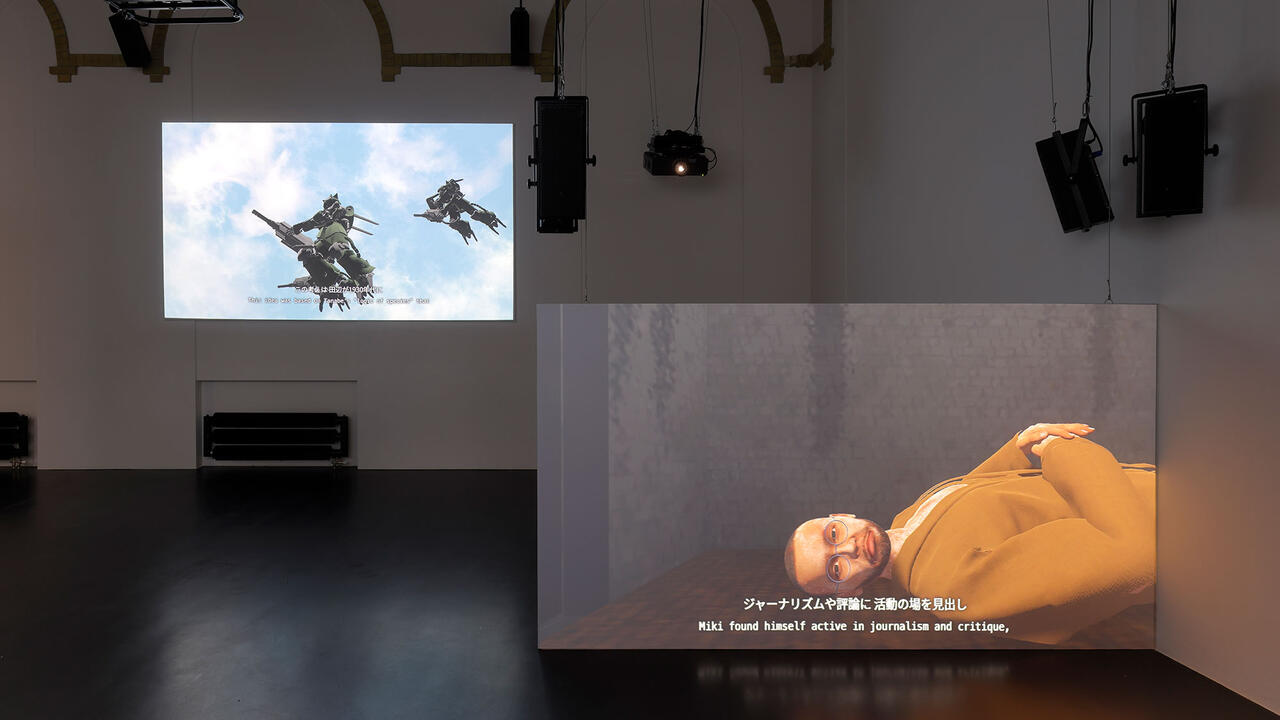
For Leeson, ‘fiction is quite central to the programme’ at 243 Luz, and there’s a sense of discovery as the gallery uses formal challenges to explore uncertain, slippery aspects of politics and culture. On the horizon is a Lizzy Deacon solo exhibition that aims to make a film using footage from an episode of a reality TV show on which the artist applied to be an extra, and a similarly theatrical work by Juliette Lena Hager, which explores the re-hanging of the Guernica tapestry at the UN headquarters in 2022.
Yehudi Hollander-Pappi, São Paulo, Brazil

Yehudi Hollander-Pappi opened in spring 2025 with a specific mission in mind: transparency. As Matheus Yehudi Hollander describes it, he and co-founders Monica Hollander and Sofia Pappi want to push against the old way of doing things – such as the ‘protectionism around information’ that defines many relationships between artists and dealers.
For the gallerists, ‘youth isn’t the point’ when it comes to the work the pair are drawn to, despite the gallery’s own young age. Their roster of nearly two dozen artists spans practices ranging from decadent painting to multidisciplinary fictional worlds inspired by video games. What drives the programme is a sense of intimacy, built through long-standing relationships with artists ‘who studied alongside us, who have spent the last ten years in our circle, whose studios we’ve visited, whose failures and breakthroughs we’ve witnessed’.
palace enterprise, Copenhagen, Denmark

Founded in 2021, off the back of what Gitte Skjødt Madsen describes as a wave of ‘amazing, active, and important artists’ returning to the city in the wake of seismic events like Brexit and the COVID-19 pandemic, Copenhagen’s palace enterprise aims to present work that’s ‘not so often visible here, especially in the commercial scene’.
With a space Madsen describes as ‘tiny’, palace enterprise uses its intimate scale to focus on a single sculpture, installation or film work at a time. These tend to be animated by thematic concerns around the politics of language; how one performs in physical versus digital space; or the existence of the body in biased or hostile spaces.
Alongside shows by some of the gallery’s nine core artists, the gallery is planning a group exhibition curated by frieze regular contributor Jeppe Ugelvig as well as solo shows by new voices as part of its 2026 programme.
PALAS, Sydney, Australia

For Tania Doropoulos and Matt Glenn, one of the most important aspects of PALAS is keeping the roster ‘small and focused’. Most of the artists represented by the gallery are mid-career and have long-standing relationships with its directors, who aim to offer ‘a different model of representation and gallery in Sydney’. This approach is animated by the idea of partnerships with other spaces – their 2024 group show ‘Breakdown’, for example, was a collaboration with Sadie Coles HQ and Herald St in London, Bridget Donahue in New York and Hannah Hoffman in Los Angeles, who showed their artists for the first time in Sydney. The goal was to ‘expand our exhibition offering to audiences here, while creating meaningful pathways for our partners to engage with audiences in this region’.
Looking ahead, Doropoulos and Glenn plan to stage a partnership exhibition with Tokyo’s Misako & Rosen, as well as present the debut solo show of the gallery’s first early career artist, Alexandra Peters, whose work occupies a space between sculpture and painting.
diez gallery, Amsterdam, the Netherlands

At first glance, the programme at diez might seem disparate. The spare minimalism of Jessica Wilson’s sculptures closed its 2024 programme, only for the gallery to return in the new year with the vibrant, furious political abundance of painter Sands Murray-Wassink. Founder Diego Diez embraces this contrast, noting that the gallery’s greatest strength is in the broad net it casts: what Diez calls an ‘obsession or deep love of art over taste or aesthetics’.
For Diez – a Spaniard who came to the Netherlands to study – the gallery is a continuation of the exhibitions he once organized in his living room while in art school almost a decade ago, ‘where the ambition was to make great shows and connect people’. This impulse drives diez into 2026, with the gallery offering space for several artists – including Flora Fritz, Ian Waelder and Alex Margo Arden – to have their first solo exhibitions in the Netherlands.
Ulrik, New York, USA

After meeting as curatorial fellows on the Whitney Independent Study Programme, Alex Fleming and Anya Komar began collaborating on one-off curatorial projects before founding Ulrik in 2021. Despite their many shared interests, the co-founders note that it’s ‘our differences [that] most impact our approach’. Fleming comes from a performance background, thinking about shows through narrative and documentation, while Komar, as a doctoral student in Art History at CUNY, emphasizes detail and close reading.
This focus on creating through difference also speaks to the intergenerational nature of Ulrik’s 2026 programme: an exhibition of Matthias Groebel’s watercolour pigment paintings alongside his chemical transfer works of the 1980s will be followed by the New York debuts of emerging artists Matthew Pang and Hansi Fuchs.
Heidi, Berlin, Germany / London, UK

Since its founding in 2021, Heidi’s openings have consistently featured a who’s who of the Berlin art world. In a commercial scene that is no longer as experimental as it once was, the gallery dares to represent artists who don’t just draw on different forms but smash them together with abandon, from the uncanny surrealism of Marnie Weber to the films and installations of Jordan Strafer.
Despite its success in the German capital, Heidi is upping sticks and moving to London in September 2026. For gallery founder Pauline Seguin, the city’s community of galleries ‘aligns with our artists’ practices and values’ – international, intergenerational and committed to bringing forms and ideas together in a dynamic conversation.