



Show Me Your Papers: Art in the UK’s Age of Digital ID
From Christian Boltanski to Hito Steyerl, artists have long made works that visualize the cost of reducing human life to an administrative form
From Christian Boltanski to Hito Steyerl, artists have long made works that visualize the cost of reducing human life to an administrative form

The UK is preparing for digital ID. The Labour government’s new Digital Identity and Attributes Trust Framework promises to make everyday life more efficient by regulating a national ‘digital wallet’ that will allow citizens to verify their identity online when applying for jobs, accessing benefits or crossing borders. To sell the policy, ministers describe the system as one of modern convenience – paperwork without the paper. But civil liberties groups such as Liberty and the Open Rights Group warn of an unspoken cost: surveillance, data retention and algorithmic discrimination.

The debate goes far beyond administrative reform. It cuts to a question that has haunted the modern state since its inception: what happens when identity is reduced to data? In her 1951 book The Origins of Totalitarianism, the political theorist Hannah Arendt described the condition as ‘bare life’ – mere biological existence stripped of political meaning, where lives can be arbitrarily decided and controlled by nameless figures within a state apparatus. The 20th century’s darkest events revealed how state systems of record-keeping could be weaponized. From the tattoos on Holocaust victims to the yellow stars of the Nazi regime, enforced visibility became a form of hyper-degradation.

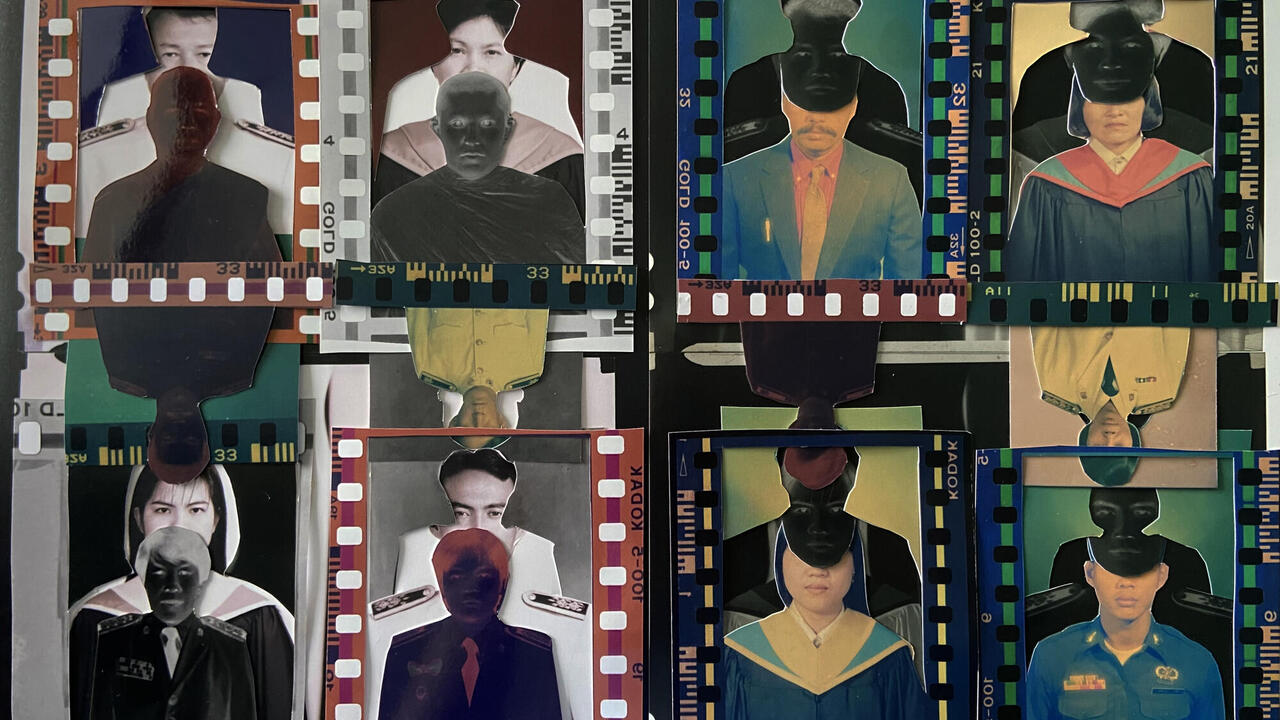
Artists such as Christian Boltanski have taken on this history directly. For his installations Les Archives de C.B., 1965–1988 (1989) and Personnes (2010), he worked with Le Relais, a French textile recycling cooperative, to transform bureaucratic materials – ID photographs, filing cabinets, numbered tags and labels, official clothing – into memorials, creating artworks of scale and austerity that confronted viewers with the residue of forgotten lives lost. Anselm Kiefer’s early works, layered with the motifs of ledgers, maps, catalogues and lists, confronted the same bureaucratic aesthetics of perceived guilt and classification.
If the analogue age made bureaucracy visible, the digital era conceals it in code. Identification now takes the form of facial recognition, biometric profiling and algorithmic sorting, processed through databases few can see or challenge.

But a wave of contemporary artists has conducted their own surveillance on these architectures of control. Hito Steyerl’s video How Not To Be Seen: A Fucking Didactic Educational .MOV File (2013) offers a satirical guide to disappearing in an age of visibility, exposing how surveillance systems depend on resolution: the ability to render a body as data via the pixel. In They Took the Faces from the Accused and the Dead … (2019), Trevor Paglen revealed how facial recognition datasets are built from millions of images scraped without consent from the internet. By exhibiting these images as photographic portraits, he reverses the logic of surveillance: what was meant to be unseen by humans becomes a gallery exhibition. Artists like Steyerl and Paglen translate the abstract politics of data into aesthetics. They make the hidden infrastructures of digital ID visible, tangible and open to question.
The stakes of this debate are particularly vivid in contemporary Britain, where bureaucratic visibility has already produced quantifiable harm. The Windrush scandal revealed how Black Britons, legally settled for decades, were rendered stateless by missing paperwork. The current government may have shelved the Rwanda deportation plan, but it has signalled it may expand its reliance on biometric screening and data-driven risk assessment to manage a migration system mired in a backlog crisis. These episodes expose the modern bureaucrat’s faith in ‘frictionless’ governance: the belief that identity can be verified through perfect information.

Yet the cultural record shows how unstable and exclusionary this belief can be. Artists have been quick to interrogate the fiction of perfect information by showing how bureaucratic systems misread, distort or erase the people they claim to render legible. Imran Perretta’s film the destructors (2019) combines performance and poetry to depict the racial profiling and suspicion faced by young Muslim men in Britain’s security and immigration apparatus, revealing how state systems meant to classify instead reproduce anxiety, opacity and harm. Richard Mosse’s three-channel video Incoming (2017) employed military-grade thermal cameras to depict asylum-seeking refugees arriving on European shores; the technology’s promise of neutral, total visibility collapses into imagery that reduces individuals to indistinct signs, underscoring how such systems produce abstraction rather than understanding. The resulting images flatten the human – born free and equal in dignity – into splotches of signal and heat.

The promise of a digital identity is convenience: one tap of an iPhone wallet to prove who we are. But streamlined access means streamlined control. As identification becomes frictionless, we risk producing an infrastructure of surveillance and exclusion that leaves little room for ambiguity or dissent. Art provides a counter-archive – a place where the individual can reassert their presence against the abstraction of administrative data. By foregrounding the messiness and interiority that bureaucratic systems cannot capture, these works show how people exceed the metrics used to classify them. They visualize the cost of reducing life to marks on paper, offering a language rooted in liberal ideas. Art reminds us that rights depend not on efficient systems but on the ability to contest how those systems see us – and to retain the freedom to remain partially illegible. As Britain edges towards digital ID, we should protect the right not to be seen. For life is anything but bare.
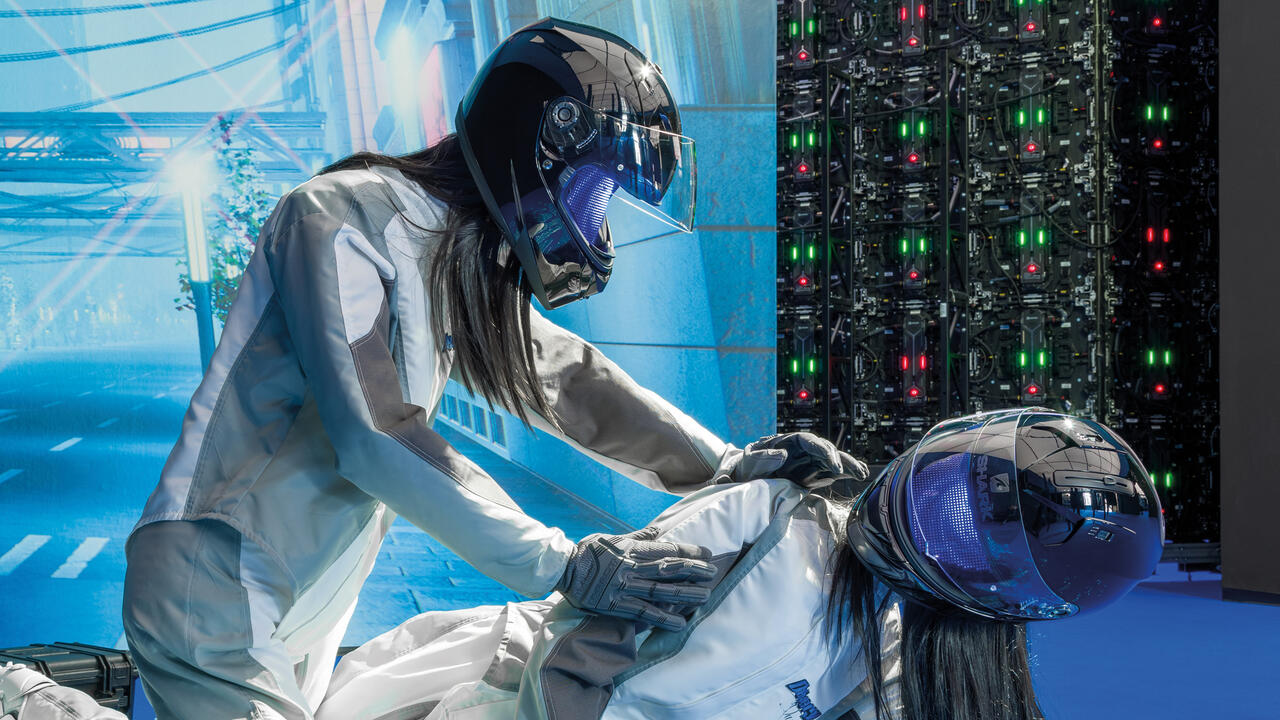
Main image: Richard Mosse, Incoming #85, 2014-7, digital c-print. Courtesy: the artist and Jack Shainman Gallery, New York © Richard Mosse