




Why Galleries Are Cranking Up the Bass on Sound System Culture
From Peter Doig to Nari Ward, Caribbean music culture continues to thrive in exhibition spaces without losing its social charge
From Peter Doig to Nari Ward, Caribbean music culture continues to thrive in exhibition spaces without losing its social charge
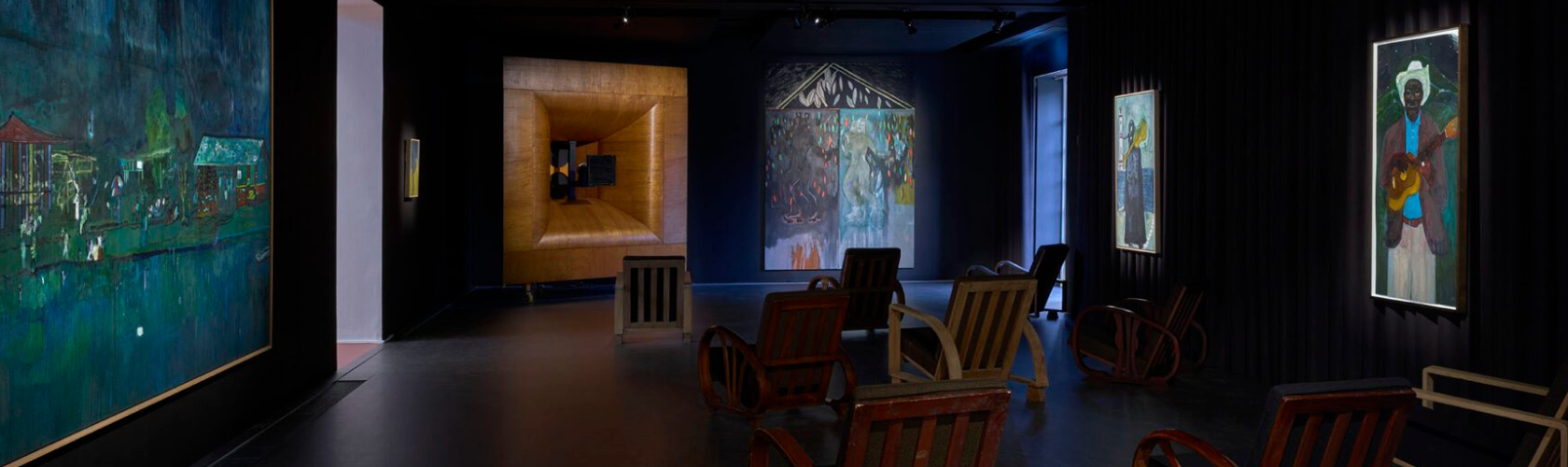
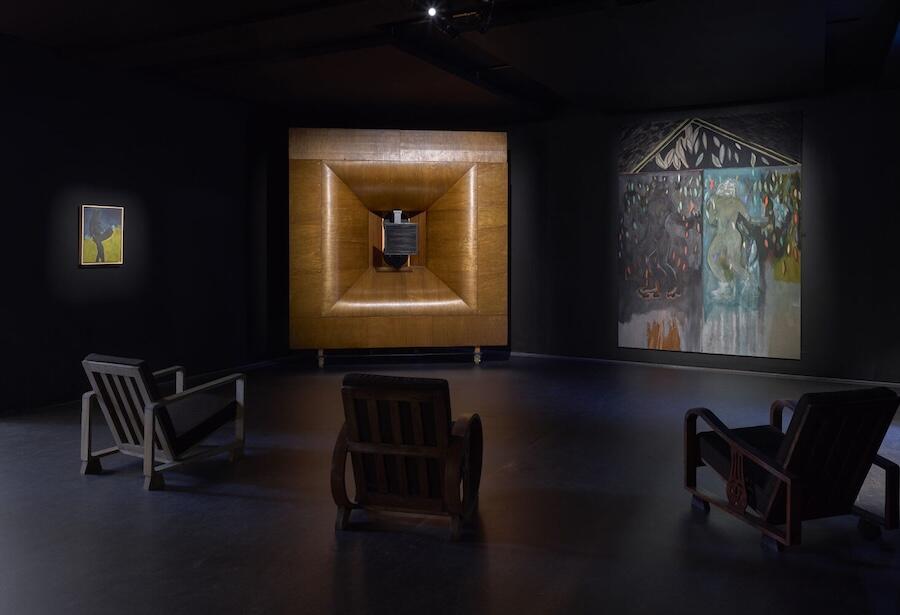
A gargantuan 1920s analogue speaker, salvaged from a derelict cinema in Wales, is suspended above the floor from a custom steel frame in the central gallery of London’s Serpentine South. This sonic focal point commands the visitor’s attention in Peter Doig’s exhibition ‘House of Music’ (2025–26): tunes pipe through its steely passages, filling the space with an enveloping resonance. Recovered and restored by collector Laurence Passera – Doig’s collaborator on the show – the sound system exemplifies a recent turn in exhibition-making towards showcasing music and its technical apparatus.
Emerging from the streets of Jamaica in the 1940s and ’50s, the sound system has found a new home within contemporary art spaces. Superficially, they may offer new aesthetic possibilities previously unexplored by such spaces or even play to recent nostalgia for analogue audio, but beneath this, the communal aspect of sound system culture matters far beyond its sonic impact.
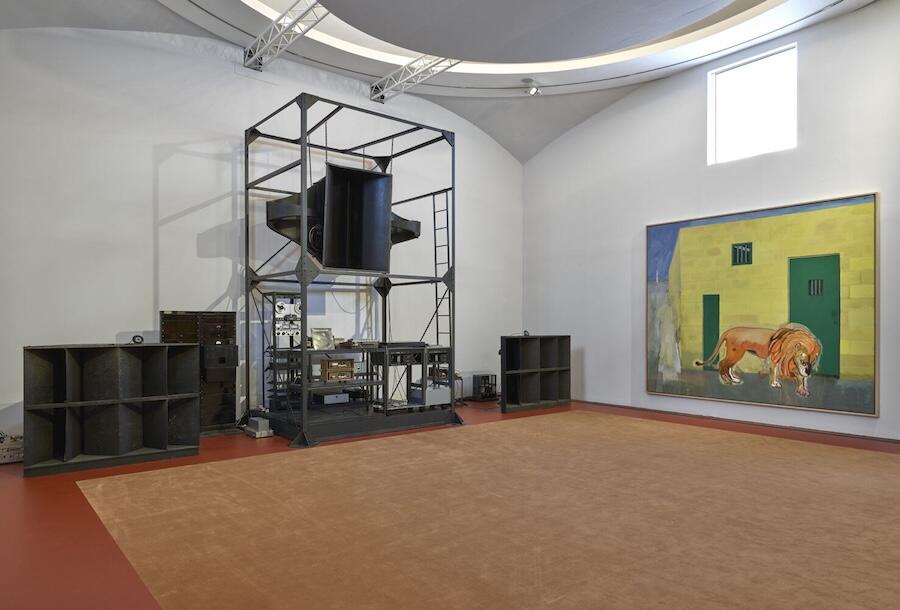
Assistant curator Alexa Chow takes requests from beneath the great sonic conch on the day I visit ‘House of Music’. I ask for Stan Getz and João Gilberto’s 1964 record, one of about thirty cassettes donated by David Lynch’s estate from the filmmaker’s personal music collection. Bossa nova rhythms float through to the adjacent east gallery where the flared wooden cone of a 1950s Klangfilm cinema speaker sits just shy of grazing the low ceiling. A smattering of bentwood armchairs positioned towards the installation defines the space’s use.
The music on constant rotation during the life of the exhibition gives Doig’s paintings a soundscape, enlivening the motion already present in works like Studiofilm and Roller Club (2025), depicting two skaters dancing under disco lights. The figures seem to breathe; the colours loosen. With its three massive vintage speakers and roster of guest DJs, the show stages high-fidelity sound as one of its key components – a trend echoed in recent attempts by exhibition spaces around the world to choreograph attention through audio. For example, the group exhibition ‘Feel the Sound’, held last summer at the Barbican, London, staged listening as an embodied spatial event, focusing more on sensory experience than on the hardware by which sound is delivered. Doig’s show, however, masterfully distils this crucial meeting of technical infrastructure and shared attention.
Built from salvaged parts and repurposed materials, the sound system originally functioned as a mobile, improvised architecture and means of communication. As the DJ Big Youth said in the 2011 BBC documentary Reggae Britannia: ‘The sound system was our BBC and ITV and CNN […] Through the sound system we could communicate with the common people on the street.’ It became a communal broadcast network, a site where engineering, pleasure and politics intermingled. Sound system culture was soon brought by members of the Windrush generation to Britain, where it became central to both celebrations like London’s Notting Hill Carnival and street demonstrations – a history foregrounded by the British Library’s exhibition ‘Beyond the Bassline’ (2024), which framed the sound system not as a subculture but as foundational to Black British life.
As the designer behind Friendly Pressure sound systems, Shivas Howard Brown, tells me in a recent conversation, ‘the post-Windrush sound system identity is one rooted in engineering and experimentation.’ Howard Brown recalls his uncle building his first drivers out of a flat-pack wardrobe. Sound systems are created with people in mind; the speakers are arranged so that the sound reaches everyone equally, whether at the back of the room or up front. ‘It’s designed as the most communal device that there could be,’ he says.
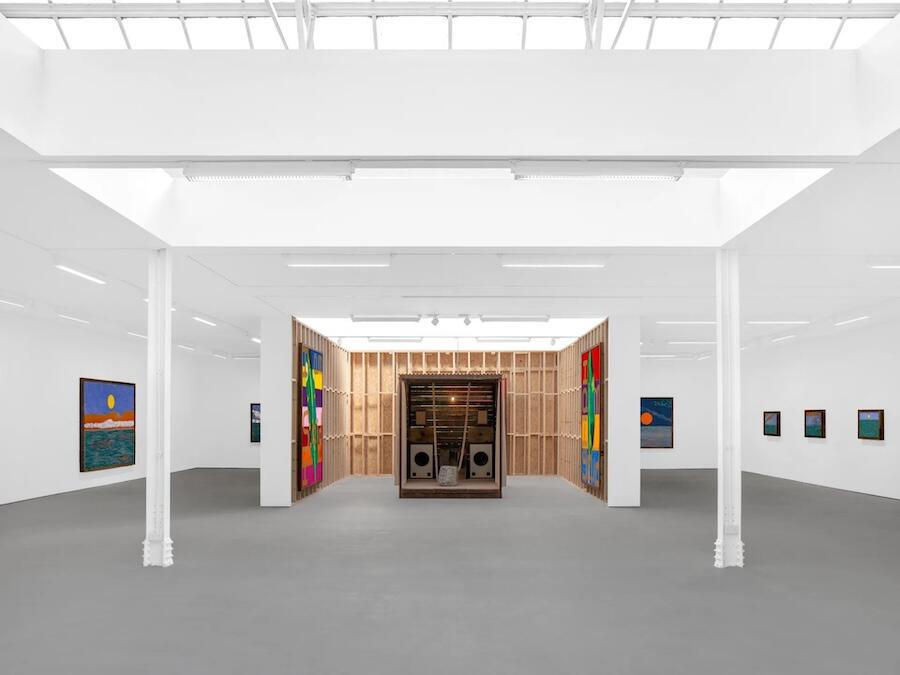
This intentional communality was what drew the artist Alvaro Barrington to Howard Brown’s work last year. When Barrington spotted a pair of Howard Brown’s early prototypes – which had already been used at many parties and events – stacked in the corner of the Friendly Pressure studio, he wanted to incorporate their sense of history and participation into his exhibition ‘Back Home / I am … I Said’ (2025) at Sadie Coles HQ in London, where the two eventually collaborated.
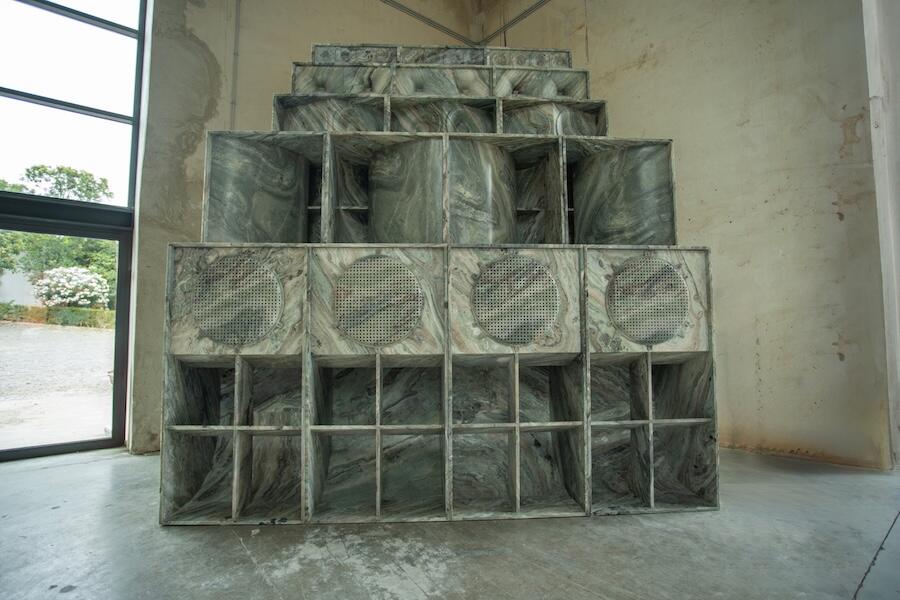
‘Caribbean identity is one of protest and communion,’ Howard Brown reflects, noting how the foundations of sound system culture, once imported into the UK, spilled into wider social and cultural contexts. This history raises a critical question: what happens when a vehicle designed for collectivism and bodily proximity is repositioned within a space built for retrospection and distance? Artists like Nari Ward have approached this contention obliquely. At the 14th Taipei Biennial, he presented SOUND SYSTEM (2025), a towering structure carved from reptilian-green marble. Fidelity is not central – the marble speakers are inert – but their monumentality reflects the collective power needed for its creation. Ward’s project for the 36th São Paulo Biennial, Spring Seed (2025), included a working sound system but this time constructed from bed springs, rusting iron and Blue Mountain coffee grounds. By using discarded household items and remnants of a luxury Jamaican export, Ward consecrates the sound system as a site of cultural memory. In both these works, Ward shifts our focus from what can be heard to the sound systems as political assemblage – a DIY practice that generates devices capable of gathering publics beyond institutional authority, thereby reclaiming their capacity for collective engagement in a gallery.
Hi-fi culture, Howard Brown notes, often privileges an aggressively ‘masculine’ and highly scientific aesthetic: speakers designed for an engineer’s ear and eye. His practice pushes against this, insisting that sound systems can exist both within the warmth of a living room and in a white-cube gallery without surrendering their social charge. Other artists have also leaned into this design-forward translation. Virgil Abloh’s installation 12-Inch Voices (2019), displayed at London’s 180 Studios for the group exhibition ‘Reverb’ in 2024–25, wrapped the mechanics of the sound system in bubblegum-pink foam, softening the industrial language of audio technology.
‘I think everyone should have some kind of entry into understanding why these vibrations matter,’ Howard Brown says. ‘These speakers are there to play musicians’ work to listeners. And that’s a dying art.’ As Doig’s exhibition reveals, the joy of intentional listening is found not just in the quality of the sound but in the ritual around it: the request, the wait, the shared appreciation. In an age marked by infinite choice and on-demand passivity, the sound system offers an alternative: limitation, intention, discovery. A selector rather than an algorithm, transforming the very space the listener inhabits.
Peter Doig’s ‘House of Music’ is on view at Serpentine Galleries, London until 8 February 2026
Main image: Peter Doig, ‘House of Music’, 2025–26, exhibition view. Courtesy: the artist and Serpentine; photograph: Prudence Cuming Associates