



The Ten Best Shows in the Americas of 2025
From a major Jack Whitten retrospective at MoMA to a storytelling-focused SITE Santa Fe International, these are this year’s standout exhibitions
From a major Jack Whitten retrospective at MoMA to a storytelling-focused SITE Santa Fe International, these are this year’s standout exhibitions

Bertolt Brecht’s adage about singing in dark times hovers around the edges of this list of great shows in a distinctly grim year. At The Brick and the Museum of Contemporary Art, Los Angeles, the long-awaited ‘MONUMENTS’ foregrounded ongoing debates over the fate of Confederate statues; Nicole Eisenman’s show at 52 Walker, New York, reckoned with some of the thorny conditions that artists face today; the first major institutional survey devoted to Wafaa Bilal, at the Museum of Contemporary Art, Chicago, skewered the violences of neocolonialism; and a solo presentation of work by Carl Cheng at the Institute of Contemporary Art, Philadelphia, cast a gimlet eye on the complexities of the anthropocene. In no particular order, here are some of the standout exhibitions of 2025.
Jack Whitten | Museum of Modern Art, New York

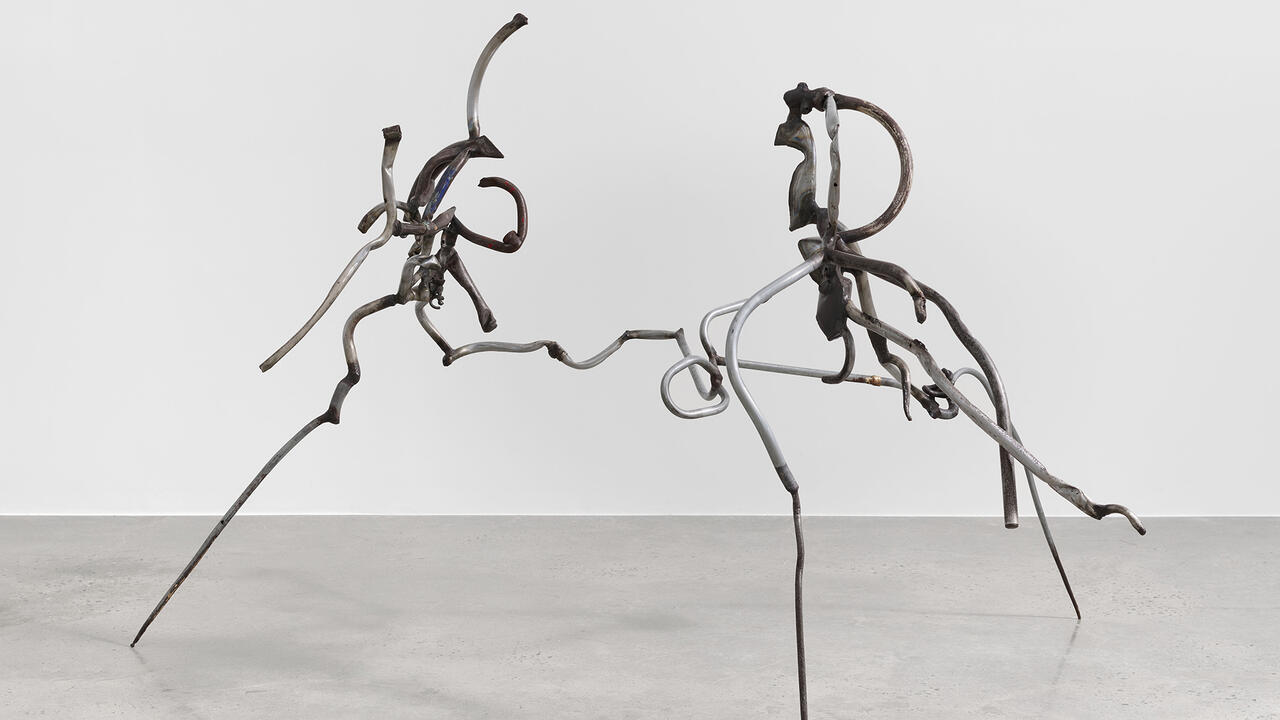
A restless innovator, Jack Whitten spent six decades making work as delicately and precisely attuned to social and technological contexts as to its own aesthetic frequencies. His robust MoMA retrospective featured some 180 examples spanning his prodigious practice: from the toner works on paper he created while in residence at Xerox Corporation, to acrylic tesserae homages to figures including James Baldwin and W. E. B. Du Bois, to teetering sculptures incorporating e-waste. Some of the idiosyncratic artistic tools he used, like a 12-foot-long rake he called ‘the developer’, were also on view. Paintings here cast their own shadows: due less to their slabbed, fragmented and raked surfaces than to the sheer magnitude of their presence.
‘MONUMENTS’ | The Brick and the Museum of Contemporary Art, Los Angeles

A show some eight years in the making, ‘MONUMENTS’ meets the moment. Co-curated by The Brick’s director Hamza Walker, senior curator Bennett Simpson of the Museum of Contemporary Art, Los Angeles, and artist Kara Walker, the exhibition was conceived amid racial justice protests in the US, when Confederate monuments, seen by many as altars to racist ideologies, were vandalized, toppled or removed from public view. The curators not only secured decommissioned monuments for display, but also presented contemporary artworks that responded to the toppled monument phenomenon, perhaps most notably Kara Walker’s Unmanned Drone (2023). Within a week of the show opening, a Confederate monument removed during the 2020 Black Lives Matter protests was reinstalled in Washington, D.C. in accordance with an executive order by US President Donald Trump. ‘MONUMENTS’ runs until 3 May 2026.
Wafaa Bilal | Museum of Contemporary Art, Chicago
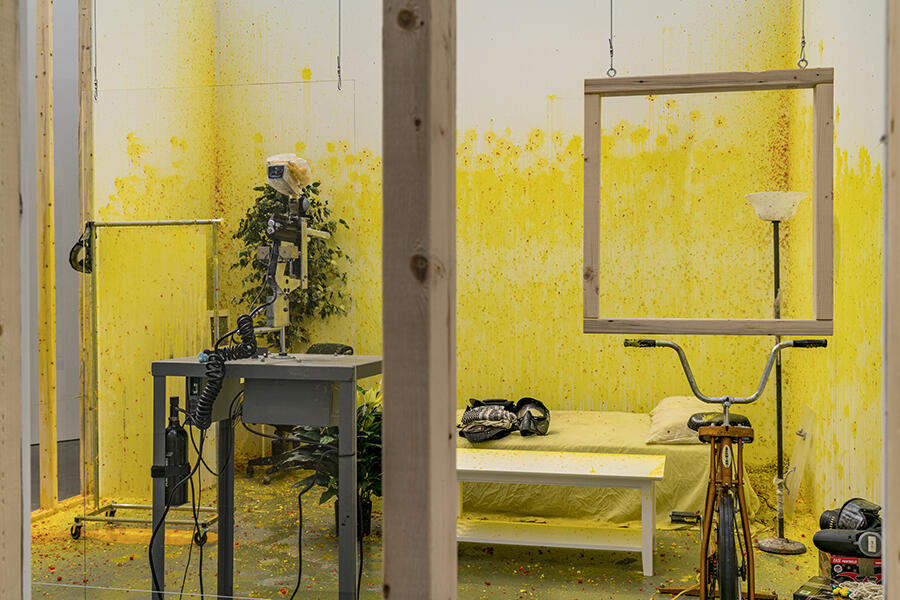
Iraqi American artist Wafaa Bilal’s first major institutional survey, ‘Indulge Me’, was an intentionally spare show; curators Bana Kattan and Iris Colburn ceded space to a few choice works involving performative and participatory elements. Visitors could play the hacked video game Virtual Jihadi (2008) in the exhibition’s ersatz internet café, or take in a thoughtful reconstruction of Bilal’s heartbreaking Domestic Tension (2007), a monthlong performance in which internet denizens acted on their anti-Arab sentiment by remotely firing a paintball gun at him. Writing for frieze, Ravi Ghosh highlighted that the continued relevance of Bilal’s work is ‘a testament to the cyclical nature of post-imperial history’ as well as the artist’s ‘formidable skill as a creative commentator’.
Laura Owens | Matthew Marks Gallery, New York
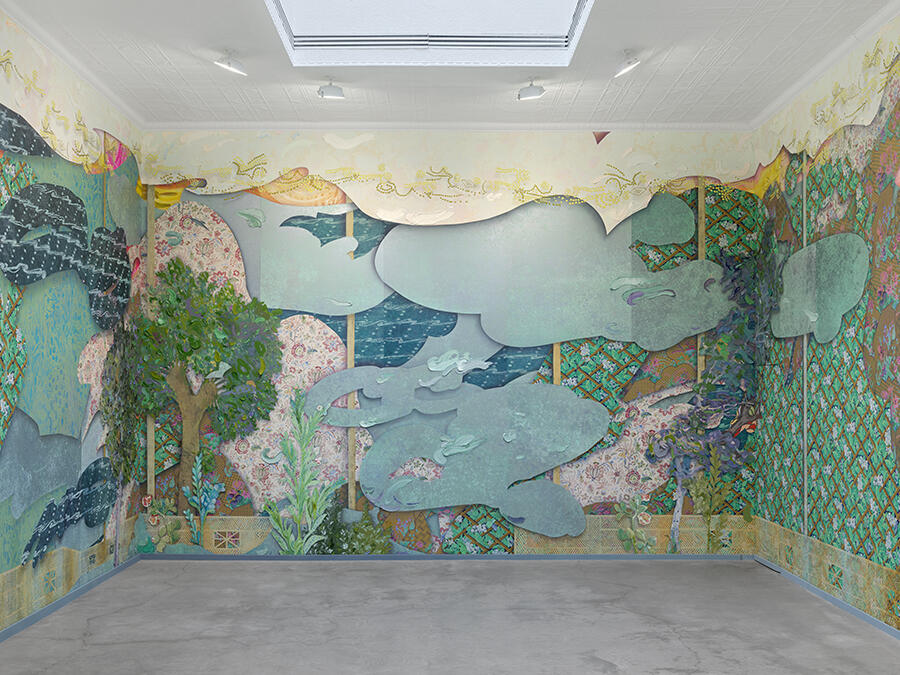
For her first New York City solo show in eight years, the formidable Laura Owens did not disappoint. Interweaving personal ephemera with coded references, hers was a sleight-of-hand exhibition where kitschy maximalism performed a kind of magic. A door cut into a riotously patterned, floor-to-ceiling, trompe l’oeil painting granted access to a cramped room, where videotaped crows voiced a conversation between Owens and her child; a press release on a desk, when touched, prompted a drawer to open to reveal an artist’s book within. There’s a lot to admire about a show that keeps its secrets by laying it all out on the table.
Carl Cheng | Institute of Contemporary Art, Philadelphia
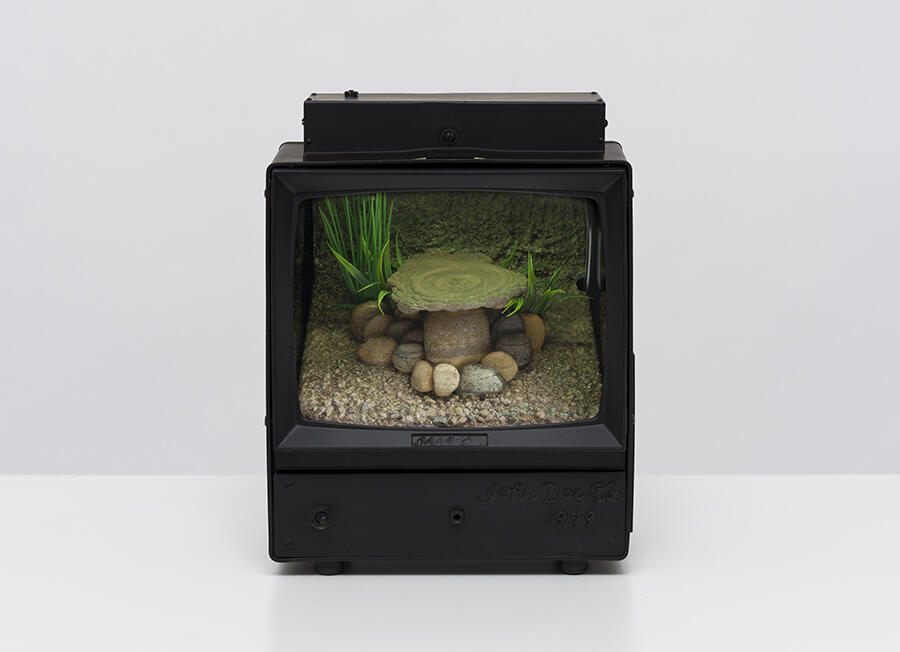
Since the 1960s, Carl Cheng’s art has countered the wilful misconception that technology is divorced from earthly matters. His work not only probes the impact of human extractivism on the planet (I was moved, almost to tears, by his ephemeral land art for eroding beaches), but also characterizes natural processes as technologies in their own right. The questions he has long posed in his work about materiality, industry and ecology resonate with much art being made today; as I wrote in my review of ‘Nature Never Loses’, which travelled to the ICA Philadelphia from The Contemporary Austin, ‘What we call foresight often comes from the hard work of attending to, and articulating, the world around you in the present.’ It was a pleasure to see Cheng get his due with this travelling retrospective (now on view at Museum Tinguely) concurrently with his inclusion in ‘Made in L.A.’ at the Hammer Museum.
Lucas Arruda | Mendes Wood DM, São Paulo
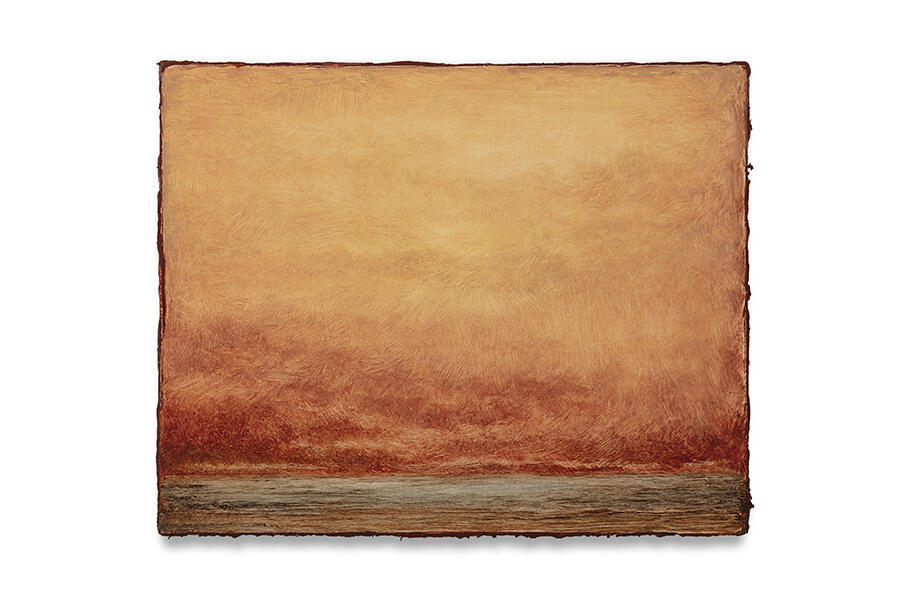
Lucas Arruda’s atmospheric paintings turn thoughts into monostichs. ‘Eclipse’ at Mendes Wood DM in São Paulo showcased 25 of the Brazilian artist’s new and recent canvases, the bulk of which were intimately scaled and titled after the late Brazilian poet João Cabral de Melo Neto’s notion of a ‘deserto-modelo’ (model desert). With their tremulous horizon lines, wet blue-grey sfumato, soft russet clouds and friable jungles, these paintings treat landscape as afterimage, prototype, fantasy or maybe just something that catches the light. The rhythmically repetitive works seem wise to landscape painting as a political project but more invested in it as a phenomenological one.
‘Once Within a Time’ | SITE Santa Fe
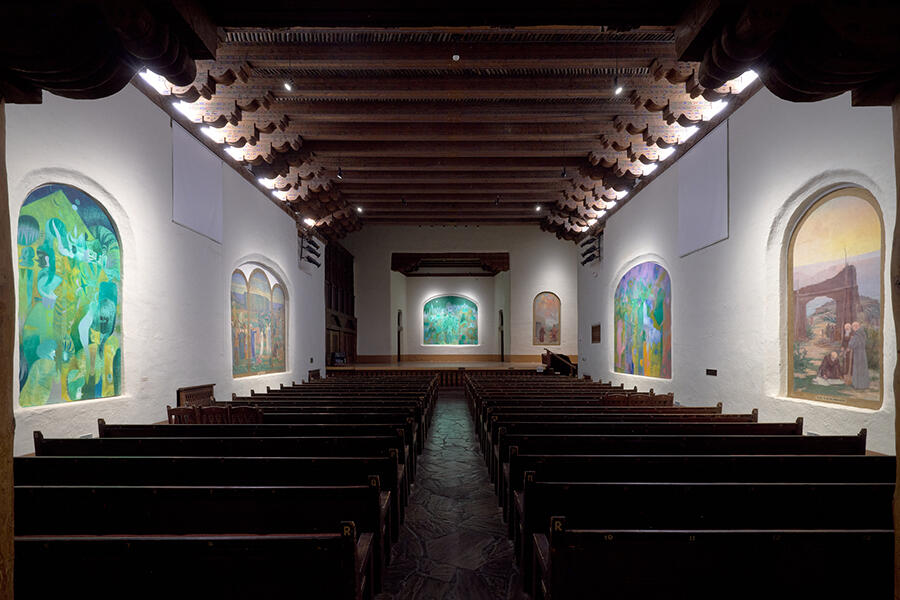
In a review for frieze, Mari Carmen Barrios Giordano lauded the twelfth edition of the SITE Santa Fe International as ‘a show of astounding clarity and focus’, despite its sprawling size: some 350 works by 71 historic and contemporary artists were spread across 14 venues. Biennials tend to be judged in part on the extent of their engagement with their contexts; with ‘Once Within a Time’, seasoned curator Cecilia Alemani focused on local stories. Titled after the eponymous film by Sante Fe-based director Godfrey Reggio, the show built on Reggio’s themes of apocalypse and narrative collapse, while highlighting a mix of fictional and real ‘figures of interest’ from the region, from writer Willa Cather to healer Francis Schlatter. SITE Santa Fe runs until 12 January 2026.
Lucy Raven | Vancouver Art Gallery and The Power Plant Contemporary Art Gallery, Toronto
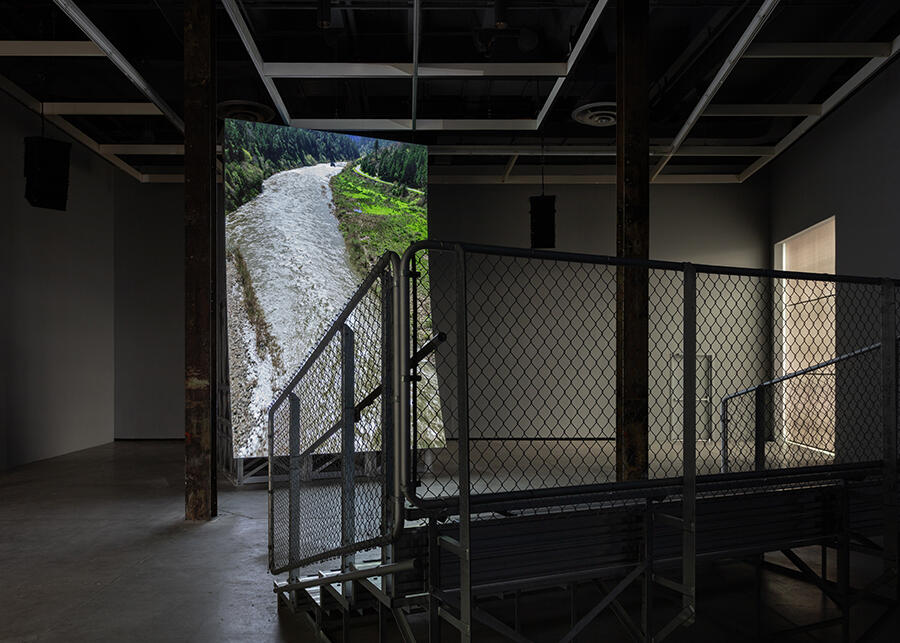
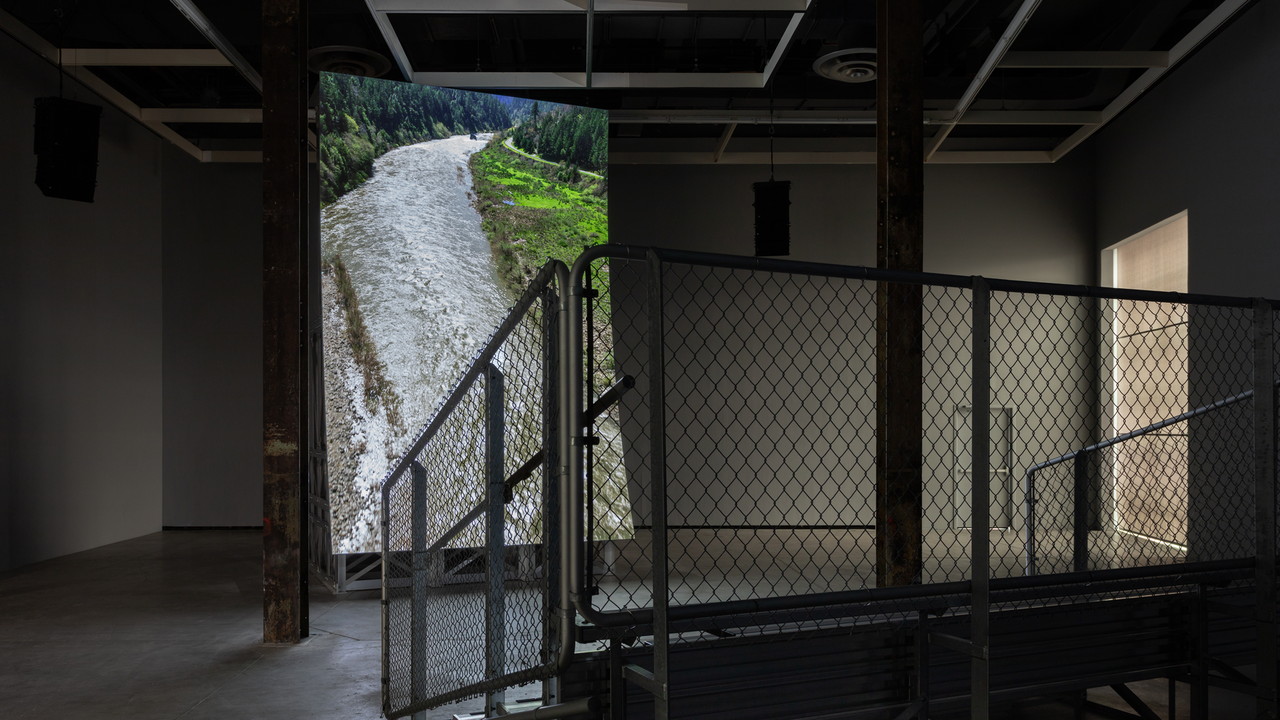
In 2024, the US completed one of the biggest dam removal projects in the nation’s history to restore the Klamath River: a response to tireless advocacy from Klamath, Karuk and Yurok tribes, as well as environmentalist groups. Lucy Raven’s new video Murderers Bar (2025), which travelled from the Vancouver Art Gallery to The Power Plant Contemporary Art Gallery in Toronto, captures Copco Number 1 Dam mid-burst – continuing the artist’s exploration of the (very much ongoing) material and ideological reshaping of landscape in the American West. A portrait of a river that doubles as a document of a historic event, the work wrestles with quandaries like those posed by Akiva Blander in his frieze review: ‘Is the demolition of a dam not also the composition of a new landscape?’ ‘Murderers Bar’ runs until 22 March 2026 at The Power Plant Contemporary Art Gallery, Toronto
Nicole Eisenman | 52 Walker, New York
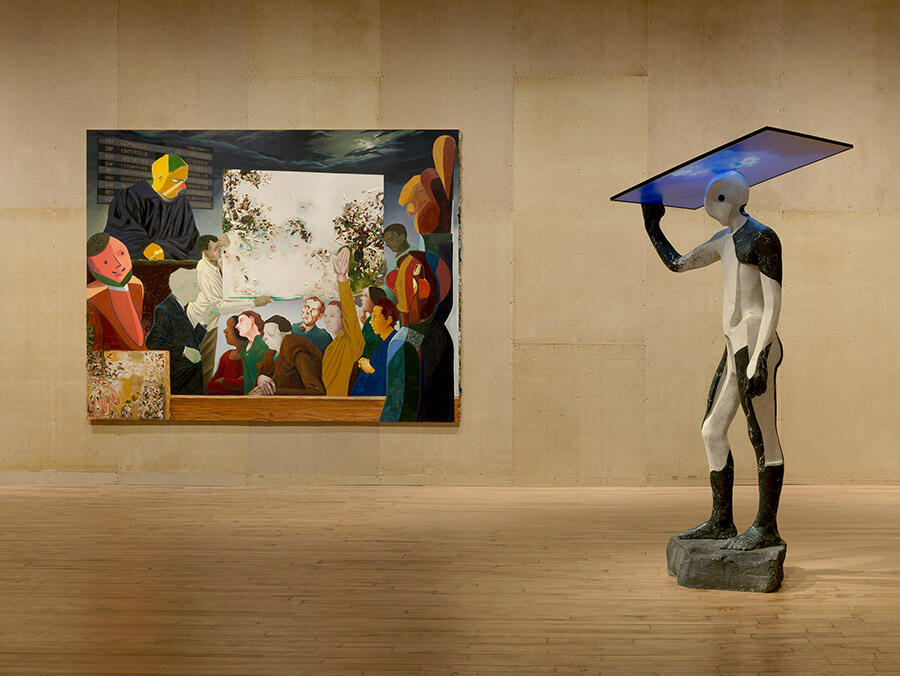
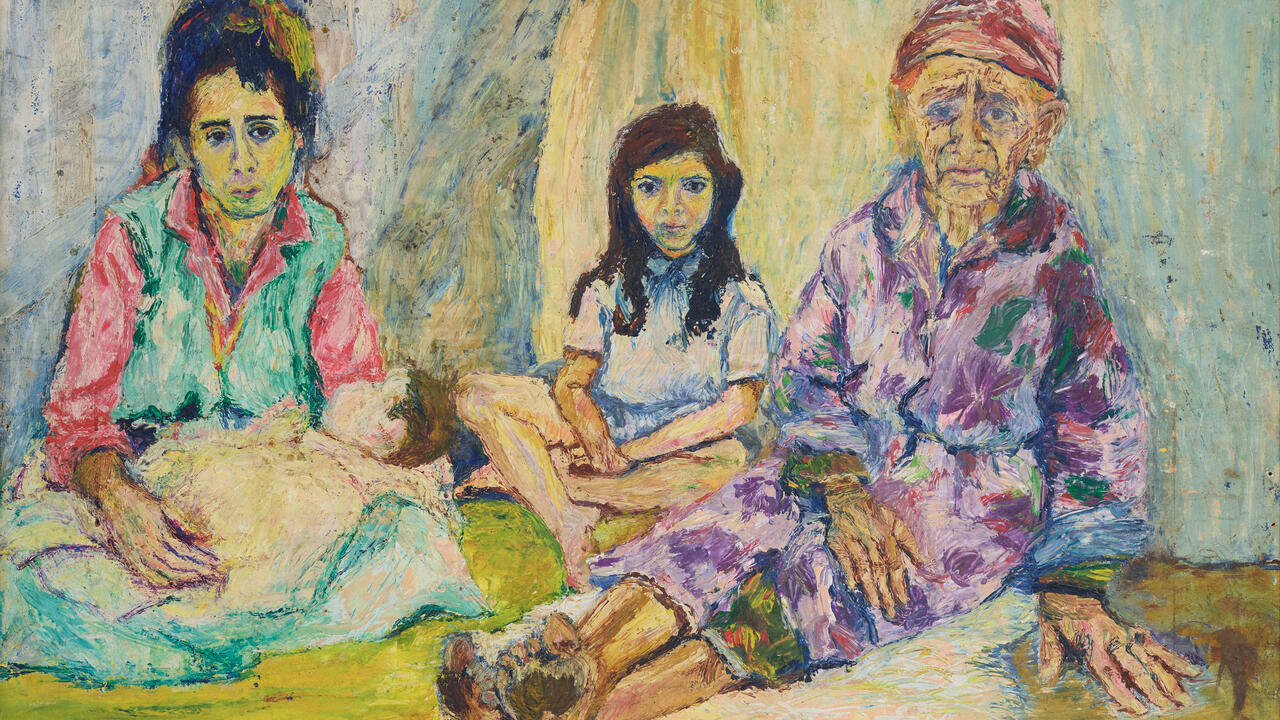
In Nicole Eisenman’s painting The Auction (2025), bidders at an art sale are presided over by a judge: a stand-in for a market that dictates value and reduces art to financial speculation. There’s an implicit violence to the scene, stoked by the presence of a pig-headed German soldier (a reference to the 1920 First International Dada Fair) in the nearby canvas Archangel (The Visitors) (2024). Elsewhere in the gallery, oversize onlookers sculpted from scagliola (a decorative composite that regularly featured in Medici family commissions) bear screens that play, among other content, AI-generated imagery (There I Was, 2025). ‘STY’ asks how one makes art within, but also against and despite, various dehumanizing systems – and alludes to pressures faced by artists today who express political views not shared by their patrons. ‘STY’ runs until 10 January 2026.
Derek Fordjour | David Kordansky Gallery, Los Angeles
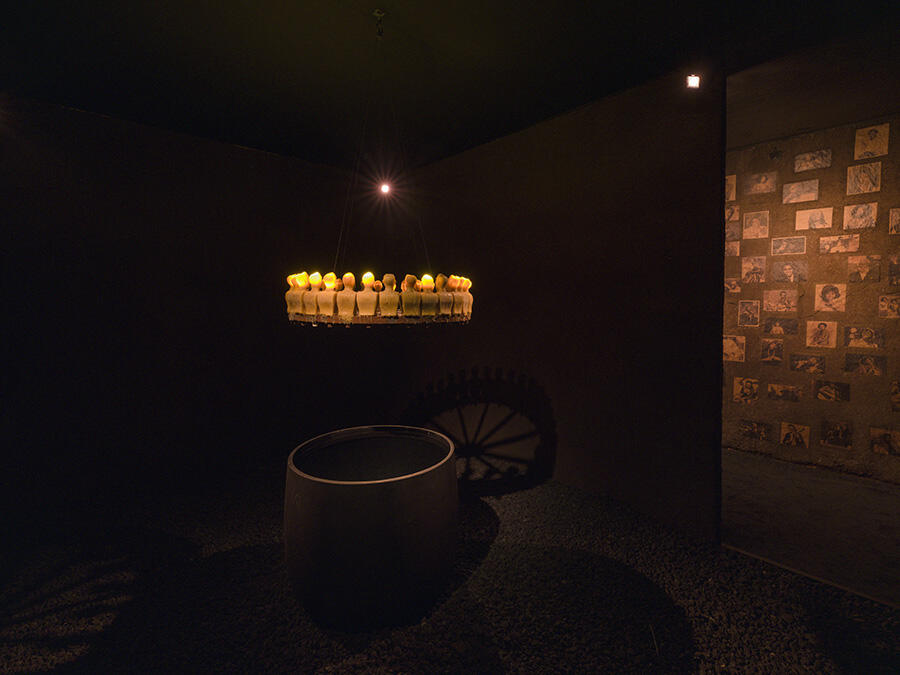
Derek Fordjour’s evenings-only exhibition ‘Nightsong’ was a beautiful gesture in a regressive moment. The show paid homage to legacies of Black music in the US: honouring those who have made it, danced to it, loved it, preserved it and passed it on. Bringing together work in media as varied as sculpture, painting, video and performance, the dimly lit show featured a four-hour soundscape and a forested exhibition design – made with architect Kulapat Yantrasast and design studio WHY – evoking ‘hush harbours’, or secret meeting places frequented by enslaved Black Americans. ‘Nightsong’ was collaborative in spirit and in practice, from Fordjour’s painted ‘covers’ of artworks that depict musicians by figures like Jacob Lawrence and Romare Bearden, to a video installation made with Kya Lou that features some 6,000 archival clips.
Main image: Nicole Eisenman, ‘STY’, 2025–6, exhibition view. Courtesy: 52 Walker, New York