




Oulu, European Capital of Culture, Puts Northern Identity in the Spotlight
Just outside the Arctic Circle, the Finnish city has launched a year-long programme exploring climate change and Sámi culture. Programme Director Samu Forsblom discusses its aims
Just outside the Arctic Circle, the Finnish city has launched a year-long programme exploring climate change and Sámi culture. Programme Director Samu Forsblom discusses its aims
Sean Burns The first thing I wanted to ask was about the overarching vision for the programme and what some of the key objectives are.
Samu Forsblom When we embarked on this journey, we wanted to identify the central issues, dreams and challenges for the European Capital of Culture 2026 by speaking to a wide range of people. We asked ourselves: what change do we want to achieve through the programme? European Capitals of Culture (ECOC) are about more than being large, international, year-long arts festivals. Instead, they aim to transform cities through creativity, arts and culture by identifying key challenges and setting long-term goals. In this process, we established our main theme: Cultural Climate Change. It’s about developing ideas around the most northerly parts of Europe, trying to make the region inspiring in a national and international context.
SB Could you talk us through some of the more specific ideas and themes that emerge under the Cultural Climate Change umbrella?
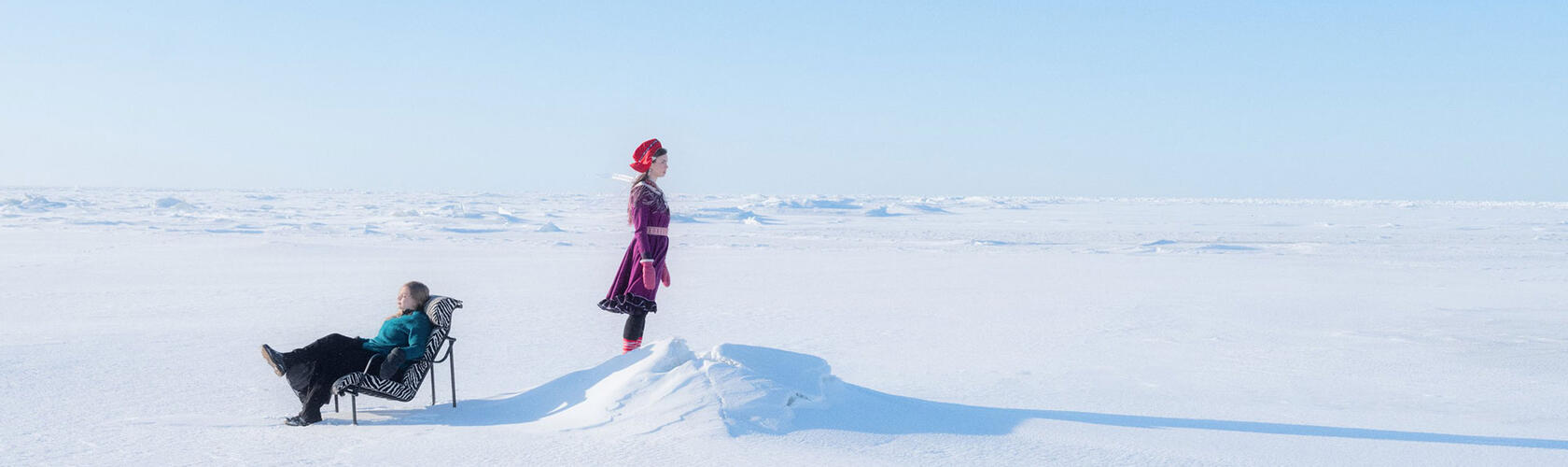
SF Over the course of the year, you’ll see different thematic seasons focusing on Arctic and northern topics. The first, for example, is called ‘Brave Hinterland’ and includes programming related to Sámi culture. The Sámi are the only Indigenous people recognized at European Union level. This season includes our premier opera, Ovllá (2025) by Siri Broch Johansen/Juho-Sire, which explores Sámi history and future, as well as the tensions between the Sámi people and the Finnish state.
We also have a major contemporary exhibition on Sámi themes at the Oulu Art Museum, ‘Eanangiella – Voice of the Land’. Over recent decades, many people from Sápmi – the Sámi name for Lapland – have moved to Oulu, making it the largest Sámi population centre in Finland. The Giellagas Institute at the University of Oulu also offers a strong programme in Sámi culture and language. This has largely gone unrecognized in the city, and we feel it’s important to strengthen Oulu’s connection with Sámi culture.
SB Can you also tell me about the Frozen People festival?
SF Frozen People is a leading electronic music festival created by young people from our city, held on the frozen sea in the Bothnian Bay. The event has already attracted international media attention and interest from a wide range of groups, as hosting a festival on the iced-over waters of the bay is truly unique. It also carries a powerful message about climate change: each year, there’s uncertainty about whether the sea ice will form at all. If the festival can still take place on the ice, we’re in a relatively fortunate position – but it also serves as a reminder that action is needed.
In fact, we have many events centred around snow and ice, including SnowFest, an ice-sculpting festival. We also have the Polar Bear Pitching festival, which is a wild event: participants go into an ice hole and pitch their business ideas to a panel of ‘sharks’ who decide whether to invest or not. The summertime season is titled ‘Wild City’. It focuses on connecting art with nature and engaging with local communities. We want to reach villages across our region, not just the city’s inhabitants. Altogether, there are 39 partner municipalities within the project area. This is the time when we want people to go out, celebrate together, share meals and explore the different hiking trails, paths and small villages. As summer arrives in Finland, people really embrace it and let loose.
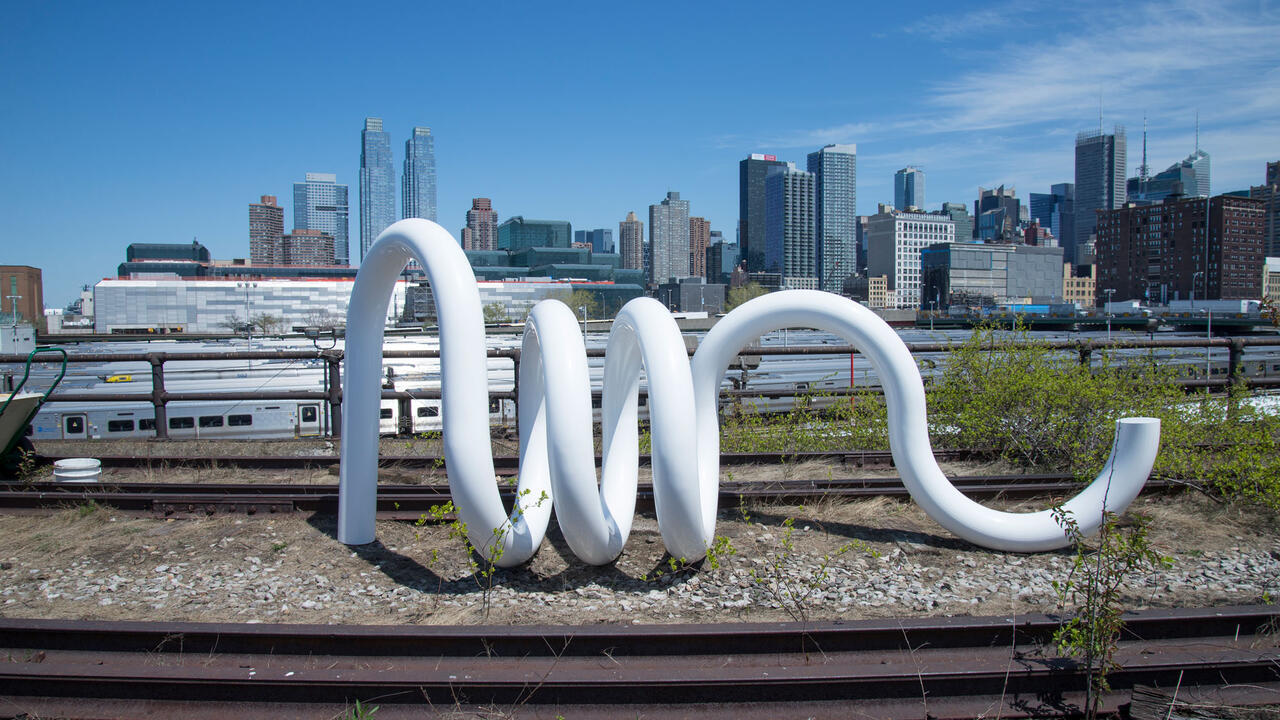
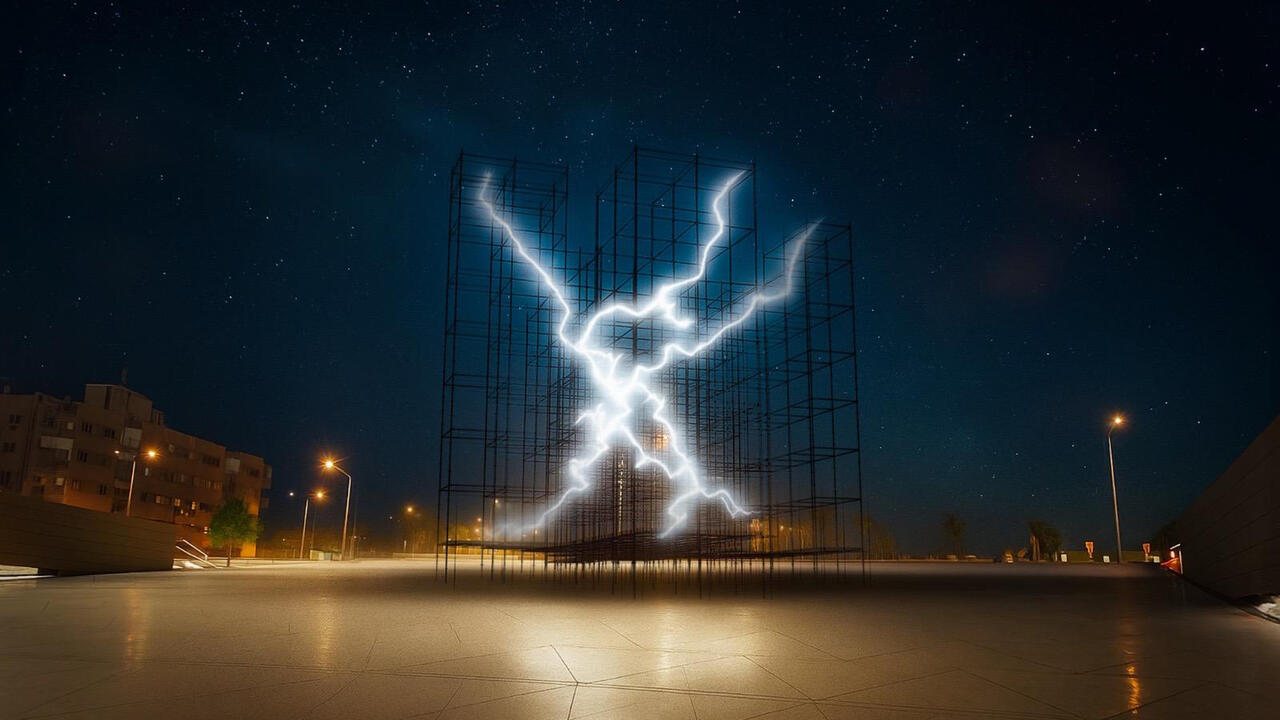
One of the highlights of the year will be the Climate Clock public art trail, which will feature seven site-specific artworks, including pieces by Rana Begum and SUPERFLEX. Participating artists are collaborating with leading researchers in the field of climate studies. Takahiro Iwasaki is working with snow hydrologist Pertti Ala-aho, a professor at the University of Oulu, who studies how ice and snow are changing because of climate effects.
With this European City of Culture, we want to put Oulu more firmly on the map.
SB I’m interested in the programming related to food culture and the challenges of growing in such cold conditions.
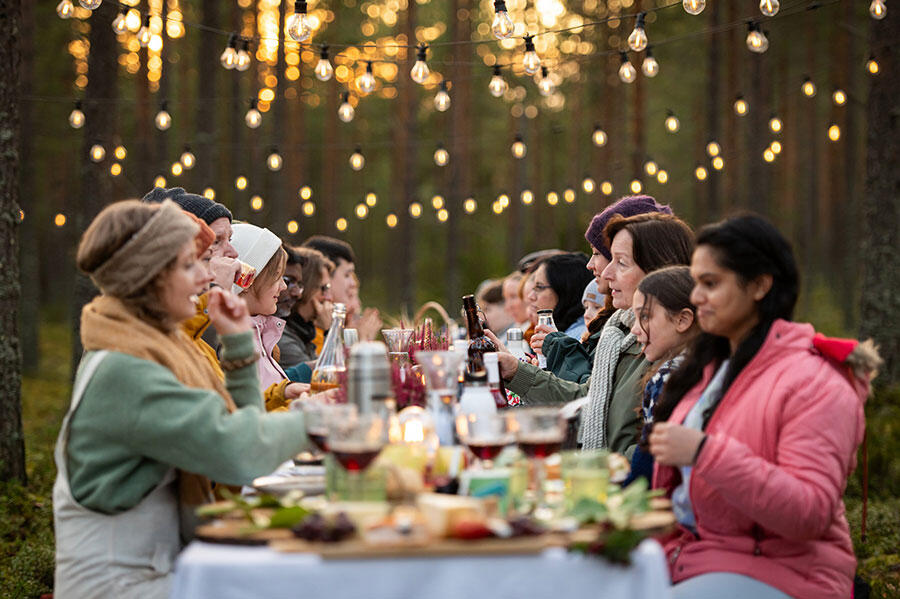
SF Food culture plays a big role in the Finnish summertime. We have a programme strand called Arctic Food Lab. Our very distinct seasons make growing vegetables and other ingredients a real challenge, as the period when you can harvest from the ground is very limited. Changes in light and temperature also have a big impact on what can be grown. Arctic Food Lab is a network of over 100 food producers, restaurants and food events, and we’re working to strengthen the Arctic food brand. The summer will culminate in a kilometre-long dining table in the city centre, where we’ll invite everyone to come and taste Arctic cuisine.
SB It would be remiss of me not to mention the Air Guitar World Championships.
SF Yes – one of the crazy events we host here. This year, it will be a very special edition: a three-night spectacular that will also feature the air guitar competition. We’re building the stage on the sea.
SB And the autumn part of the programme has a technology slant.
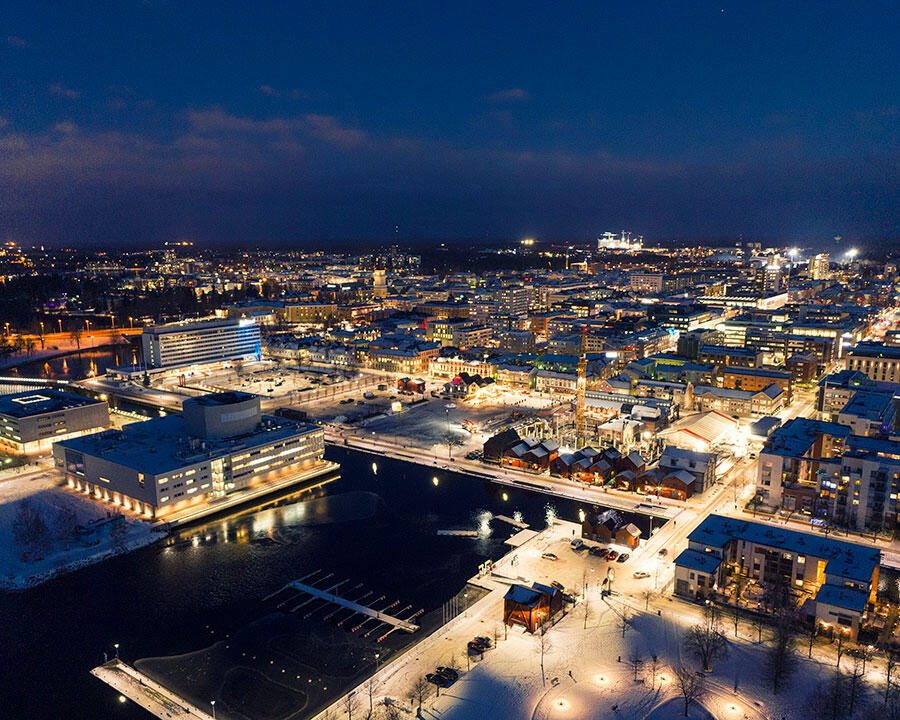
SF When we move into the autumn period, titled ‘Cool Contrasts’, the artistic vision is very much focused on art and technology. Oulu was selected as part of the UNESCO Creative Cities Network in the Media Arts category, and we’re now concentrating on developing our city into a major arts and technology hub in the northernmost part of Europe.
We have a wide range of exhibitions, but the main event is the ten-day Lumo Art & Tech festival in November. This includes a top electronic music festival, a light festival and many art and technology installations across the city. Jakob Kudsk Steensen, for example, is taking over Oulu’s entire underground parking system to create an immersive digital exhibition (Underground Clash [working title], 2026). Moving from the underground to outer space, we’re staging a large concert celebrating the astrophotographer Jukka-Pekka Metsävainio’s lifelong vision of space. The event, Beyond the Sky, will bring together multiple art forms, including Metsävainio’s astrophotography and music by composer Lauri Porra, the great-grandson of Jean Sibelius.
SB I wonder if you could speak to the way that the festival is going to integrate ideas of sustainability.
SF The main idea is that sustainability is something we consider in all our projects at a practical level. The idea is that art and culture are powerful tools for changing people’s mindsets. They can raise questions and leave an emotional impact on visitors at exhibitions or other events. By addressing these topics through the ECOC and bringing people together, you can inspire new ideas and perspectives. It’s also important to recognize that organizing a mega-event is not inherently a sustainable act, no matter how well it is produced. However, the power of bringing people together in dialogue is in allowing them to understand each other better.
SB Is there a particular event or exhibition you’re personally looking forward to?
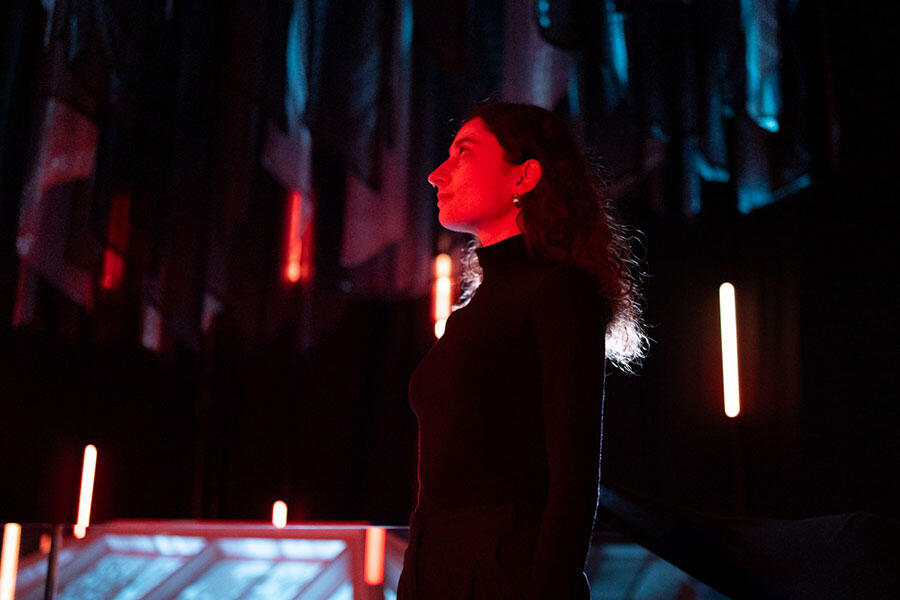
SF ‘PLAY’, a photography exhibition organized by Fotografiska Tallinn in the Pekuri shopping district. It explores the idea of play as both a source of joy and a source of disruption through the lens of 17 international artists. Our City Hall will also be transformed into a digital arts centre, hosting two exhibitions – one of which is ‘Layers in the Peace Machine’ by Ekho Collective, an immersive exhibition focusing on peace. Visitors follow a route through Oulu City Hall – which is beautiful in its own right – before arriving in a specially designed room.
SB What do you hope the legacy of the ECOC year will be?
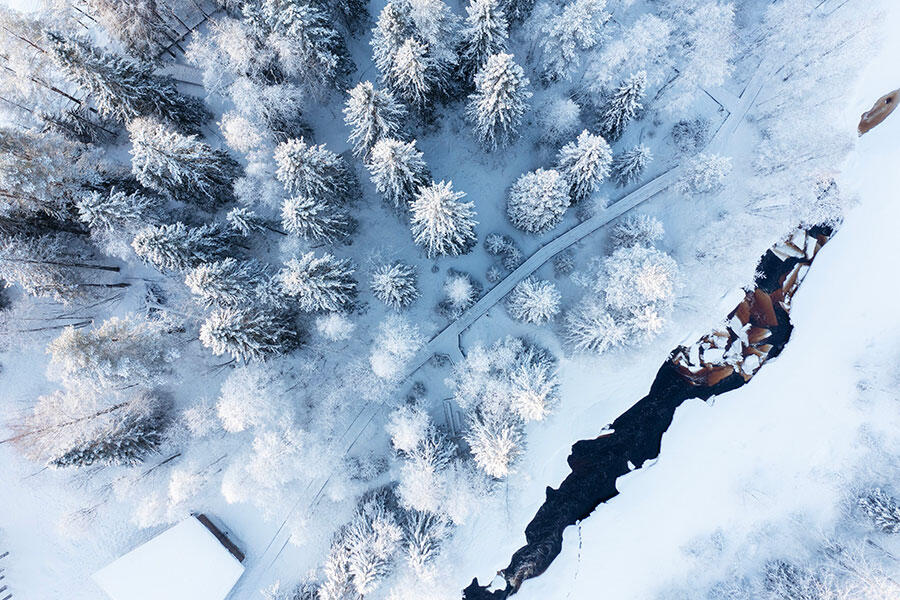
SF Most people worldwide know of only two places in Finland: Helsinki and Rovaniemi in Lapland, where Santa Claus lives. But Finland is much more than that. Oulu, for example, has a lot to offer, especially with its four distinct seasons, a proper winter, ice and all the unique experiences that come with it.
With this ECOC, we want to put our city more firmly on the map of Europe – to show that we’re a place to visit and a city capable of attracting skilled workers to our local sectors. At the same time, looking within our city, our community will become stronger and more confident. We’re also discovering the essence of what it means to be a northern city. I believe this could create a long-lasting legacy, inspiring everyone with the possibilities this year has offered.
Oulu European Capital of Culture 2026 runs throughout the year in the region. Full details of the programme are available on their website
Main image: Courtesy: Oulu2026; photograph: Juho Huttunen