


Must-See: Ali Eyal Paints the Aftermath of War
At François Ghebaly, New York, the Iraqi artist’s cartoonish creations reckon with trauma and transformation
At François Ghebaly, New York, the Iraqi artist’s cartoonish creations reckon with trauma and transformation
This review is part of a series of Must-See shows, in which a writer delivers a snapshot of a current exhibition
Ali Eyal’s ‘Imagine, all this happened just an hour ago’, at François Ghebaly in New York, searches for what lies beyond the edges of depiction. Enshrouded within a cartoonish painterly language, Eyal’s wobbling line translates the trauma and turbulence he experienced as a child born amid post-Gulf War tensions in Iraq. His paintings and drawings teem with amputated limbs and segmentation: motifs that expand the time-space of the corpse, lingering on the ambiguity between thing and subject. The ‘dead ends’ of interrupted forms recall Théodore Géricault’s The Raft of the Medusa (1818–19) studies – but unlike Géricault, whose interest in the unrepresentable came at a safer distance from the matter, Eyal excavates from deeper, closer proximities: what the artist refers to as ‘the after war’.
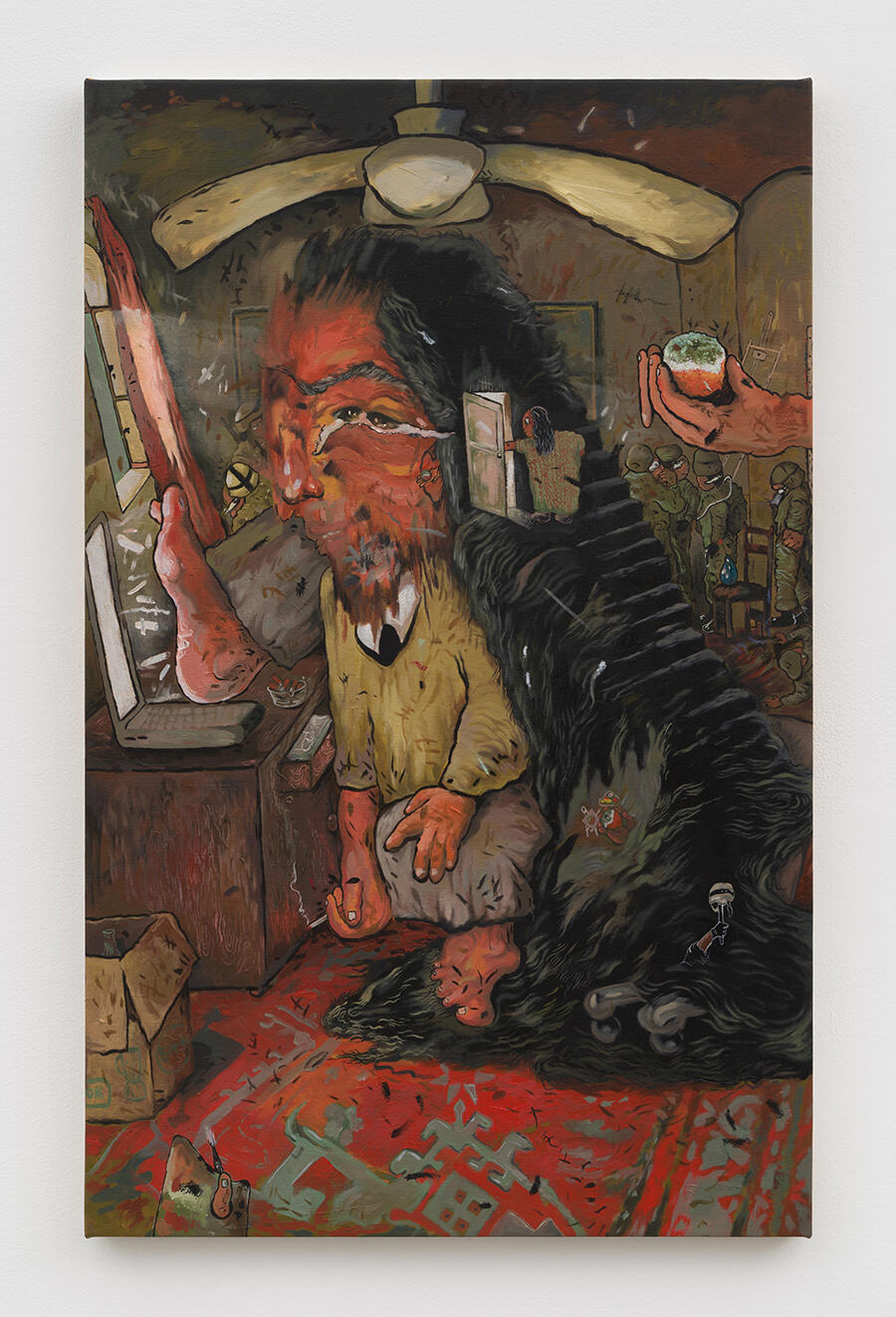
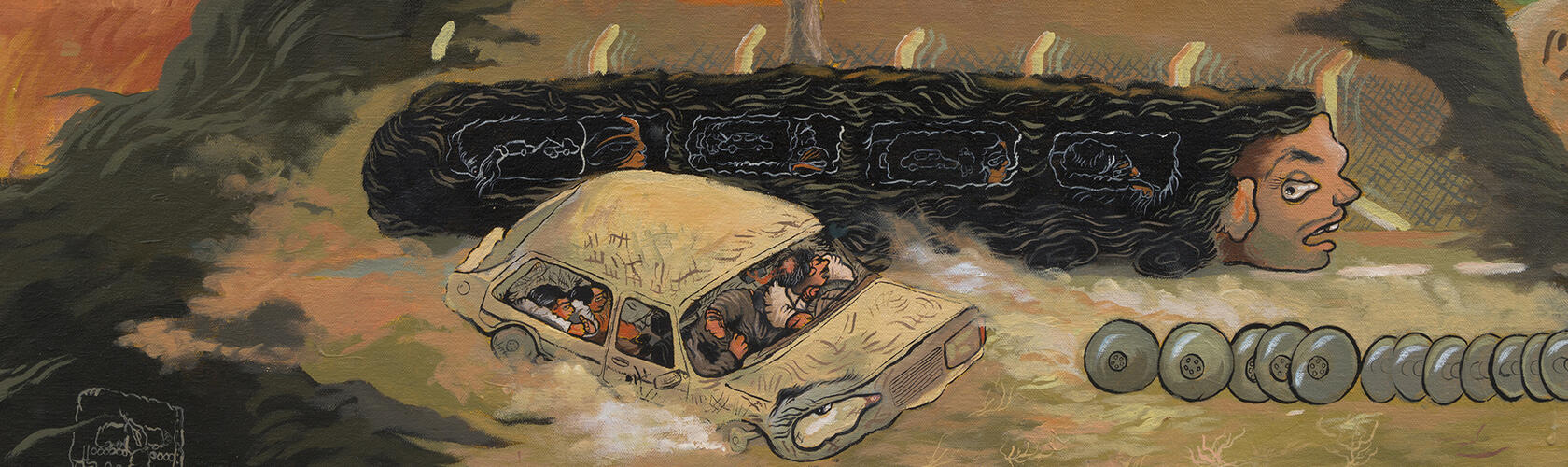
For Eyal, the body is abbreviated through trauma, but it is also a vibrant object: it sweats, expels, secretes and generates. His work often transfigures eyes into seminal trails, mimicking and repeating the shapes of condoms, as in the drawing My own table (2025). While the eye originates life, the hair, with its currents of penumbra and void, feels more like an abyssal image generator. In Eyal’s painting The road to an unknown hand (2024), buses, stairwells, even a lost highway of careening cars materialize within its strands, forming vignettes of thoughts and memories, real and imagined, collapsing into a single timeline.
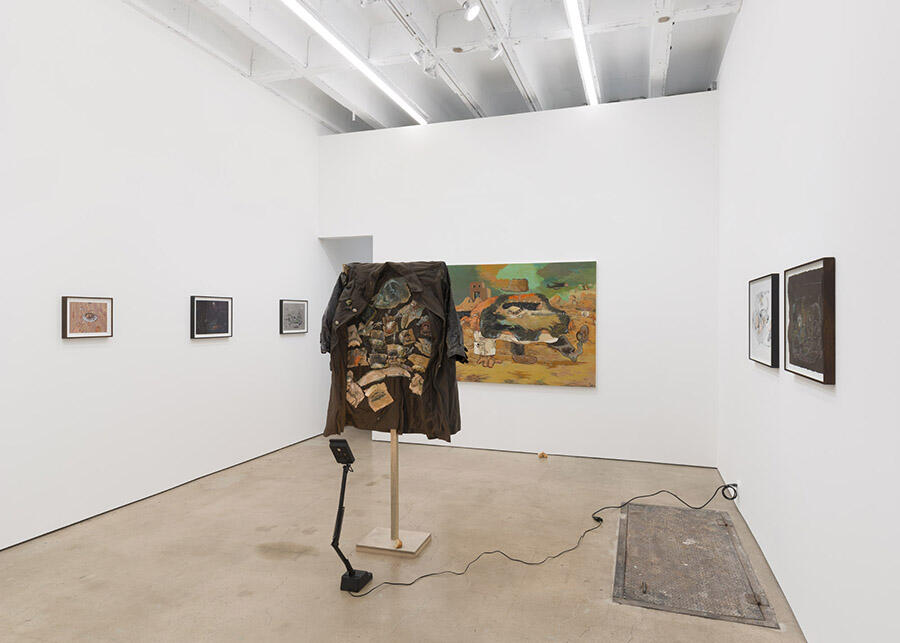
Eyal’s work strives to make permanent the memory of what was lost. Yet, aware that to end in images of war could exploit victims and survivors (including himself), he doesn’t leave it at distressed bodies but instead searches for the intimate and somatic poetics of transmutation. A used coat affixed with small oil paintings and clay sculptures of caterpillars (Where do the walls of the museum go when they are forgotten? And, 2021–25) hangs in the centre of the gallery, a signal that, by meditating on these images, metamorphosis may be possible. Probing the soft, rending retreat of those moments, I used to love watching the ants. (2025) focuses on the traumatic response of fixating on details. Ants are not just in the image but also painted on the floor – leading us to a small sketch in the back room (A phone call with my mom, 2025): a memory of love carried across distance.
Ali Eyal’s ‘Imagine, all this happened just an hour ago’ is on view at François Ghebaly in New York until 31 January 2026
Main image: Ali Eyal, The road to an unknown hand (detail), 2024, oil on canvas, 1.3 × 1.7 m. Courtesy: the artist and François Ghebaly, Los Angeles, New York; photograph: Charles Benton