




Simon Benjamin Confronts an Island Iconography for Colonial Minds
At PATRON, Chicago, the artist works with vintage Jamaican travel ephemera to unpack history’s reverberations in the present
At PATRON, Chicago, the artist works with vintage Jamaican travel ephemera to unpack history’s reverberations in the present
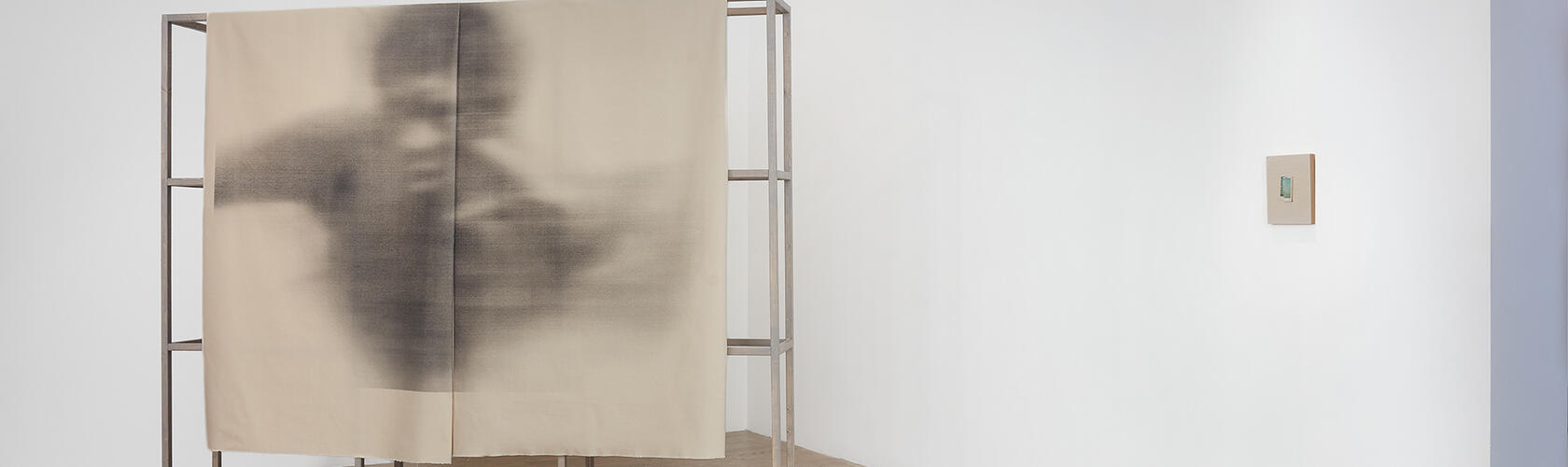
In her 2006 book An Eye for the Tropics, art historian Krista A. Thompson articulates the visual iconographies of colonial power that continue to impact life in the Caribbean. ‘Tropicalization’ is the term Thompson gives to the British colonial strategies of economic control and political consolidation expressed through a nascent 19th- and 20th-century tourism industry built upon images of flora and fauna not native to the Caribbean, as well as eroticized and othered Black life. Tropicalization spread through the period’s travel ephemera, offering anglophone tourists an imaginary of island life.
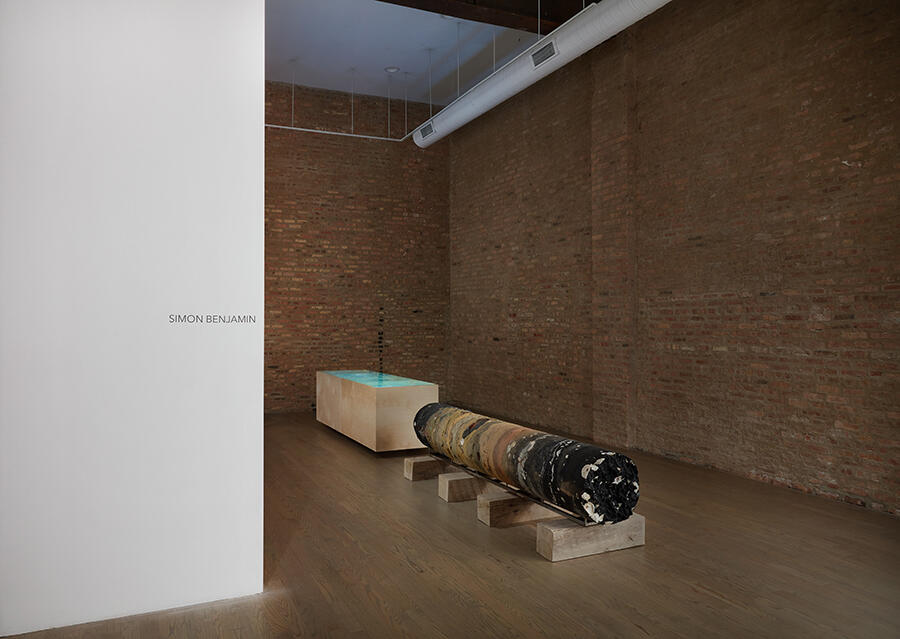
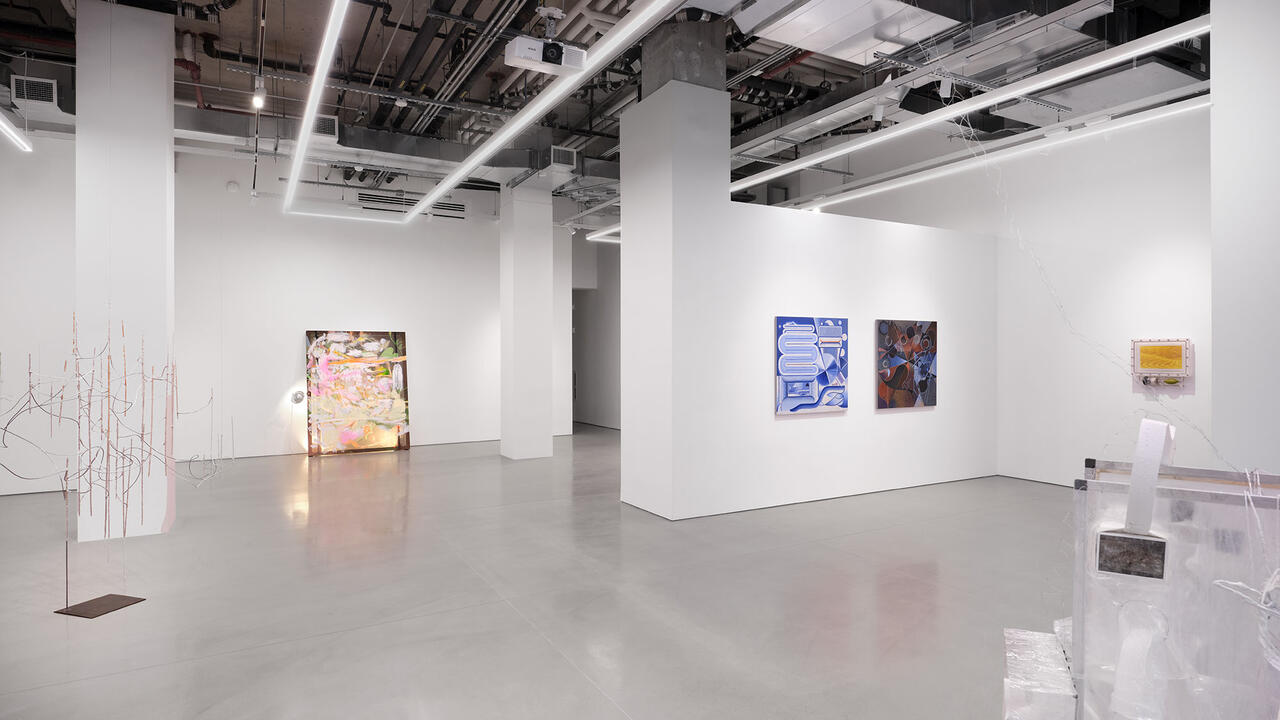
Tropicalization also functions as the thesis of Simon Benjamin’s exhibition ‘Long, Shore, Drift’ at PATRON Gallery in Chicago. Benjamin, who has long focused on the sea’s complex connection to Afro-diasporic life, examines how tropicalization proliferated through the circulation of visual signifiers such as images of young Jamaican boatmen, coin divers and British soldiers. The Jamaican-born artist focuses on how these flows of images crystallized into an island iconography for the colonial mind: a filtered, skewed, economically viable vision of Jamaica designated for consumption.
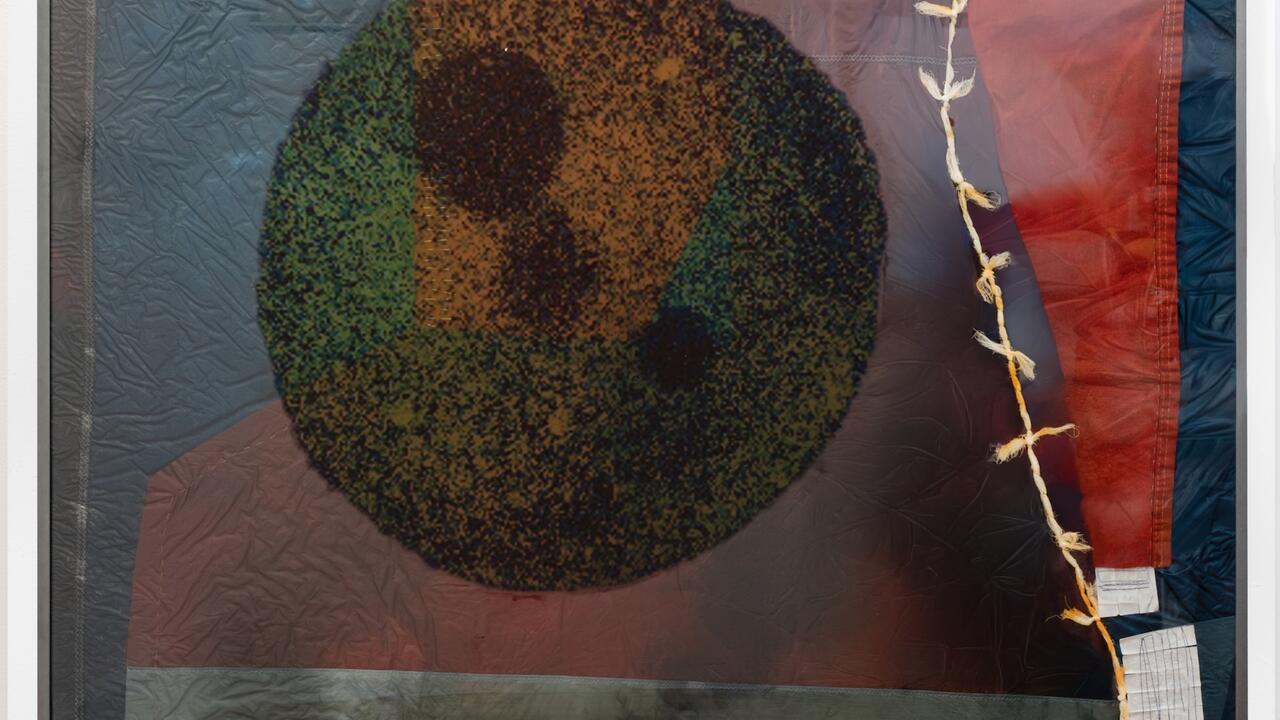
Benjamin selects images from his own collection of vintage travel curios and silkscreens them onto large canvases. At the show’s heart are depictions of young Black men by the water amidst the ongoing grind of colonial and neo-colonial economies. In stark contrast to the immediacy and emotional intimacy that characterize these depictions, Benjamin’s images of British soldiers and European tourists feel distant from the viewer. These figures haunt the edges of the islands, their presence creating a double vision. Is the viewer’s perspective that of a tourist, given the artist’s source material? Or is there a challenge to see differently?
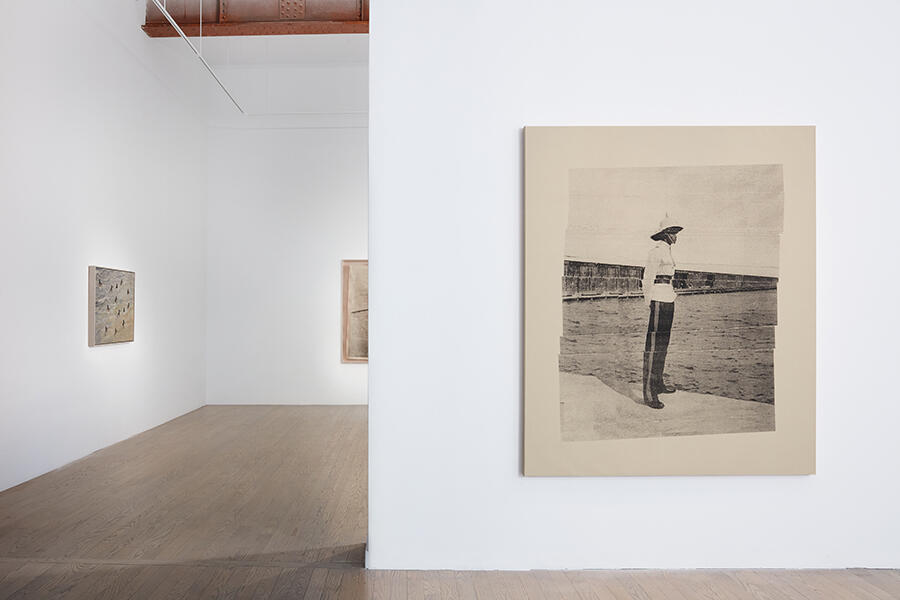
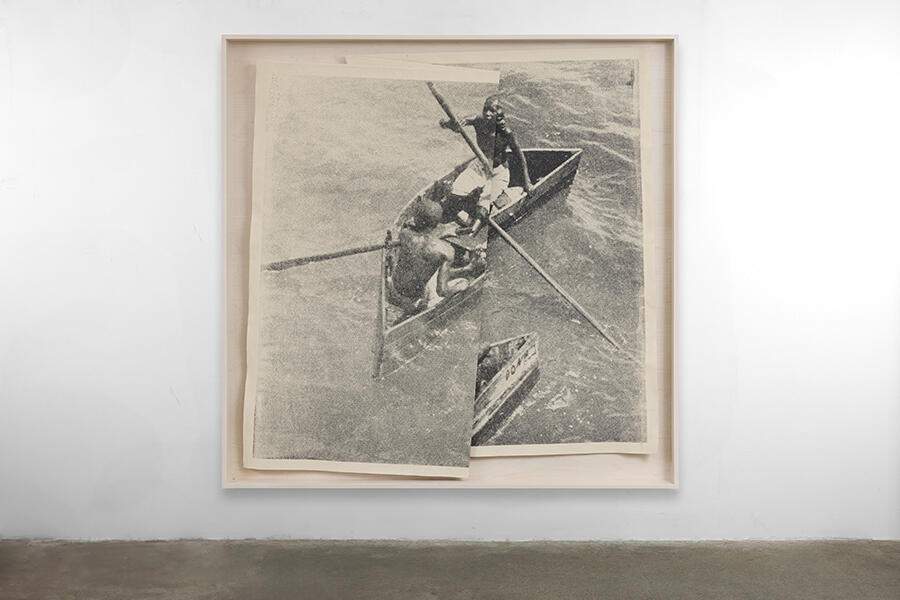
Some of the silkscreened images, like Diving Boys—this is us and Divers No. 07 (all works 2025), are then hand-painted in tones reminiscent of sand on a shore, a wave’s cerulean blues and glass-bottle greens, or the weathered beige light of an Atlantic sun. Particularly alluring is the materiality of the canvas in Native Boatmen, one of Benjamin’s unpainted silkscreen works. Though the scene depicted is simple – two different men in a small boat pause their rowing as they gaze at something, or someone, out of frame – a fold in the canvas bisects the picture plane like a woozy cantilever. The bow of another boat, its captain unseen, edges slightly into the frame. Time here is cut; memory, too, cuts. Such a cut is a trap, something tender. One of the men’s faces splits in two; he looks upon the water and into the horizon at once.
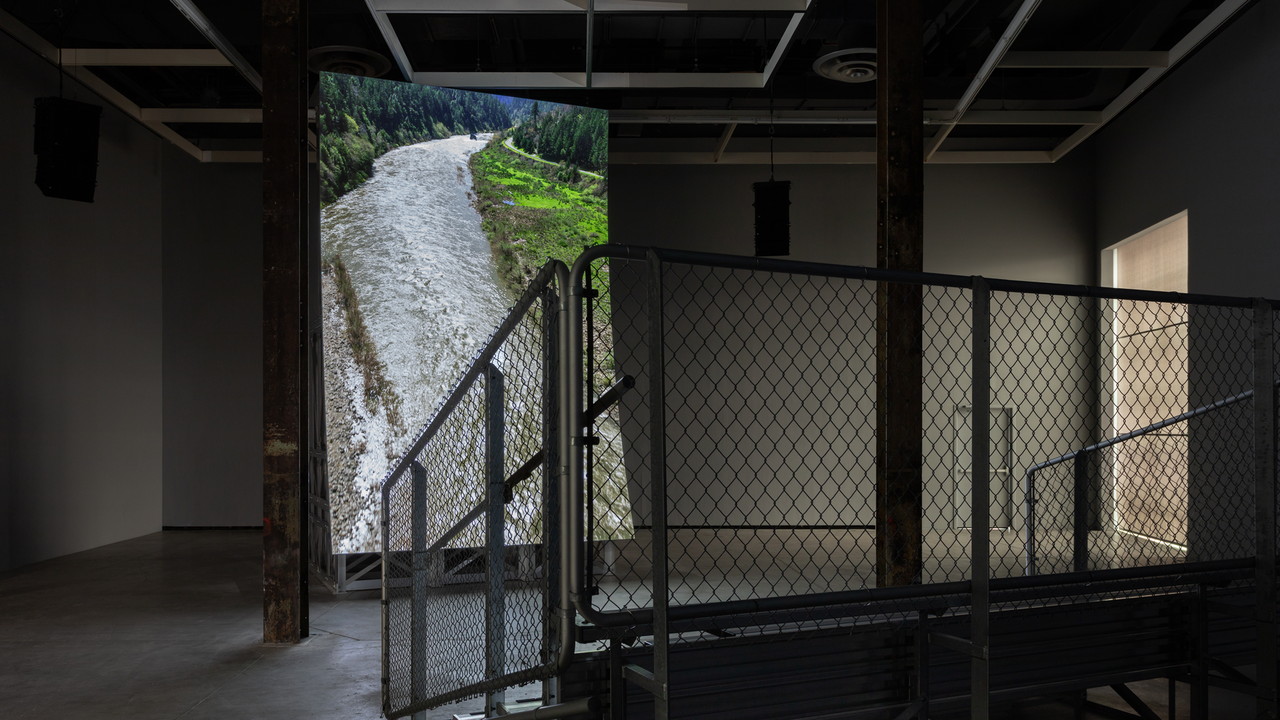
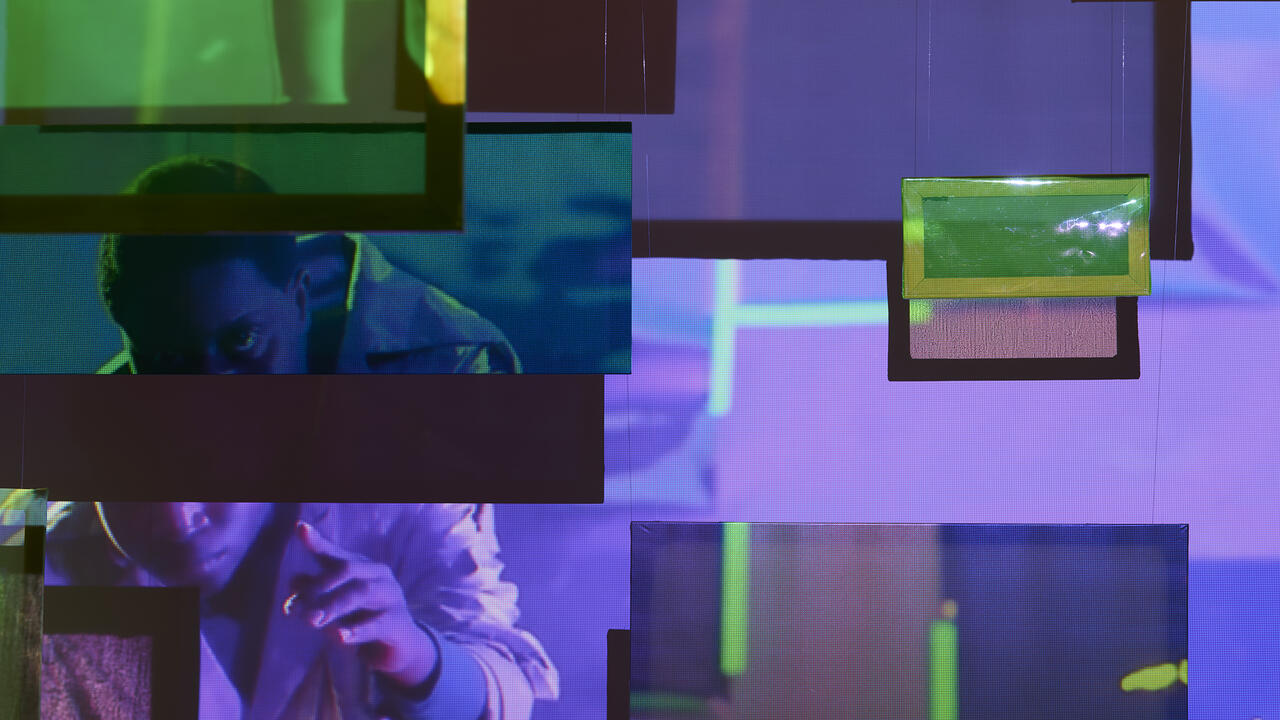
Alongside Benjamin’s canvases are sculptures shaped like core samples made of cornmeal, found beach detritus and sand (Beeren Eylandt, Lenapehoking.NY.2025.06.19.002 and Beeren Eylandt, Lenapehoking.NY.2025.06.19.003), and Tidalectic No.1 (2025), a multi-media installation with two-channel video. Through layers of sediment and an ocean floor that forever holds its own company, time is restructured, re-sutured and rearticulated. There’s a relationship here akin to philosopher Christina Sharpe’s concept of ‘residence time’, from her 2016 book In the Wake – which proposes a throughline between the scientific definition of residence time (the time a substance stays within a defined system) and the traumatic economic, political and social reverberations of the Middle Passage. As Benjamin explores the circulation of money and people, of images and their meanings, history becomes an echo in the present: a present that cracks open and reveals its own fault lines.
Simon Benjamin’s ‘Long, Shore, Drift’ is on view at PATRON, Chicago until 17 January
Main image: Simon Benjamin, ‘Long, Shore, Drift’, 2025–6. Courtesy: the artist and PATRON, Chicago; photograph: Joseph Robert Krauss