



The MUNCH Triennale Leverages Reality as Material
In ‘Almost Unreal’, artists push back against the en-slop-ification of culture by reviving old media and embodied practices
In ‘Almost Unreal’, artists push back against the en-slop-ification of culture by reviving old media and embodied practices
In her opening keynote for the 2025 MUNCH Triennale, theorist and raver McKenzie Wark outlines what she calls the epistemic crisis of the present: a condition in which venture capitalists who produce no social value increasingly monopolize every facet of human life, stripping us from the capacity to make meaning. We are transformed into rent-paying, discombobulated subjects of this empire, tasked with navigating through the haze of contemporary mediascapes in order to find our way back to our bodies, to the real. Artists, Wark argues, have both a particular capacity and responsibility in this endeavor: interrupting capital’s drive towards optimization by engaging with new technologies inefficiently or by reconnecting with old media forms poetically.
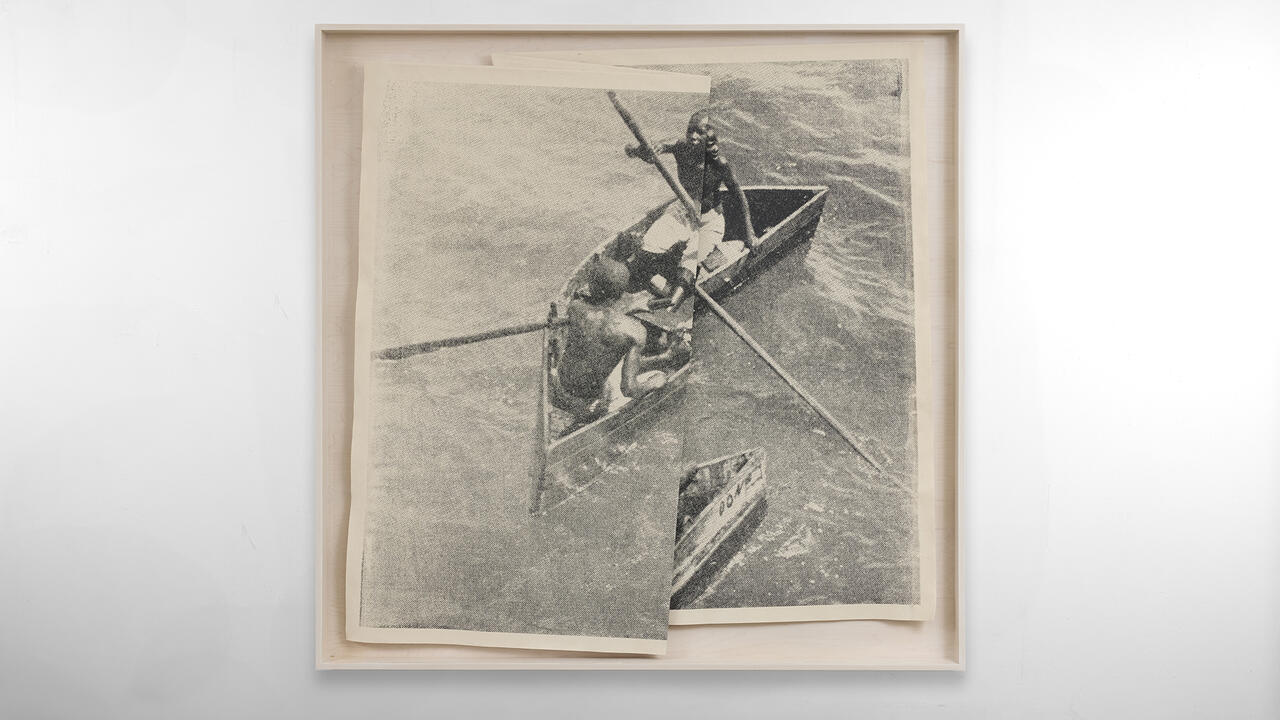
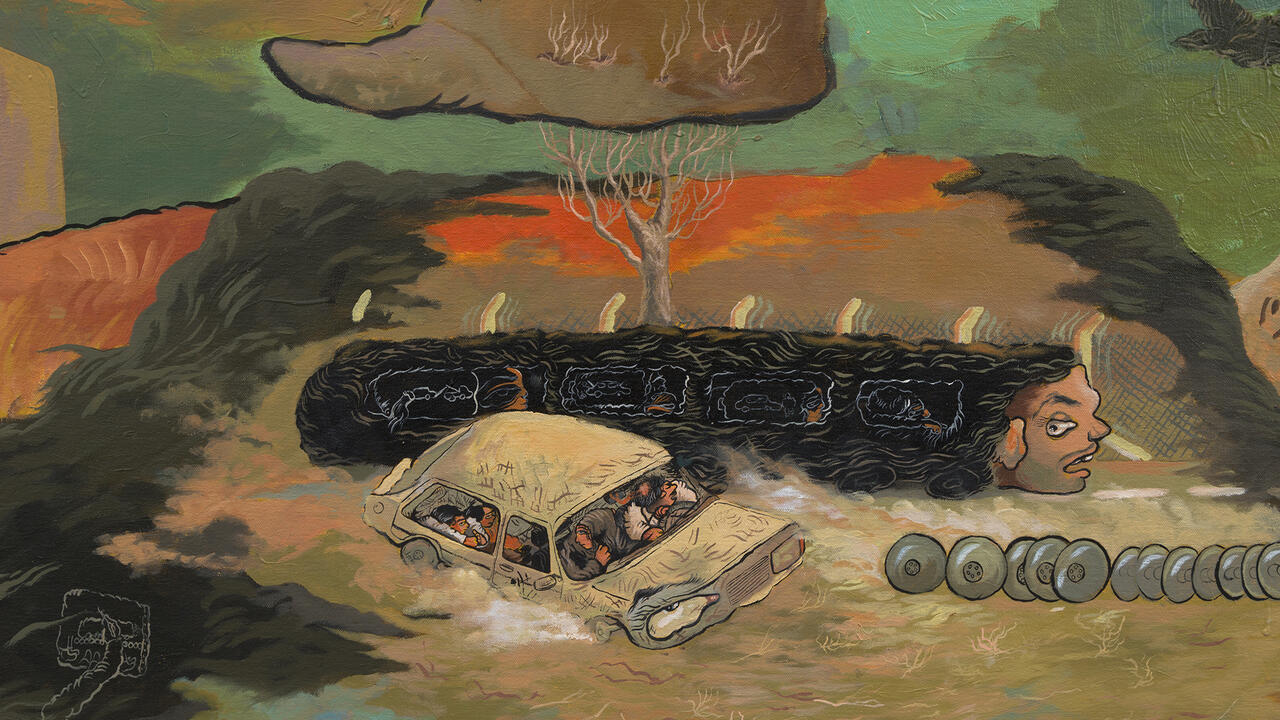
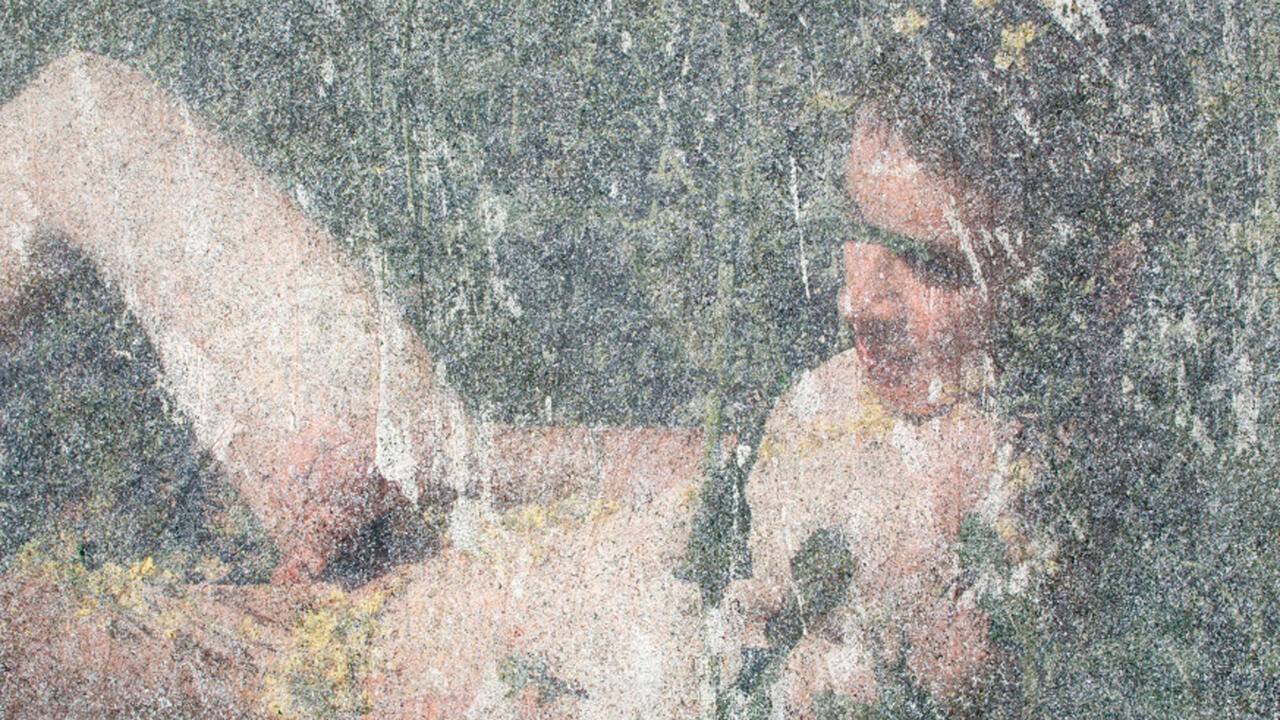
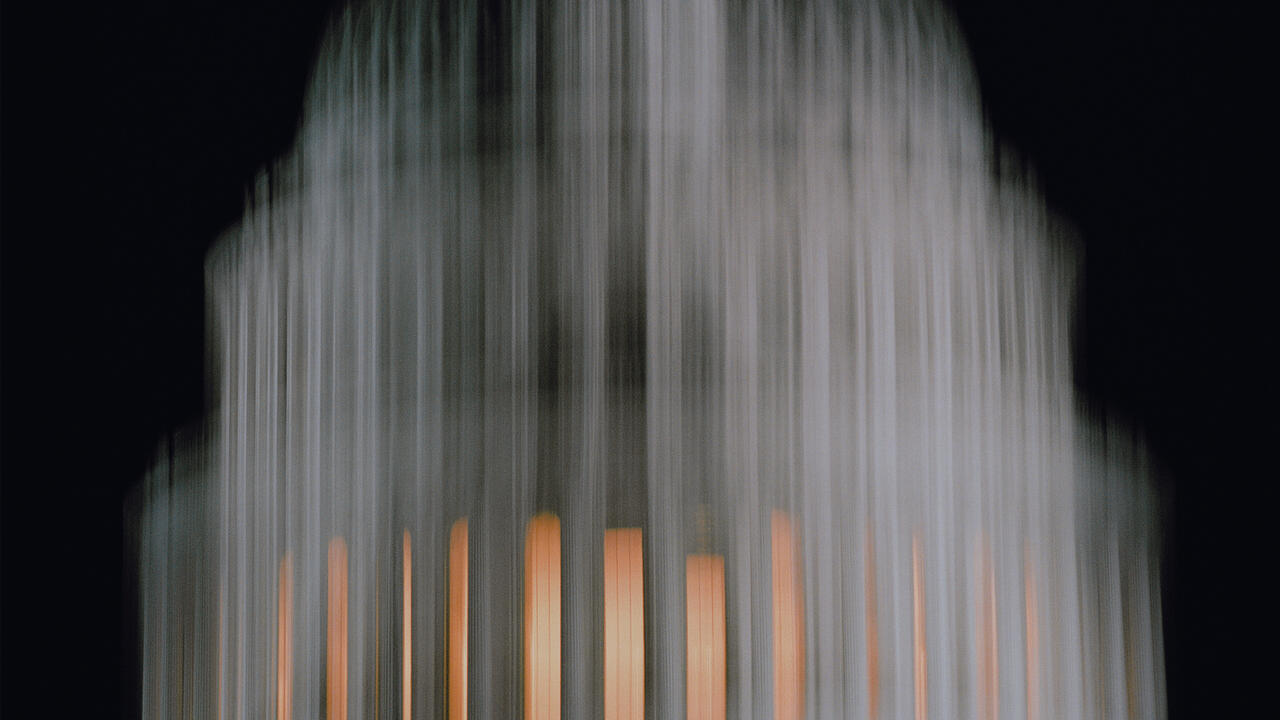
‘Almost Unreal’ sets out to rise to Wark’s challenge. Bringing together 26 artistic positions, the exhibition takes on the stakes involved in the production of reality within contemporary digital culture. The remit is thus quite broad: the triennale moves between a decolonial critique of ‘media’; a return to embodied experience; manufactured landscapes and the dangers of the digital manosphere. These strands pull the exhibition in many directions, and the real/unreal binary sometimes feels too strained to hold them all together. The individual artistic positions are, however, consistently incisive.
One of the show’s strongest through-lines traces the body’s appearance and disappearance across media history, excavating the roots of our contemporary disconnection from embodied experiences. In Himali Singh Soin’s video work how to startle the unbelieving (2019), the artist narrates the story of a young clairvoyant girl in colonial Calcutta tasked with finding a lost Arctic explorer, as we watch footage of disembodied hands silently playing a theremin. The work contrasts the telegraphic infrastructures that sustained empires with the shamanic knowledge of subjugated peoples, viewing both as media practices: one impersonal, and focused on maintaining control, the other embodied and rooted in placemaking, evoking the possibility of a decolonial relationship to our current media landscapes.
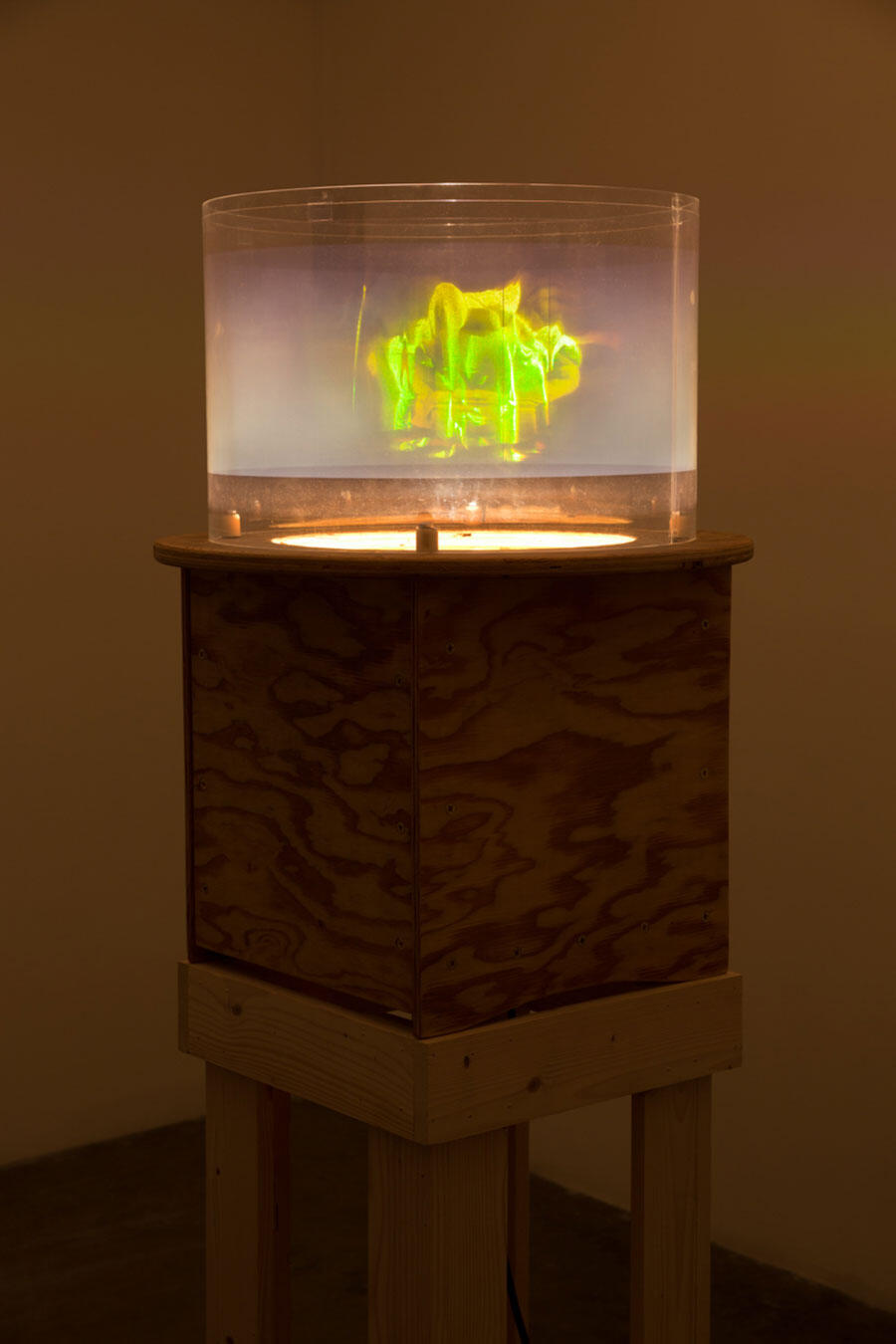
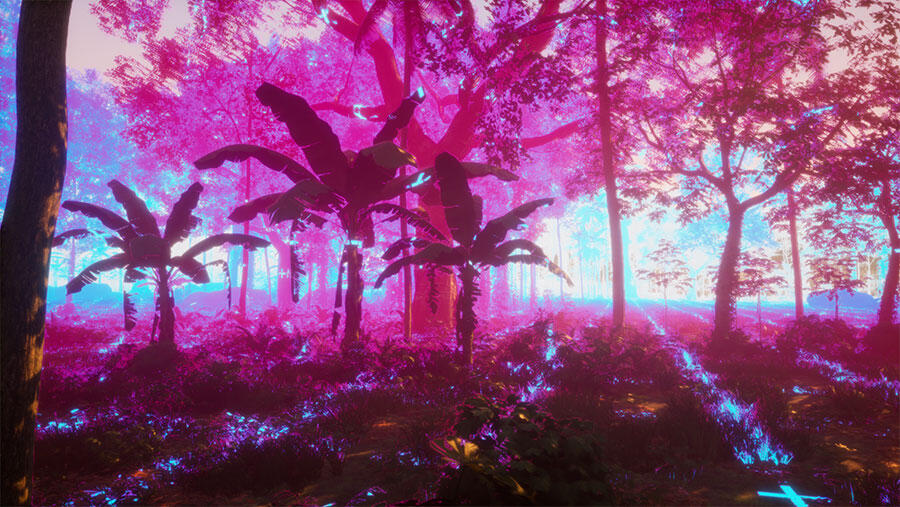
Similarly, Alice Bucknell’s walking simulator Earth Engine (2025) projects viewers into virtual facsimiles of landscapes surrounding climate data-collection centres, where the environments they interact with are fed by live data from earth-sensing systems. A sudden or wrong move can render the virtual terrain hostile, underscoring the simultaneity of bodily presence in real and virtual space under constant satellite surveillance. More poetically, the holographic rendering of Simone Forti’s Huddle (1975), created with physicist Lloyd Cross, depicts a ‘moving sculpture’ of figures, breaking away from the eponymous huddle and clambering upon each other to reach the top. Activated as visitors circle it, the hologram gives the illusion of movement and flips the relationship between performing and viewing bodies, evoking a sense of wonder rarely associated with technological encounters today.
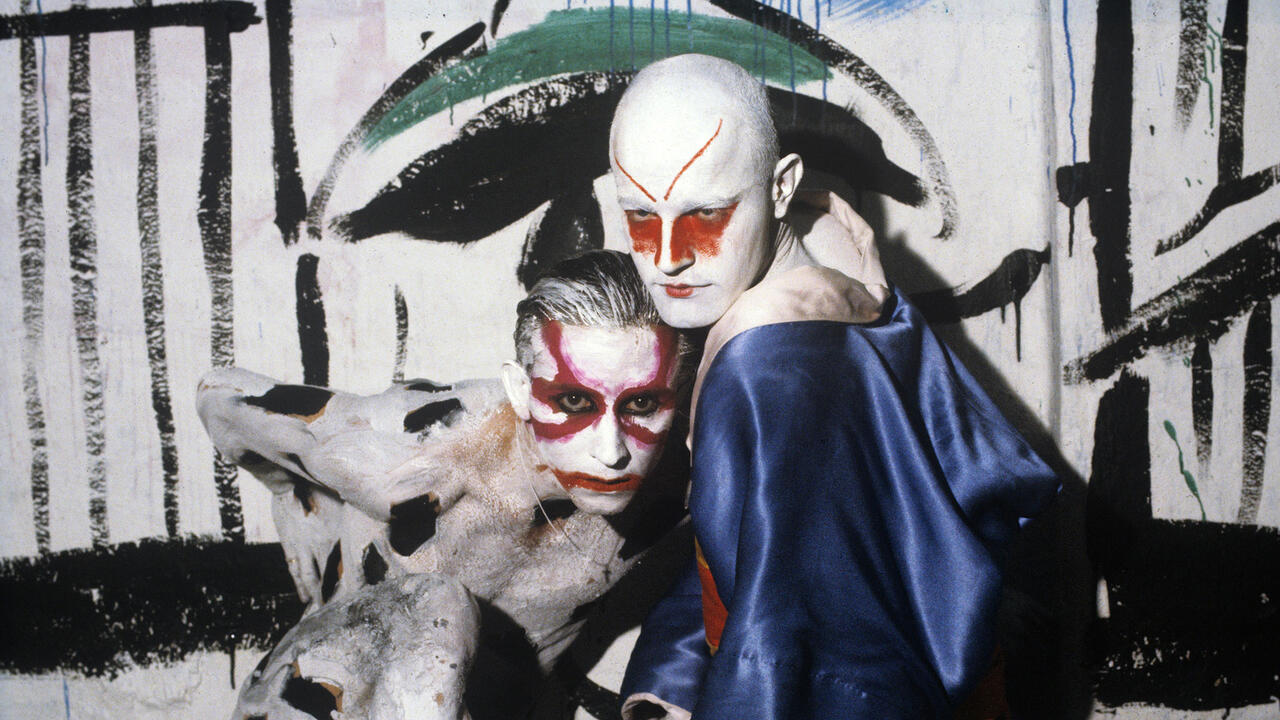
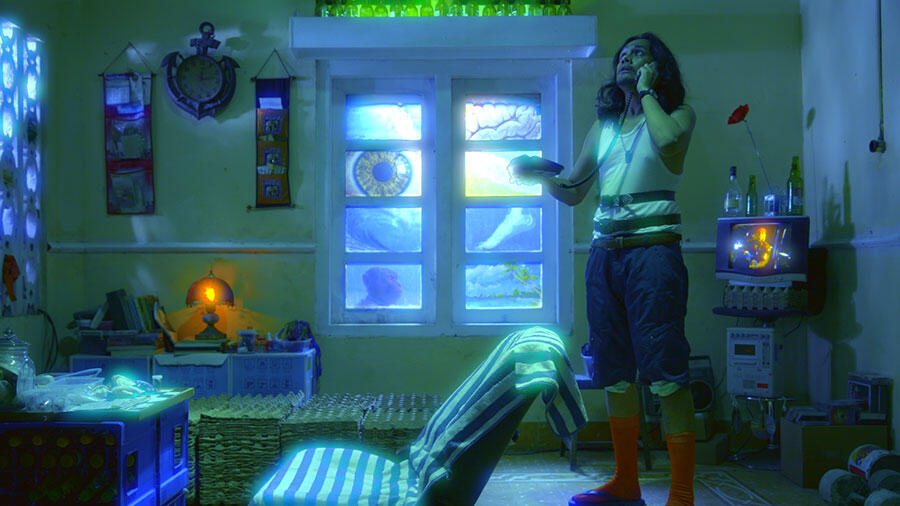
Shot in the style of an Indonesian B-movie, freely referencing early 2000s-internet visuals and drag aesthetics, Natasha Tontey’s Macho Mystic Meltdown: Oikouménē (2025) presents a fictionalized account of her father’s disappearance at sea. Rescued by magical dolphins, he becomes a shut-in hoarder who invents his own cosmology, equally referencing Christianity, folk spiritual beliefs and vacuous workout-video mantras. A parable of the incel, the work maintains a gaze that is both sympathetic and critical. In doing so, it speaks to a cultural moment in which online male subcultures collapse pop-culture references and niche internet knowledge into increasingly mainstream fascist ideologies. Tontey thus answers Wark’s call for new modes of signification that synthesize disparate registers, brilliantly using irony and humour to confront the epistemic crisis of contemporary digital culture.
Through these remarkable projects, ‘Almost Unreal’ opens an experimental space for contemplating on the relationship between technology and society today. The curatorial project may feel at times messy, but it is deeply sincere, opening portals through which we may suture our bodies and imaginations, enabling us to make meaning again, against the pull of culture’s total en-slop-ification.
‘Almost Unreal’ is on view at MUNCH Museum, Oslo, until 22 February
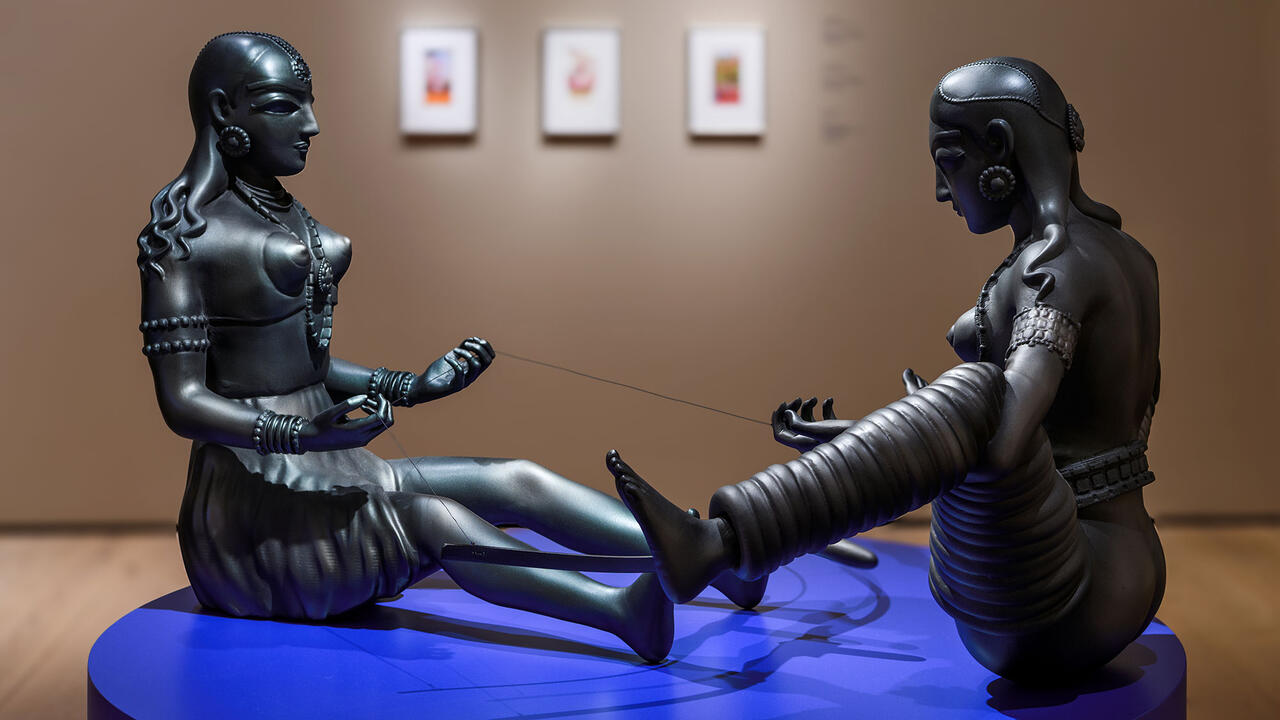
Main image: ‘Almost Unreal’, 2025, exhibition view. Courtesy: Munchmuseet; photograph: Ove Kvavik